Malaga, Costa del Sol: Attractions, Beaches and Leisure. Complete City Guide

1. History and General Information
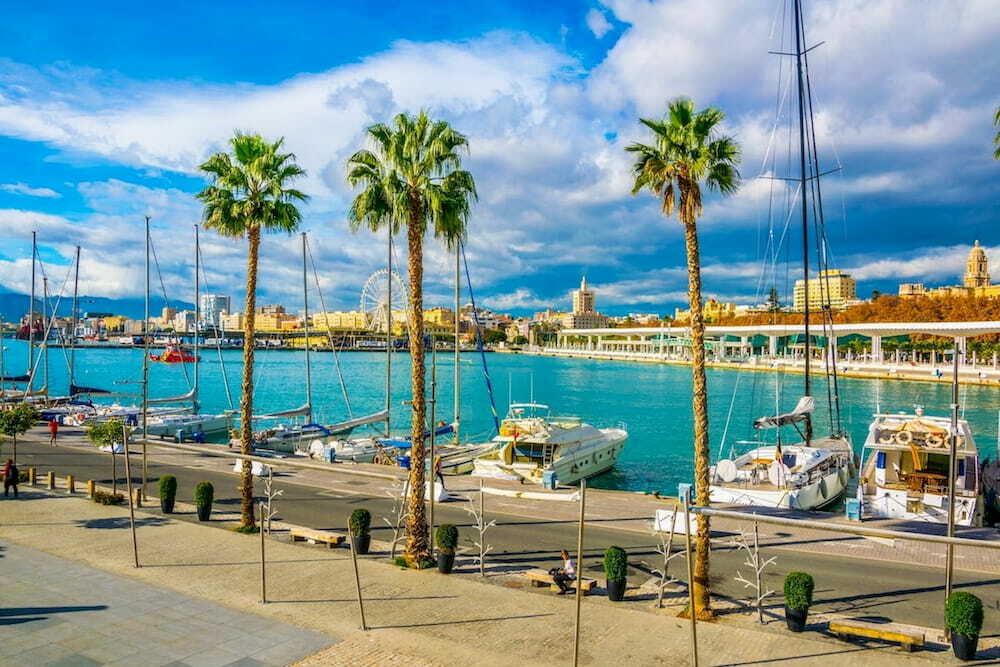
Malaga is one of Spain’s largest ports and the capital of the province of the same name in Andalusia. The city’s population reaches 570,000; it is one of Europe’s oldest cities.
The city’s history dates back to the 8th century BC, when Phoenicians founded a settlement called Malaka, meaning “salted”. Subsequently, the city was under Roman rule (until the 3rd century BC), then Byzantium and the Visigoths. During Islamic rule, Malaga became part of the Caliphate of Cordoba and grew into a major trading centre. The Castilians conquered the city in 1487, incorporating it into the Crown of Castile. The 19th century brought rapid economic development, and from the 1960s the tourist boom began.
Today Malaga is a major tourist, industrial and cultural centre at a key transport hub on Spain’s southern coast. The city combines charming winding streets of the old quarter with modern high-rises and shopping centres. Pablo Picasso was born here, and actor Antonio Banderas frequently visits his hometown - promenades are named after both.
2. Climate and Weather
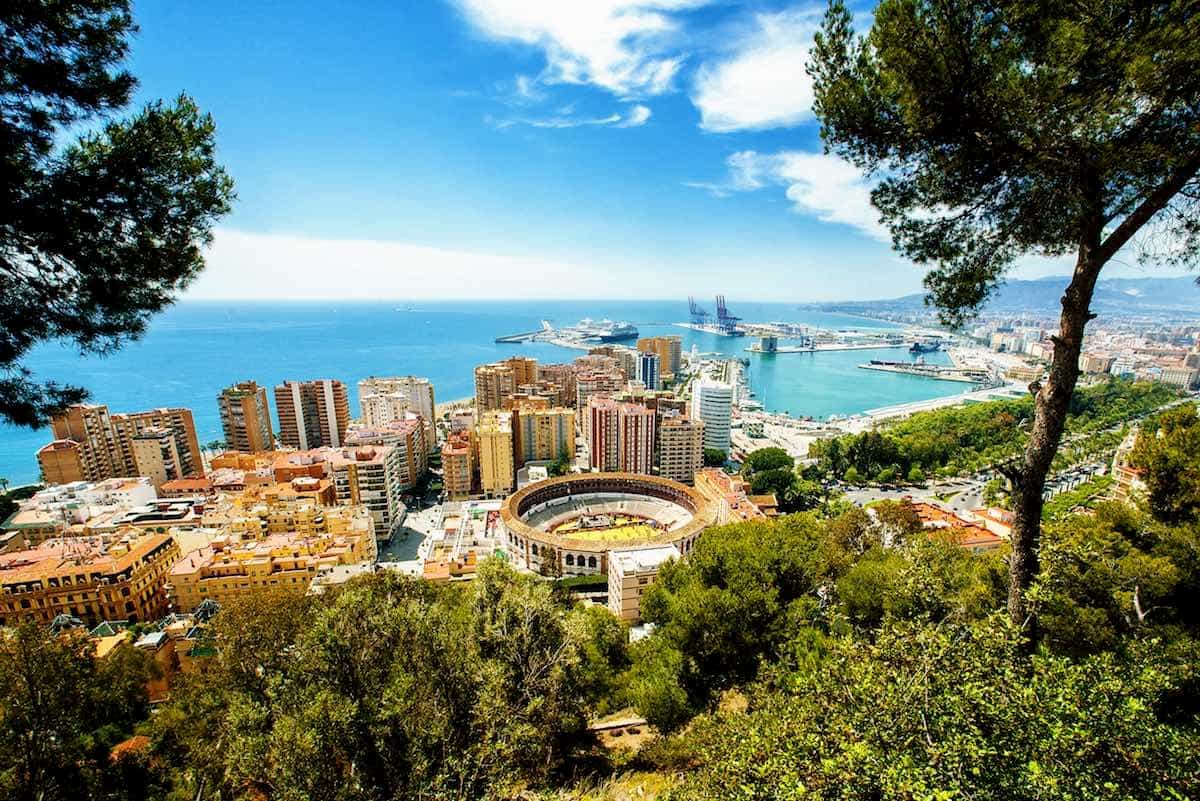
Malaga is located in southern Spain and has a hot climate, especially in summer, with an extended swimming season lasting until late October. From late May to September it is hot and dry with minimal rainfall. April and May are warm; in September the heat eases in the second half of the month.
Average temperature in July and August reaches +30 C. In winter, the climate is warm and mild, averaging +17 C. The Mediterranean Sea moderates summer heat, maintaining a pleasant water temperature of around +22 C.
Malaga Weather Forecast for Today and the Coming Week
3. How to Get to Malaga
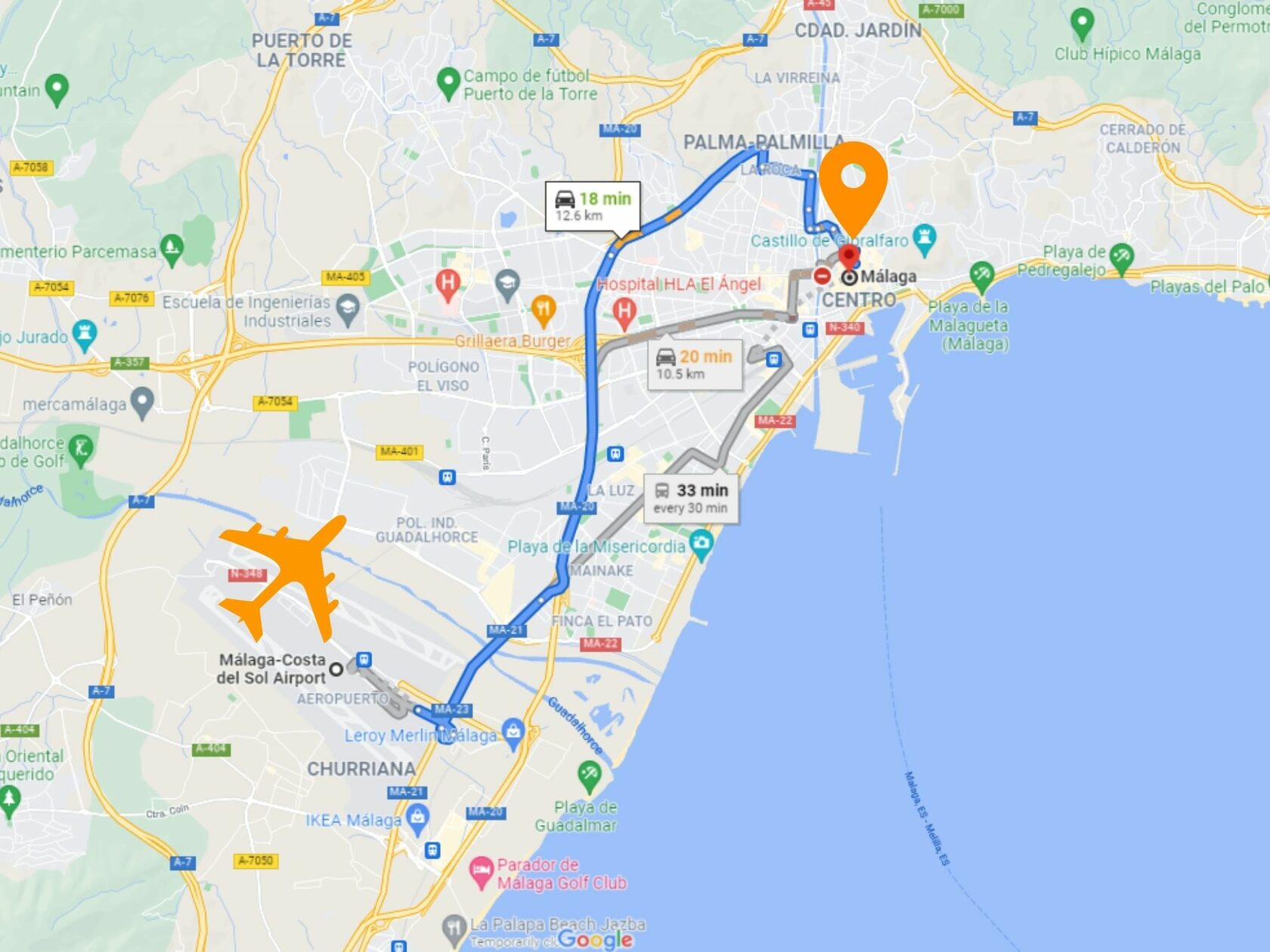
The international airport is approximately 8 kilometres from the city. The EMT Malaga express bus runs every 20-25 minutes from 7:00 to 24:00, reaching the city centre in 30 minutes for EUR 3.
Renfe trains depart every 20 minutes from Malaga-Centro Alameda station to the airport, with a 12-minute journey time costing EUR 1.8 to EUR 2.6 depending on the day. These trains also conveniently connect the city with neighbouring resorts. Madrid can be reached in approximately 2.5 hours.
By car 15-20 minutes; taxi from the airport costs up to EUR 15.
Malaga on the Map of Spain
4. Malaga’s Beaches
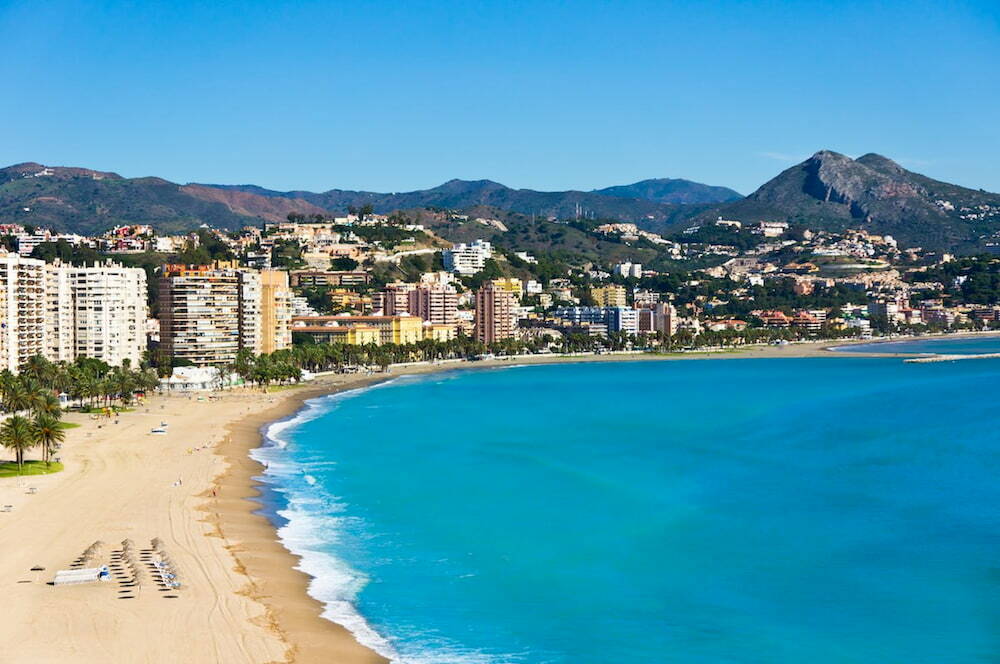
Malaga’s coastline stretches 14 kilometres and includes 16 official beaches. Central and western sections are sandy, predominantly dark sand, while the eastern part contains numerous rocky zones. Beaches are well-maintained and clean, several holding “Blue Flag” status. Infrastructure includes toilets, showers, play and sports areas, and sunbed hire.
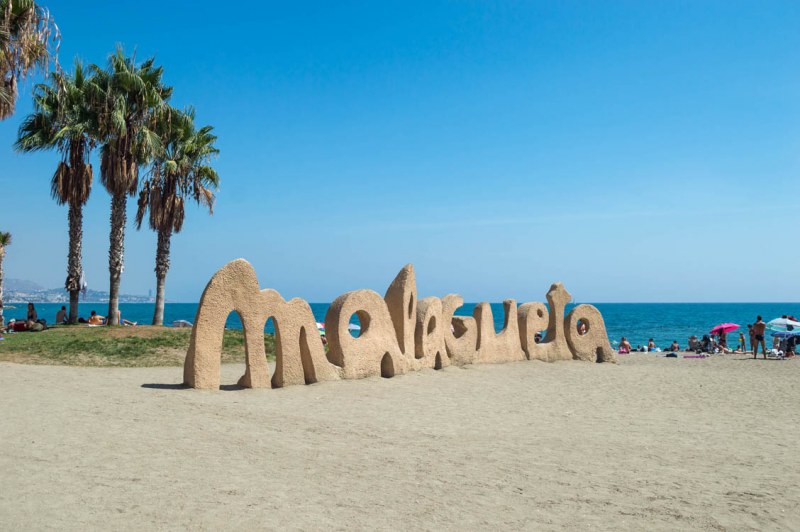
Most popular central beaches. La Malagueta is the most visited, 1.5 km long and 50 m wide, with Saharan-origin sand. La Misericordia stretches one kilometre with impressive evening views as high-speed ferries arrive. Pedregalejo beach has breakwaters creating cosy coves with numerous fish restaurants. All central beaches have developed infrastructure and lifeguard service.
Western beaches. For those seeking tranquillity: Campo de Golf and Guadalmar beaches are the most remote from the centre. Campo de Golf at 2 km attracts kite surfers. Guadalmar is small and least crowded at 450 m with excellent bars, spacious parking and playgrounds, though aircraft noise from the nearby airport is unavoidable.
Eastern beaches. Beyond the Guadalhorce river mouth lies the quiet 750 m Sacaba beach. Banos del Carmen and Penon del Cuervo are scenic secluded coves. Designated nudist zones are available.
5. Must-See Historic Attractions
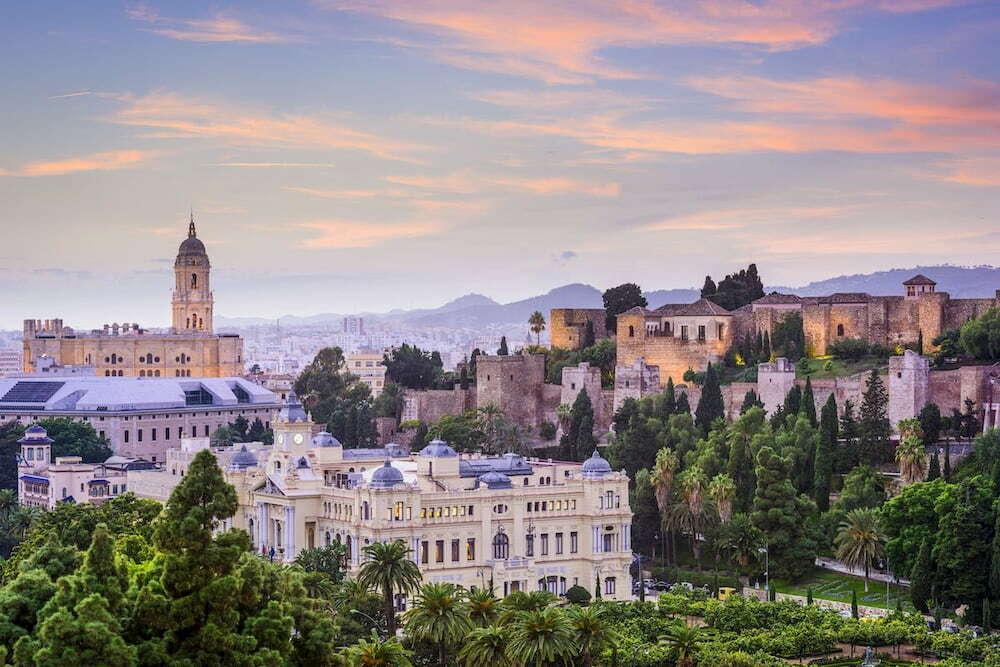
Town Hall (Ayuntamiento). A magnificent neoclassical building with modernist elements, built in 1912-1919 to the design of Fernando Guerrero Rosado Strachan. Declared a monument of cultural and historical heritage in 2010.
Malaga Park (Parque de Malaga) is the central park covering almost 10 hectares, one of Europe’s largest. Endemic and exotic Mediterranean plants, numerous sculptures, monuments and fountains. In the eastern part is the Plaza del General Torrijos with the “Three Graces” fountain.
La Malagueta Bullring (Plaza de Toros) is a symbol of Malaga, 52 metres in diameter, 19th century, neo-Mudejar style. Alongside is a bullfighting museum with historical materials, matador costumes and century-old posters.
Alcazaba Fortress is an ancient Arab fortress built by Moors in the 11th century opposite the town hall. A fortified Muslim palace with double walls, towers and gates, incorporating fragments of the Roman theatre. Massive crenellated walls, paved roads, arches and fountains survive.
Gibralfaro Fortress stands on Gibralfaro hill, probably 14th century, possibly on the site of earlier Phoenician structures. Connected to the Alcazaba by a covered passage. From upper levels, panoramic views extend towards the Strait of Gibraltar. Inside are residential quarters, stores, wells and a mosque. The 40-metre “Bottomless” well cut into rock survives. Together, these two fortresses formed one of the mightiest defensive systems of Moorish Spain.
Roman Theatre (Teatro Romano) dates to the 1st century BC. Discovered accidentally in 1951. The auditorium, 31-metre stage, orchestra pit, galleries and corridors survive. Performances and cultural events have been held here since 2011.
Malaga Cathedral (Catedral de Malaga) is a magnificent monumental cathedral combining Gothic, Baroque and Classicist styles. Construction began in the 16th century on the site of a former mosque. Official name: Cathedral of the Incarnation. Nickname: “La Manquita” (“the one-armed”) due to having only one completed tower (funds ran out for the second).
Picasso Museums. The birthplace museum (Fundacion Picasso Museo Casa Natal) and the Picasso Museum (Museo Picasso Malaga) with 233 works. You can see the workshop, personal family items, hundreds of drawings, sculptures and graphic works.
Automobile Museum (Museo Automovilistico de Malaga) features rare Bugatti, Rolls-Royce, Jaguar, Bentley, Ferrari and Packard cars. Themed sections: “Art Deco”, “Dolce Vita”, “The Twenties”, “Dream Cars”, “English Traditions”. Admission EUR 6, closed Mondays.
Interactive Music Museum houses approximately 400 musical instruments from different countries and eras that visitors can touch and play. Eleven halls tell the story of music’s origins, first instruments, great composers and music’s therapeutic effects.
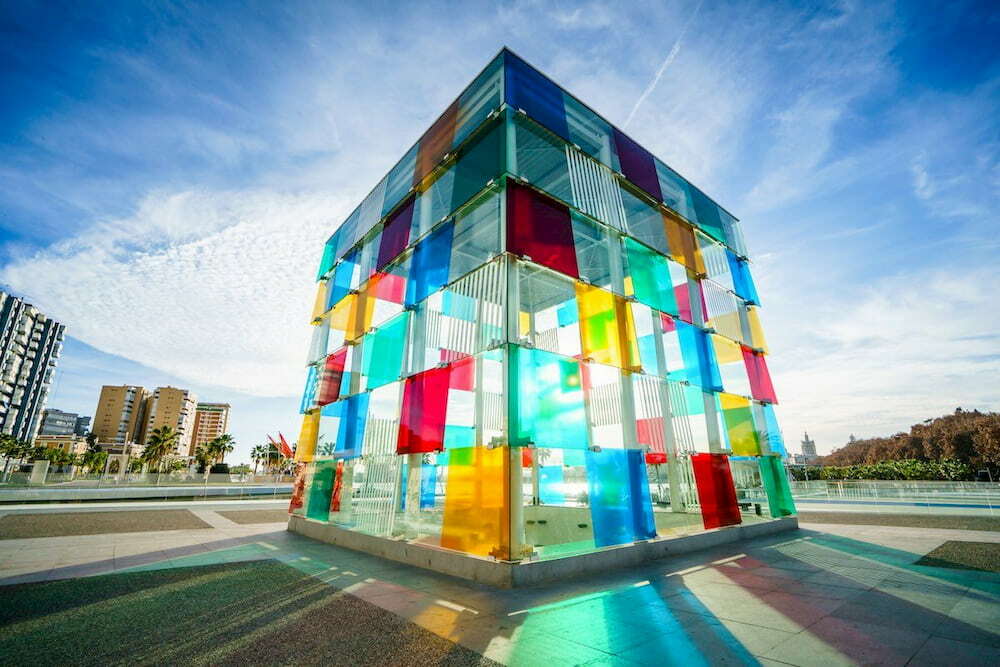
Contemporary Art Centre (CAC Malaga) features works by 20th-21st century icons: Francis Bacon, Alexander Calder, Marc Chagall, Giorgio de Chirico, Max Ernst, Alberto Giacometti, Frida Kahlo, Fernand Leger, Rene Magritte, Joan Miro, Pablo Picasso and others. Also located here is the first overseas branch of the legendary Paris Centre Pompidou in a characteristic multicoloured glass cube at the port, in the Muelle Uno shopping centre.
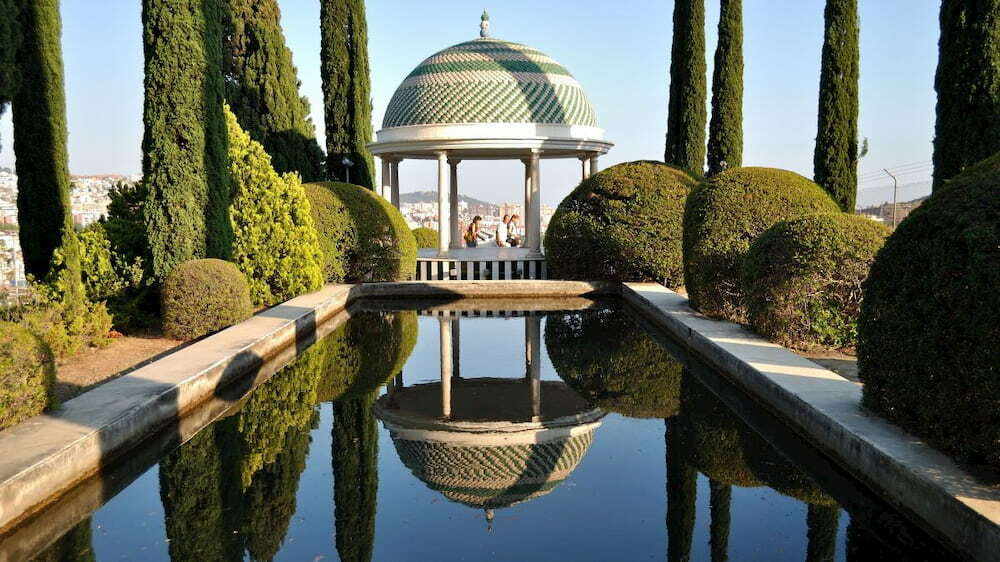
La Concepcion Botanical Garden (Jardin Botanico-Historico La Concepcion) is the perfect refuge from the hot sun. In the 19th century, Jorge Loring and Amalia Heredia created this garden in the finest European traditions. French gardener Chamus designed a large English garden with exotic plants, pergolas and sculptures. Several hours are needed to explore the entire garden.
6. Cuisine

Beyond traditional Spanish dishes, each region has its unique snacks. In Malaga, these are espetos - small sardines skewered on bamboo sticks and grilled over fire.
Numerous restaurants and beach cafes serve excellent paella, fresh seafood and cool aromatic sangria. Near Playa El Candado, El Tintero restaurant is notable: there is no menu; waiters carry trays of food, loudly announcing dishes, and the bill is calculated by plate count.
Andalusian specialities: “cason en adobo” (tuna marinated in wine vinegar with garlic) and “coquinas” (clams in white wine). Malaga’s characteristic sweet wine is found in virtually every restaurant and bar.
For budget beach snacking, chiringuitos (beach bars) offer freshly prepared fast food or baked potatoes for EUR 10-15. Lunch in an average cafe costs approximately EUR 25. Dinner with wine in an upmarket restaurant starts from EUR 60 per person.
7. Nearby Attractions. What to See Near Malaga
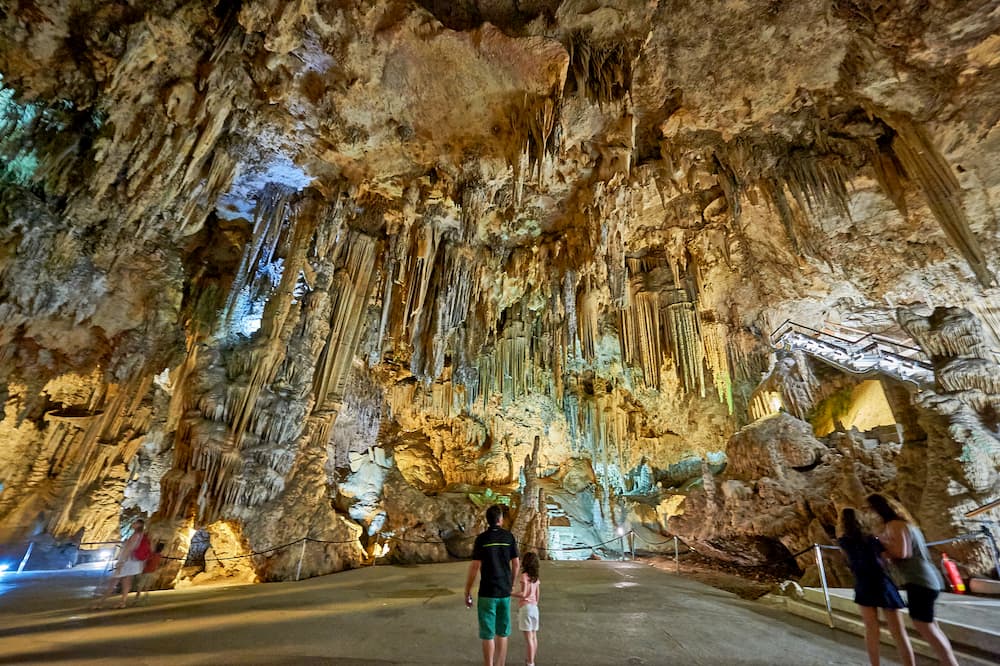
Nerja Caves (Fundacion Cueva de Nerja) are 60 km from Malaga, the largest prehistoric caves in Andalusia. The open section covers 9,000 m2 with a volume exceeding 106,000 m3 (approximately one-third of the total 35,000 m2). Age: approximately 5 million years. Archaeological finds including cave paintings, stone tools and ceramics testify to ancient human life.
Impressive spacious halls with powerful stalactites and stalagmites. The Waterfall Hall serves as an unusual concert venue for star performances. The Cataclysm Hall contains a giant 32-metre column from the world’s largest stalactite. Admission EUR 10.
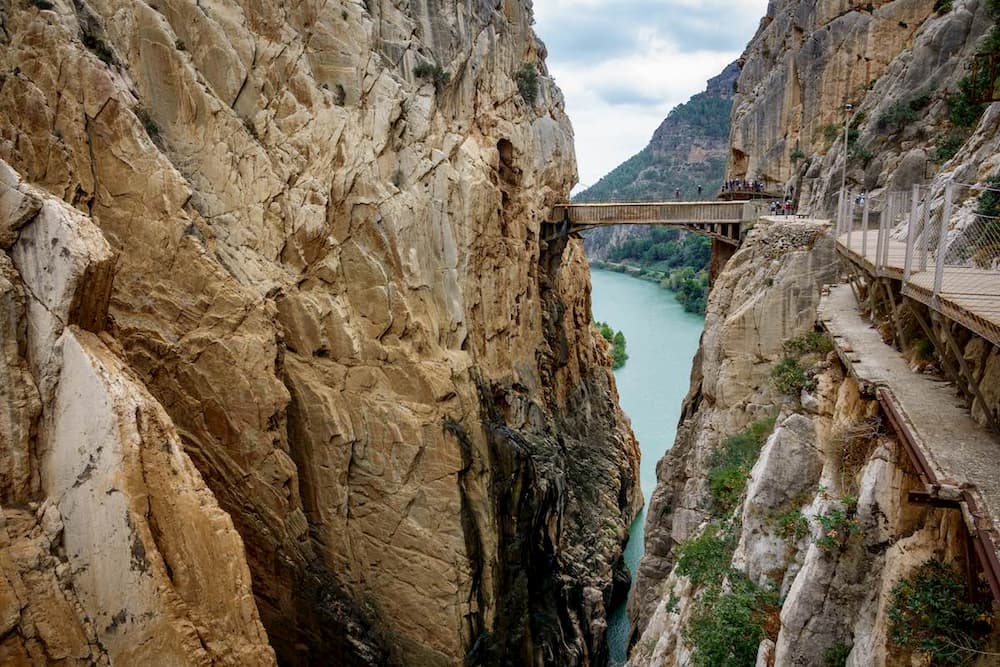
Torcal de Antequera Natural Park lies approximately one hour’s drive north of Malaga, covering 20 km2. Bizarre mountain ridges formed 160 million years ago from various types of limestone. Three official routes: 1.5 km, 2.5 km and 4.5 km. From the longest route’s viewpoint, a park panorama opens; on clear days, Africa’s coast is reportedly visible. Several hundred plant species, 30 orchid species and over a hundred animal species. Free entry, daytime visits only.
8. Property in Malaga
The residential property market in Malaga province weathered the pandemic relatively well. While prices in the provincial capital continued to rise, the coast saw some slowdown due to restricted international buyer travel.
Several factors drove price growth: lockdown lifting, free purchasing opportunities, significant demand from relocators attracted by quality of life, and expanded supply of better-quality premium housing.
In 2020, over 24,600 property transactions were completed in the province - half of all Andalusia’s volume. Around 5,000 were new-builds, up 52% on 2019. The average new-build price in Malaga city rose from EUR 216,713 (2017) to EUR 340,387 (2020) - a 50% increase.
In 2021, the market showed significant growth in both sales and average prices, mainly driven by prestigious eastern and western districts.
According to Idealista (November 2021), the average price per square metre in Malaga reached EUR 2,173 - up 3.5% year-on-year and 1.6% compared to Q2 2021.
Property Prices in Malaga by Type
- New-build, 1 bedroom, sea views (62 m2 + 4 m2 terrace): EUR 144,000
- Luxury apartment, 4 bedrooms (267 m2, terrace 98 m2): EUR 2,213,000
- 3 bedrooms (97.40 m2 living area, terrace 12.30 m2, garden 73.24 m2): EUR 304,000
- Penthouse, 3 bedrooms (88 m2): EUR 565,000
How Have Property Prices Changed in Malaga Over the Last Six Years?
Average prices per square metre show steady growth from January 2015 (EUR 1,557/m2) to November 2021 (EUR 2,175/m2) - approximately 40% growth over six years, with minor fluctuations during the pandemic months of 2020.