San Pedro del Pinatar: Guide to Living, Holidays and Buying Property

1. General Information
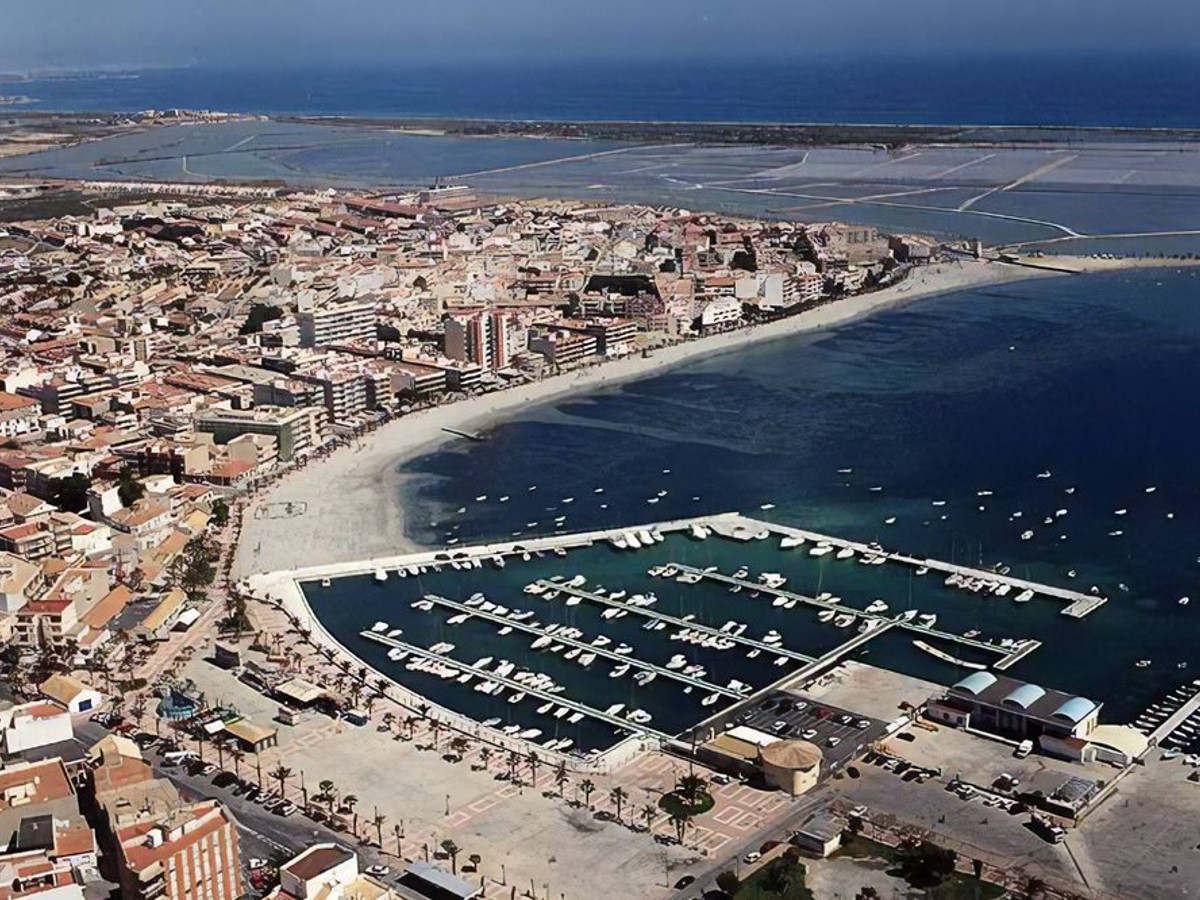
San Pedro del Pinatar is located in Murcia province, on a peninsula bounded by the Mediterranean Sea and the Mar Menor lagoon. Municipality area: 22 square kilometres, population 25,167 (2018).
The town received its name in the 17th century from a chapel dedicated to Saint Peter the Apostle, built by Franciscans. Previously the settlement was called El Pinatar, as it was situated amid extensive pine forests.
San Pedro del Pinatar on the Map of Spain
The town is 37 km from Cartagena, 58 km from Murcia and 22 km from Torrevieja. Accessible via the AP-7 motorway (exit 775) or the N-332 road.
Three marinas operate on the coast: Villa de San Pedro, Marina de Salinas and Lo Pagan, oriented towards fishing and recreation.
How to Get to San Pedro del Pinatar
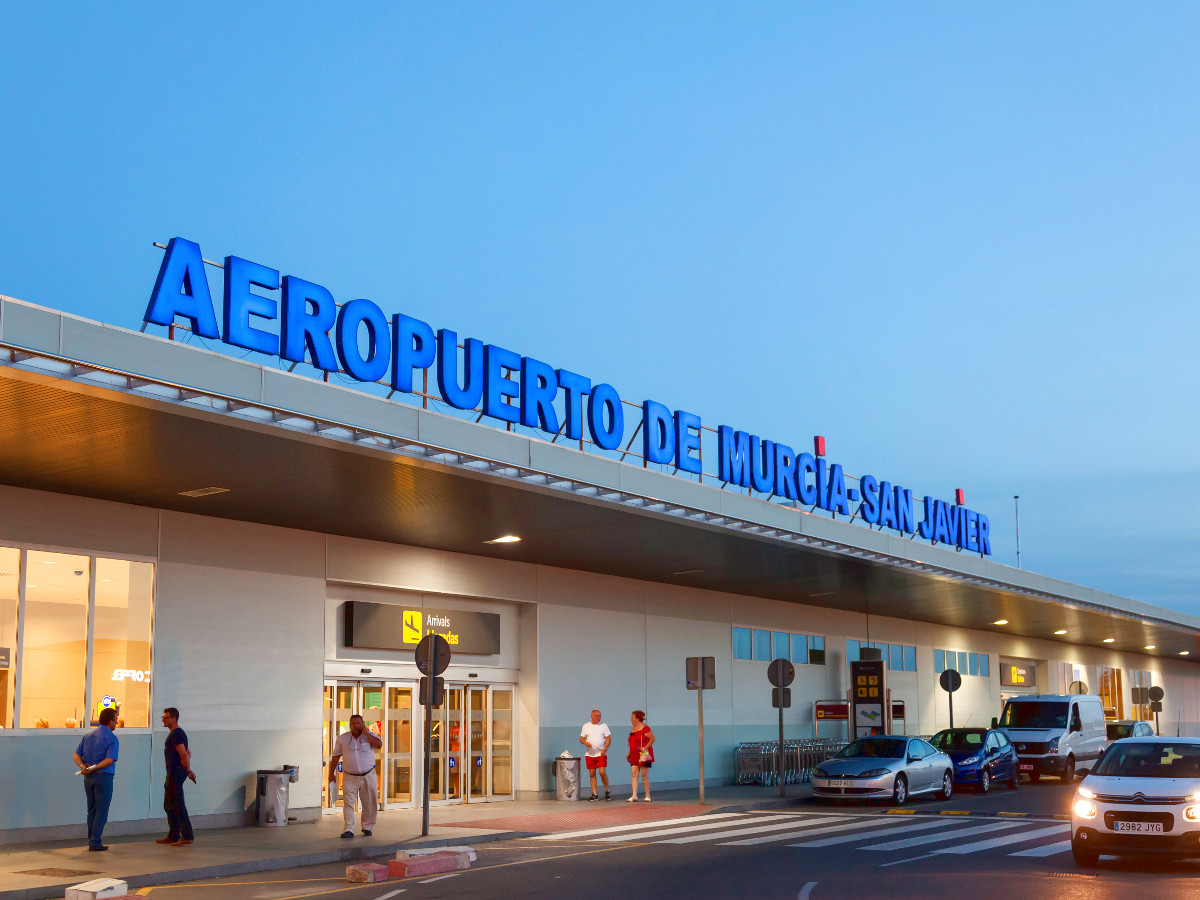
From Corvera Airport (Murcia), 40 km away, the InterBus runs to Mar Menor with final stop in San Pedro. Fare: EUR 10, journey time 1.5 hours.
From Alicante Airport (74 km), Globalia Autocares bus. Journey time approximately 2 hours, fare approximately EUR 5.
More comfortable but less budget options: taxi, car rental or transfer service.
2. Climate and Weather
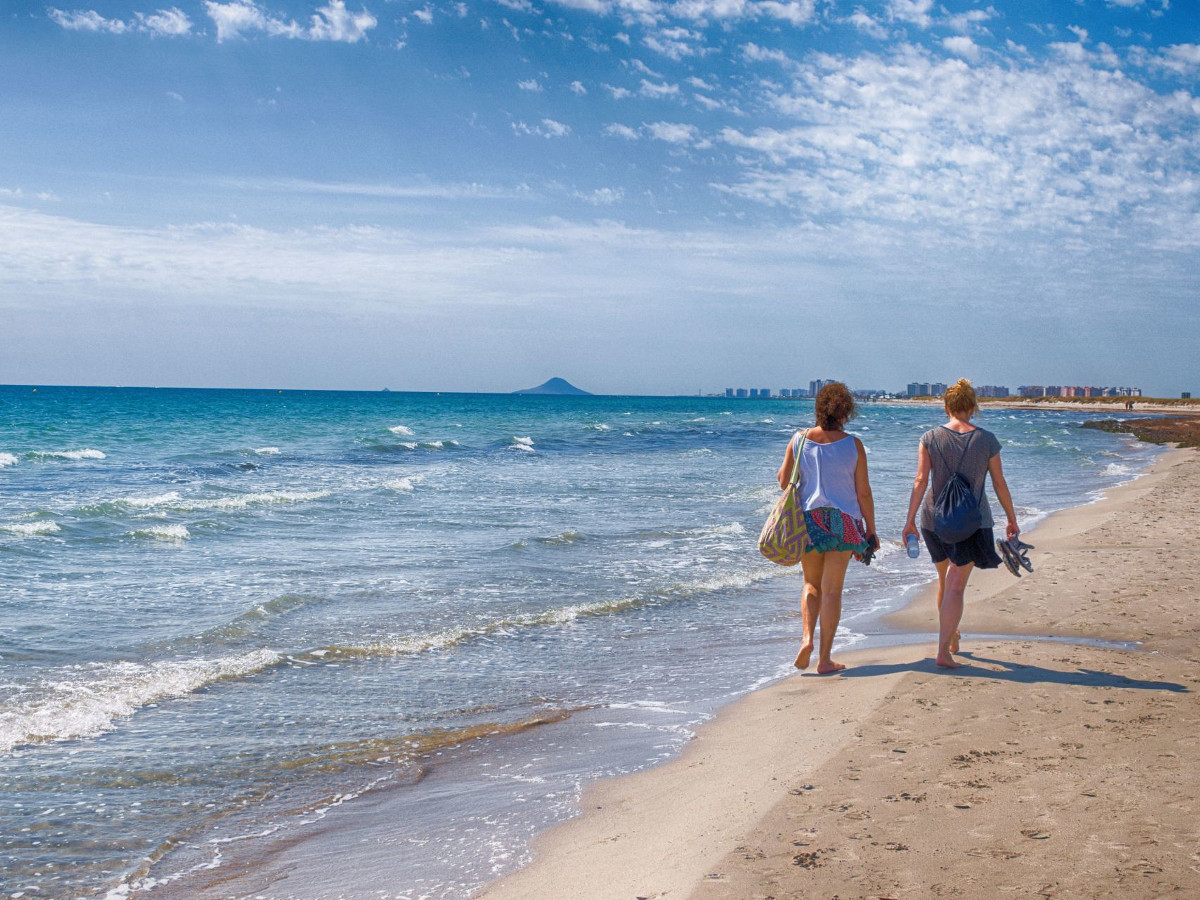
Semi-arid Mediterranean climate with approximately 2,500 sunshine hours per year. Mild winters and fairly hot summers. Average annual temperature 17 C; winter maximum 15 C, summer 28 C. Minimums range from 6 to 19 C respectively.
Average sea temperature in the hottest month, August, reaches 26.8 C; in July and September 25.5 C. In June and October, water warms to 22-23 C.
San Pedro del Pinatar. 7-Day Weather Forecast
3. History
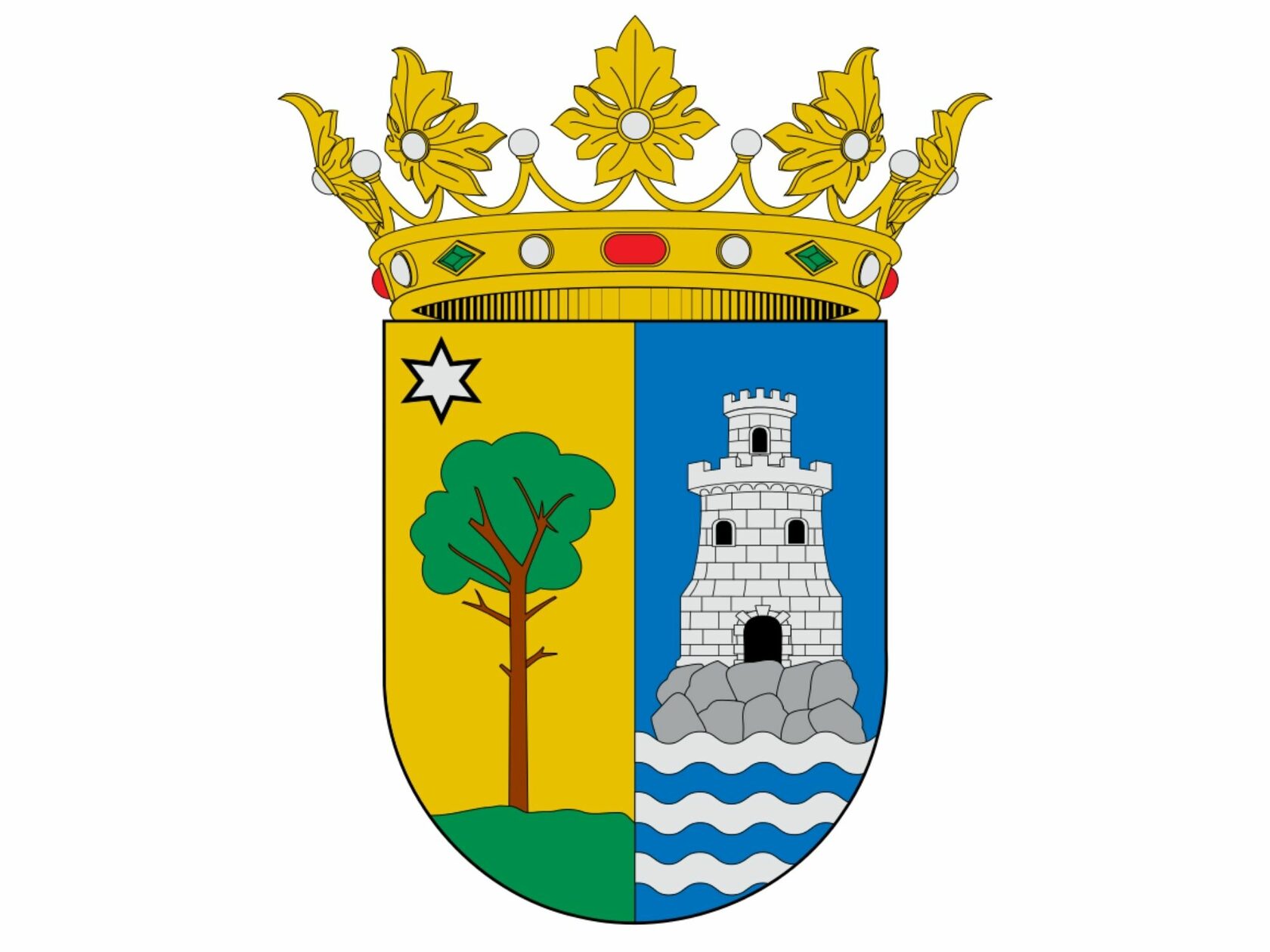
During the Palaeolithic, an Iberian settlement existed on the territory. Archaeological finds indicate Phoenician traders from 2600 BC. Under the Romans, El Pinatar became a salt extraction site. The Arab fishing technique “encanizadas” (circular labyrinth traps) survives and is still used only in San Pedro del Pinatar on the Mar Menor.
After the Christian conquest in 1243, King Alfonso X incorporated the territory into the Crown of Castile. In the 16th-17th centuries, watchtowers were built against Berber pirates. In the 17th century, Franciscans founded the chapel of Saint Peter, giving the settlement its current name. The first independent town council was created in 1836. The 20th century brought two serious floods (1919 and 1987) and significant population growth from the tourism boom.
4. Beaches
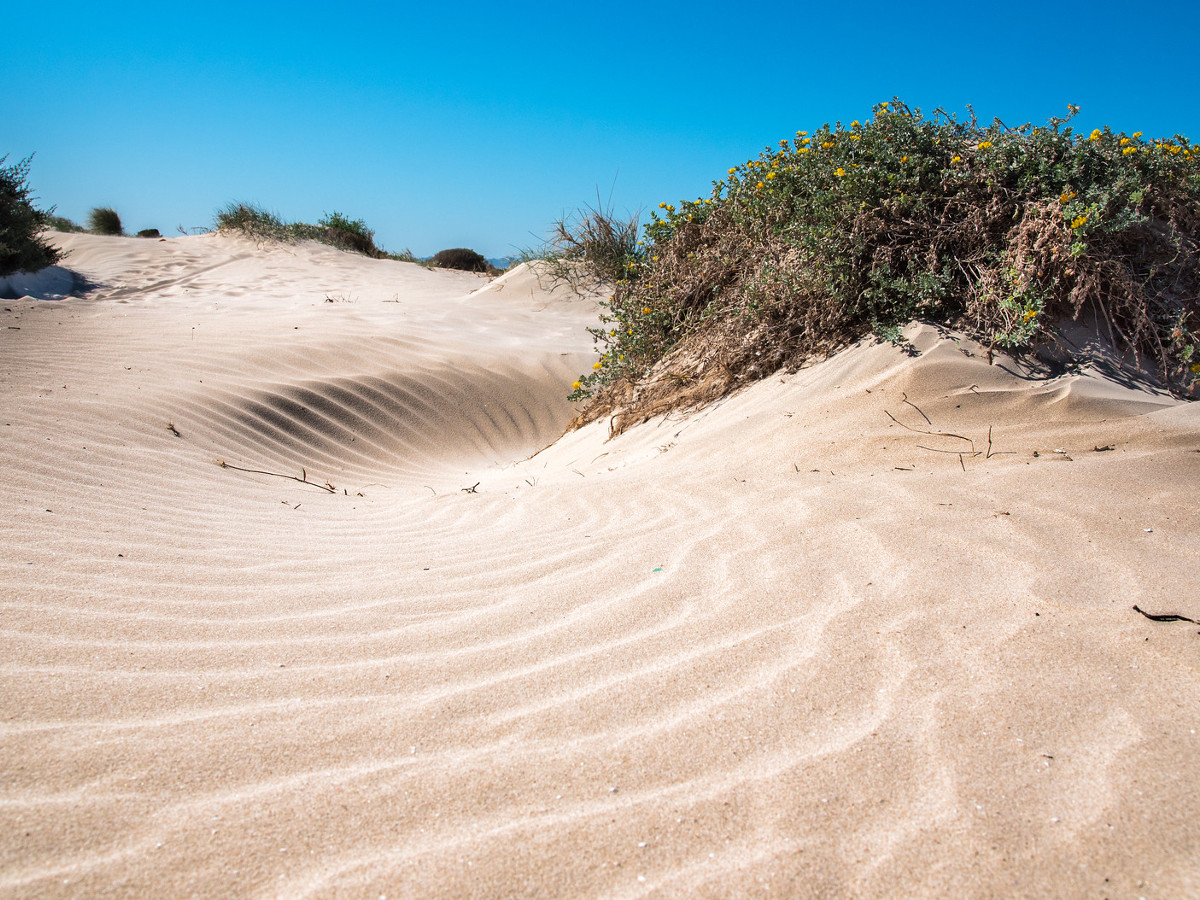
Part of San Pedro sits on a small peninsula, with the Mediterranean on one side and the Mar Menor lagoon on the other. 14 km of coastline with excellent beaches between two seas.
On the Mar Menor side: Playa de la Mota, Playa de Villananitos, Playa de la Puntica. On the Mediterranean side: Playa el Mojon, Playa de la Torre Derribada, Playa de las Salinas, Playa Punta de Algas, Playa de la Barraca Quemada.
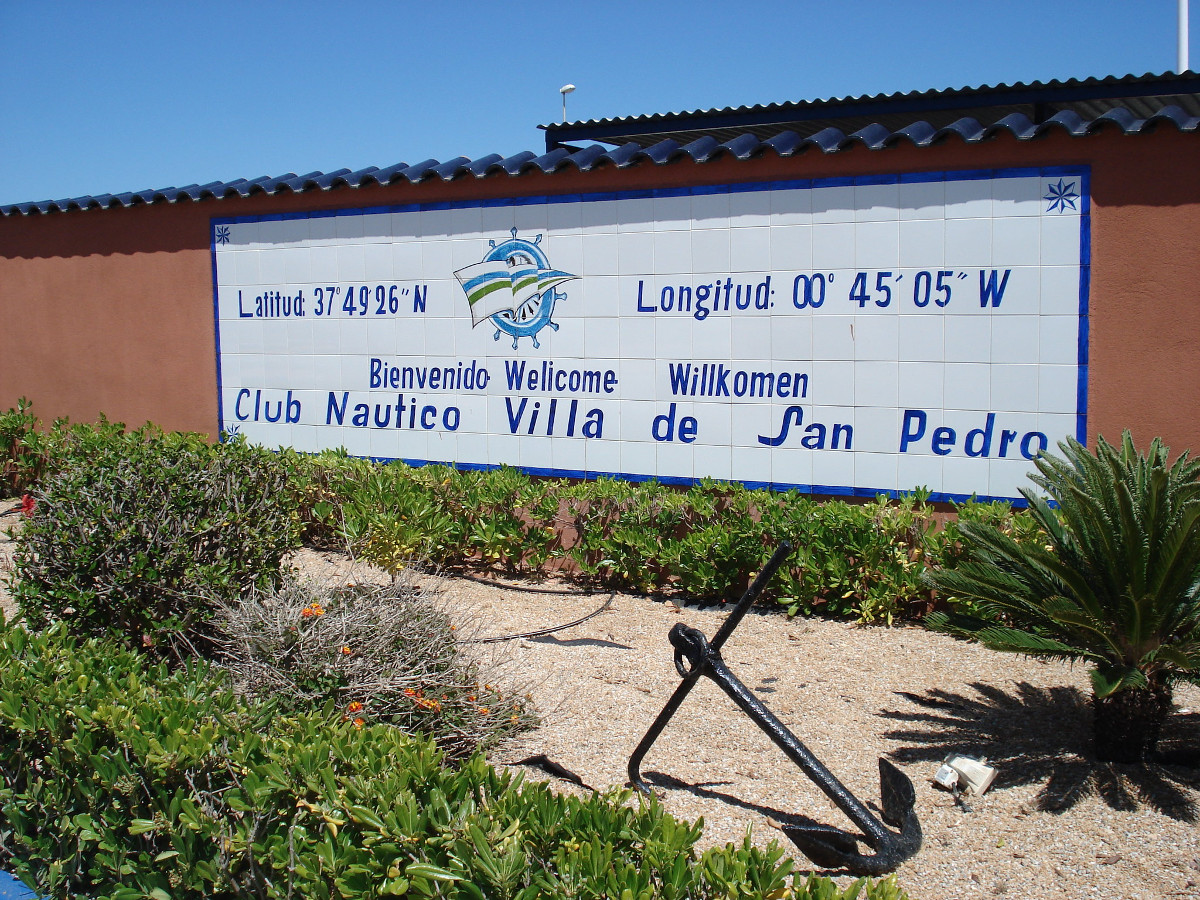
Beaches Las Salinas, Barraca Quemada and Punta de Algas form the 3-km La Llana coast with dunes, part of the protected Salinas y Arenales natural park. Playa de las Salinas is the closest to the port, popular thanks to good access and parking. Playa de la Barraca Quemada is recognisable by its group of scenic palms. Playa Punta de Algas is the farthest from the port, where Mediterranean and Mar Menor waters meet. In 1976, the sunken island of San Ferreol was discovered here, inhabited in the 1st century.
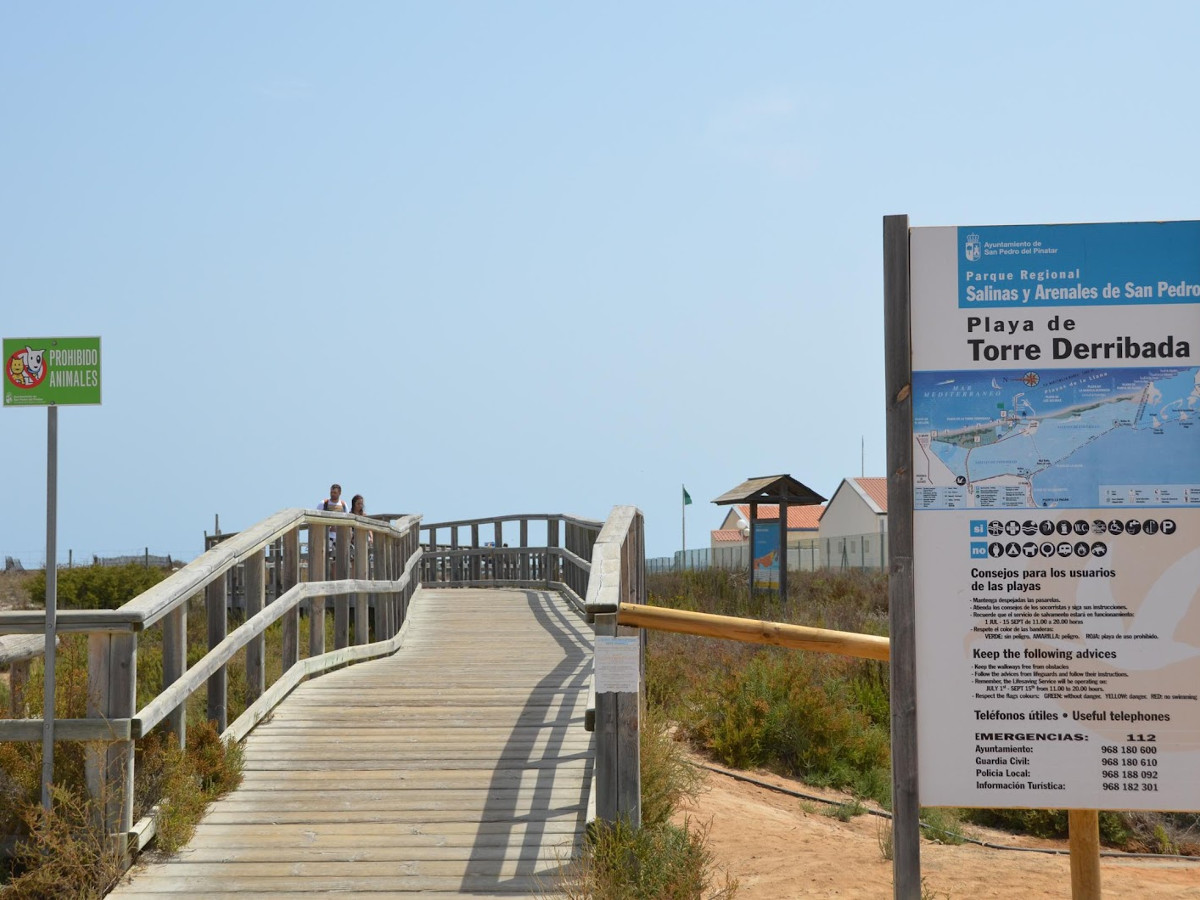
Playa de la Torre Derribada (“Fallen Tower Beach”) is one of the most modern beaches, stretching over 2 km of fine golden sand. On the Mar Menor coast, 1-km La Mota beach features dark sand with picturesque salt mills. Villananitos (700 m) has crystal-clear water and full infrastructure. Playa de la Puntica is the oldest beach on the Mar Menor, used for swimming since the late 19th century.
5. Attractions and Museums
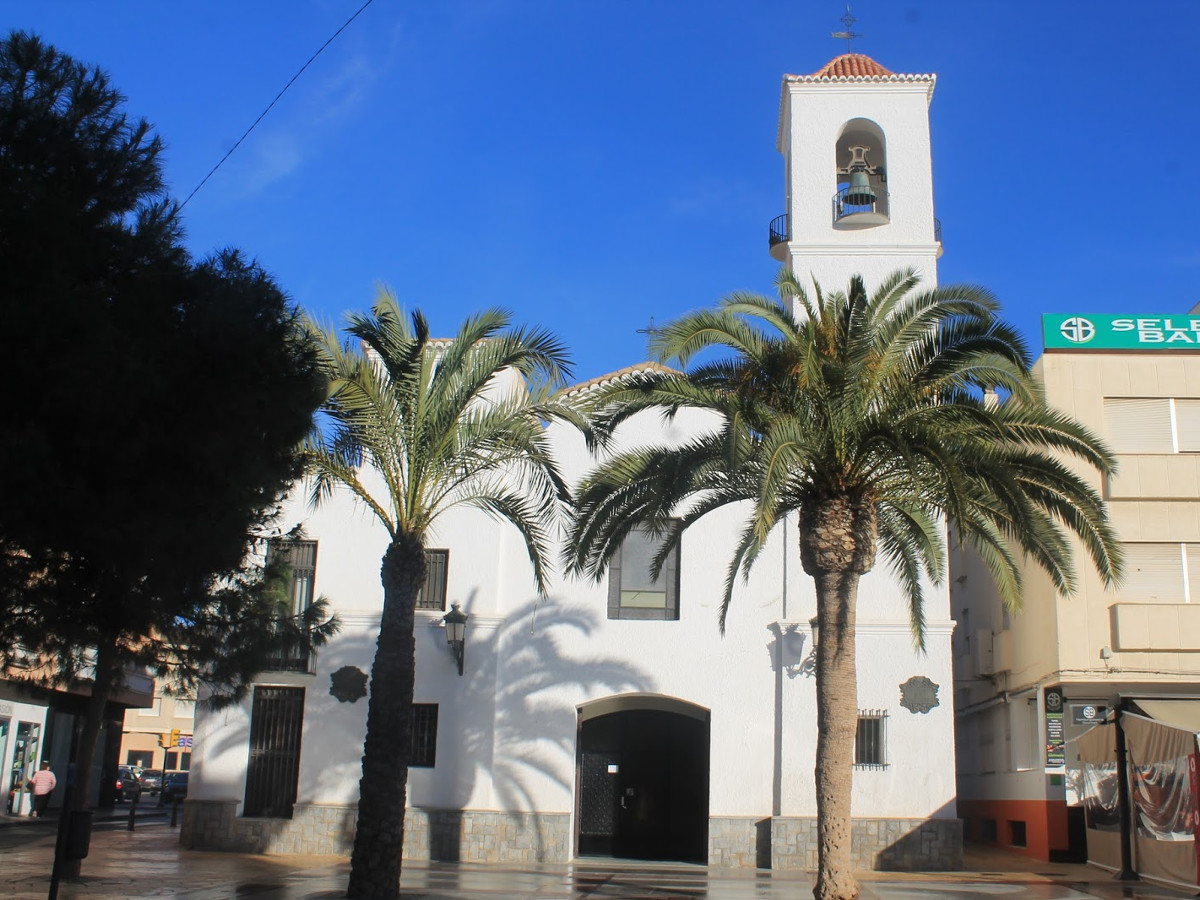
In the town centre stands the Church of Saint Peter the Apostle (Iglesia de San Pedro Apostol), built by Franciscans in the 17th century. A simple but expressive white temple.
The Casa del Reloj (House of the Clock) is a modernist building from 1888-1895 where the first Spanish Republic president, Emilio Castelar y Ripoll, died in 1899. Cultural Interest Site since 1995.
The Baron de Benifayo Palace is a neo-Mudejar brick palace completed in 1892, now housing the Archaeological-Ethnographic Museum with Roman, Phoenician, Carthaginian and Arab artefacts.
The Museum of the Sea (Museo del Mar) features sea shells, fishing tool miniatures, nautical knots and navigational charts.
6. Active and Healthy Recreation, Mud Therapy
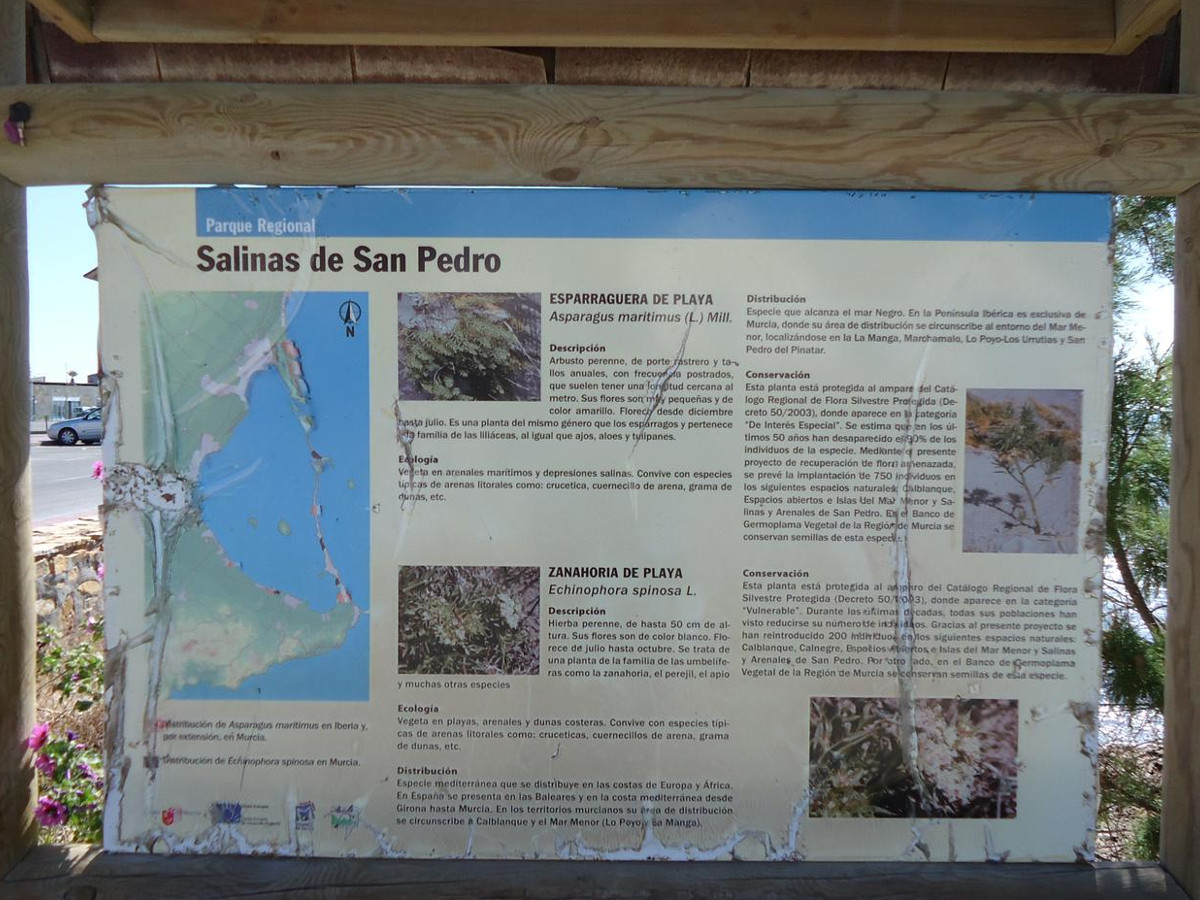
The Salinas y Arenales de San Pedro del Pinatar natural park covers almost 900 hectares of coastal wetlands. Natural reserve since 1985, regional park since 1992, Special Protection Area for Birds (ZEPA) since 1998.
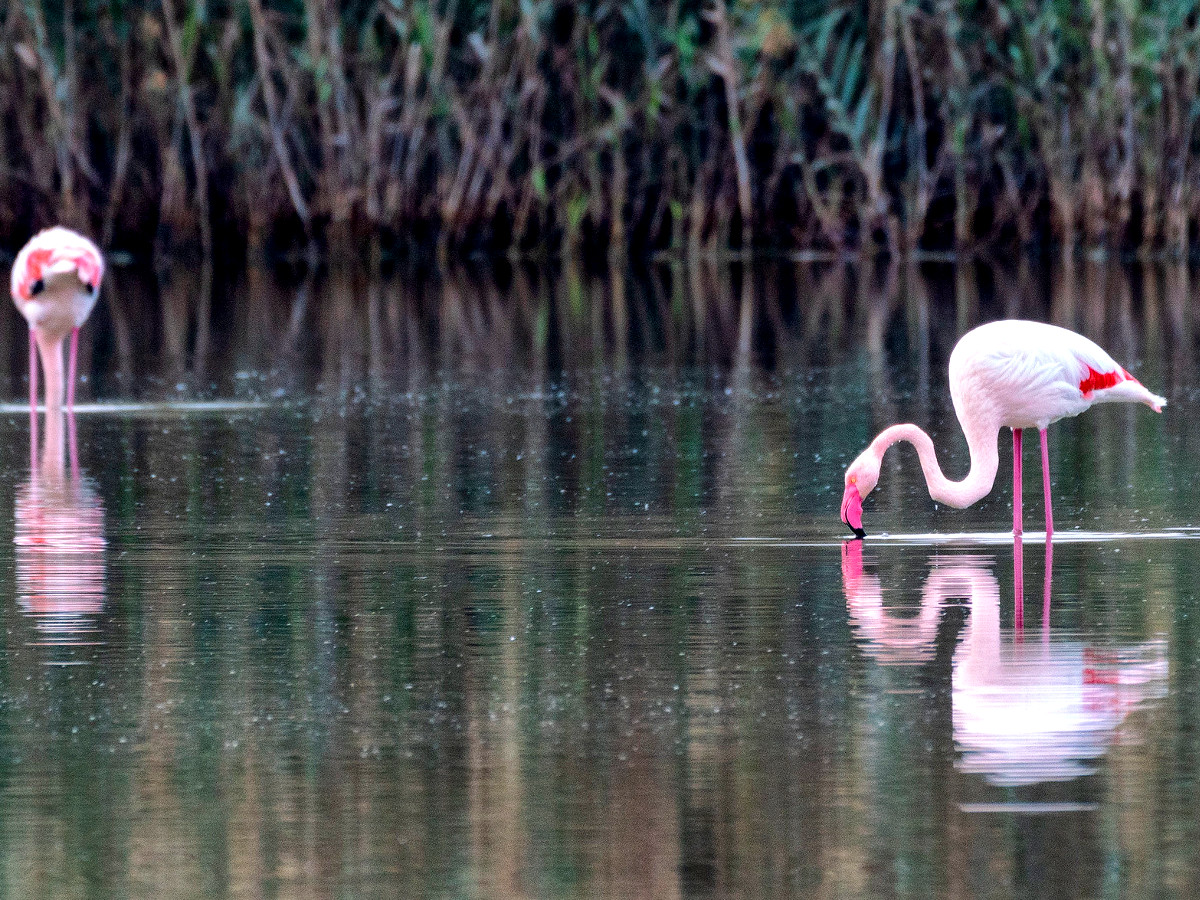
The park unites diverse ecosystems: salt lakes, pine forests, reed beds, salt marshes, dunes and encanizadas (old Moorish fishing systems). Rich in endemic species including the unique Mar Menor asparagus. Bird highlights include avocets, flamingos, herons, cormorants and many more.
Mud Baths in San Pedro del Pinatar
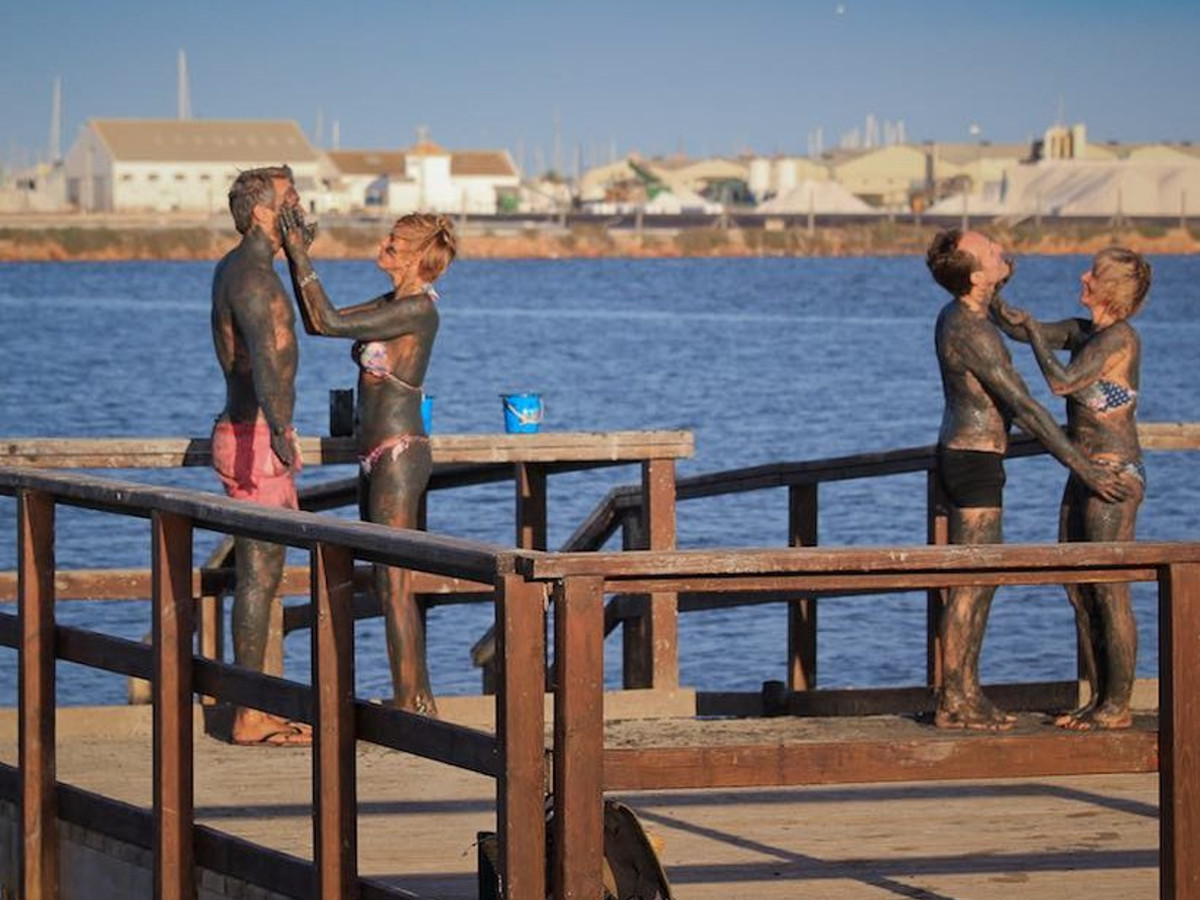
San Pedro boasts one of Europe’s largest open-air mud bath facilities. University of Murcia research (1995) confirmed elevated mineral content (calcium, magnesium, potassium, chlorides, sulphates).
Mud therapy is effective for rheumatism, joint diseases and skin conditions. Application: apply a thick layer, wait 15-25 minutes in the sun, then immediately rinse with salt water.
Popular locations: Lo Pagan, Playa de la Mota, Las Charcas (near the lake in the nature park).
Salt Baths
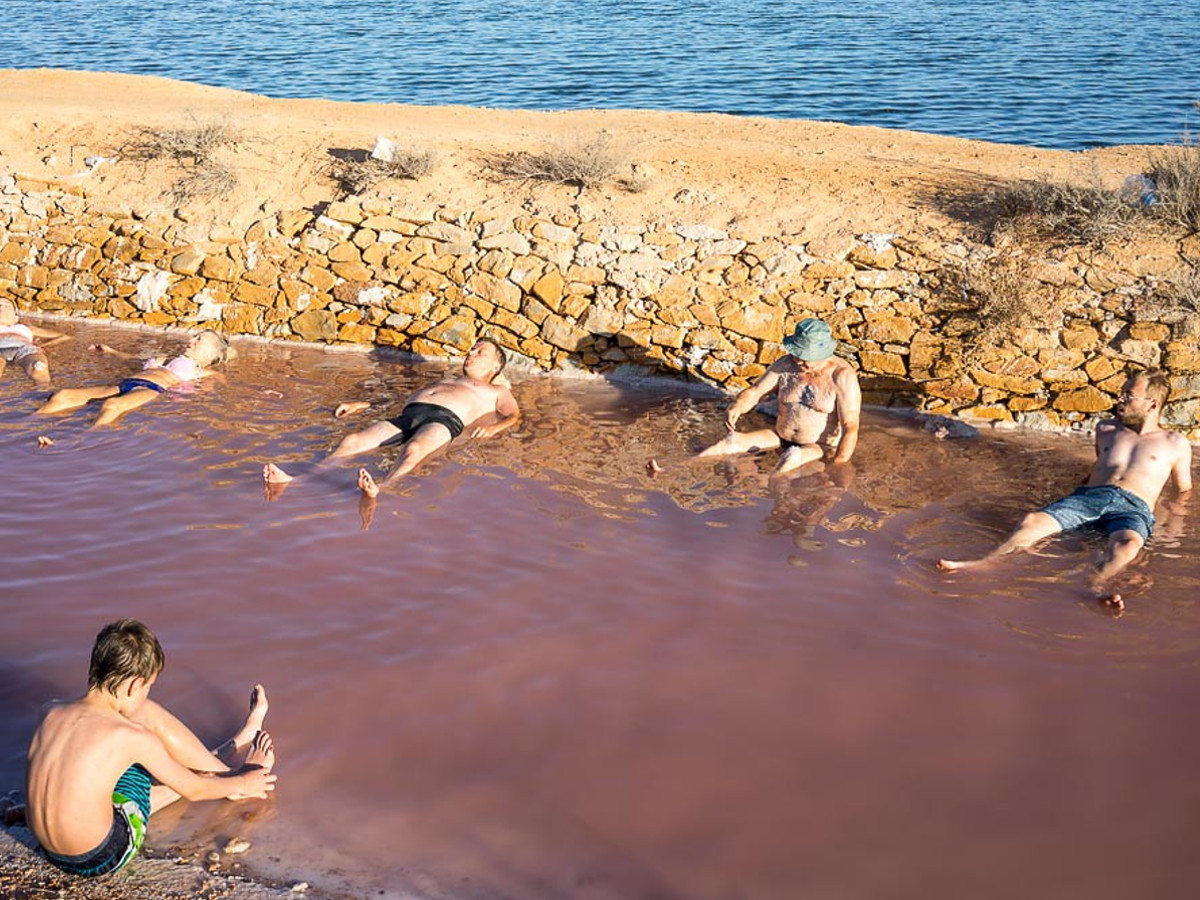
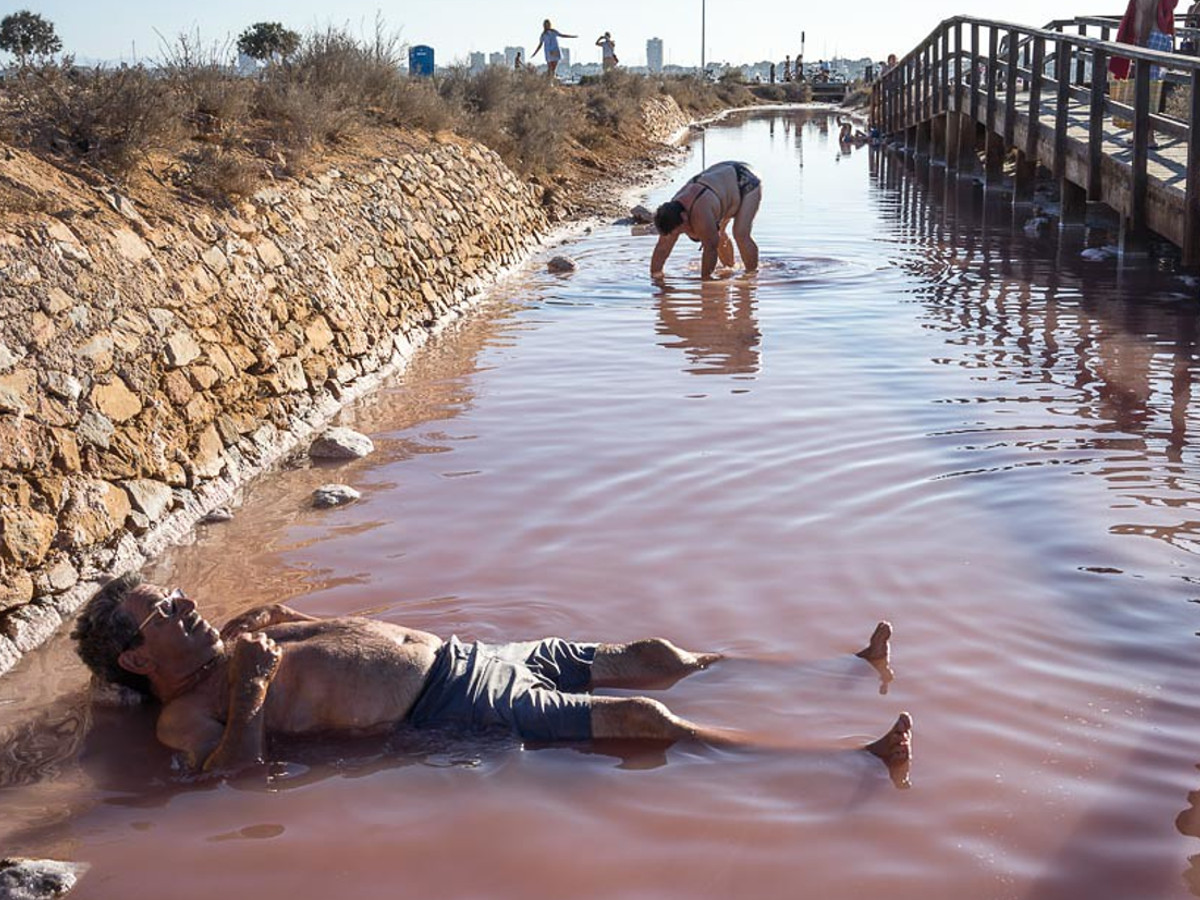
Salt lakes in the natural park offer additional therapeutic benefits from bathing.
7. Festivals
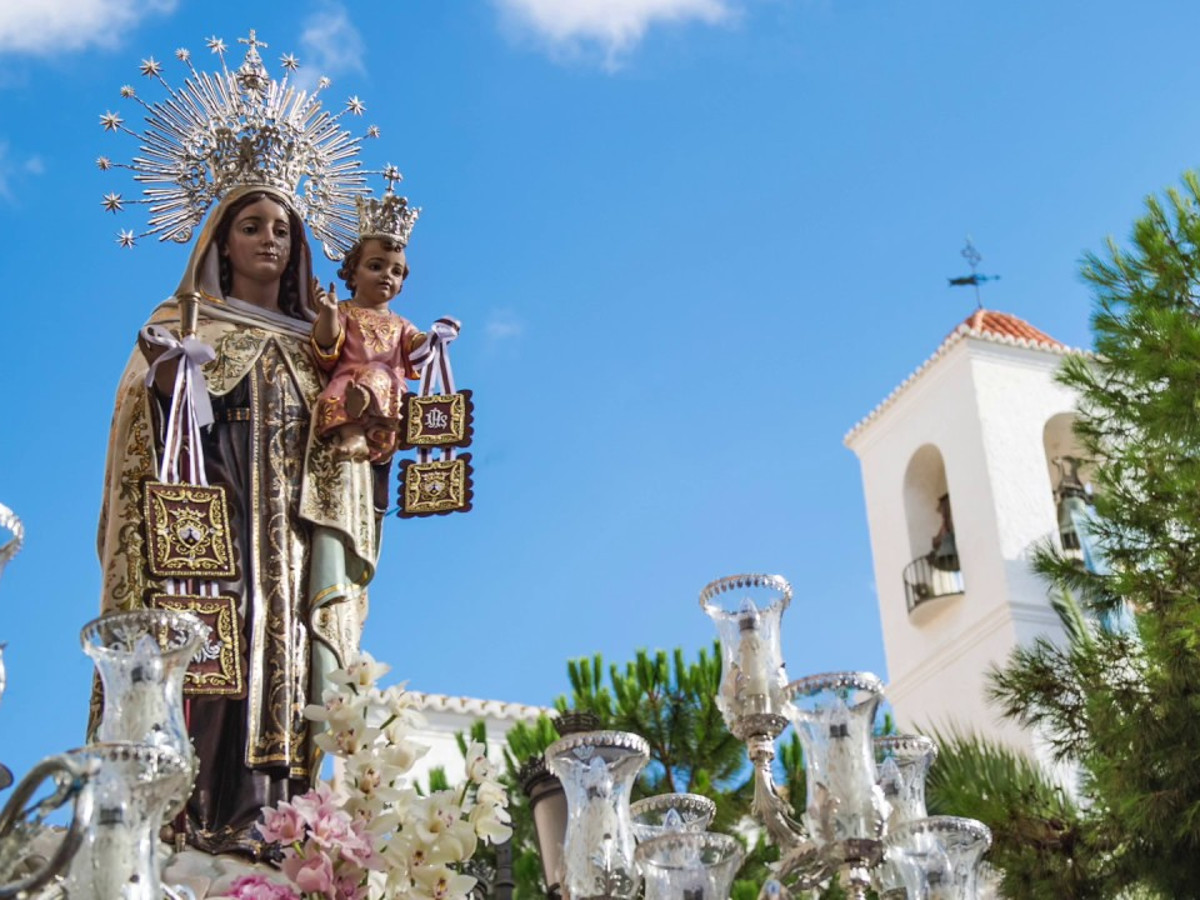
The Feast of the Virgin of Carmen (16 July) is the main local festival: a pilgrimage and maritime procession on the Mar Menor lagoon, outdoor mass, traditional “caldero del Mar Menor” cooking, midnight fireworks, and dawn return procession to the church singing “Salve Marinera” - the official Spanish Navy hymn.
Three Kings Cavalcade (5 January) and all standard Spanish celebrations.
8. Gastronomy and Restaurants
Fish and seafood are the undisputed foundation of San Pedro’s cuisine. Most typical dish: caldero (rice with fish, bream or mullet, nora pepper and paprika). Also popular: salt bream, langoustines, fried whitebait, mullet roe and mojama (dried salt-cured tuna with almonds).
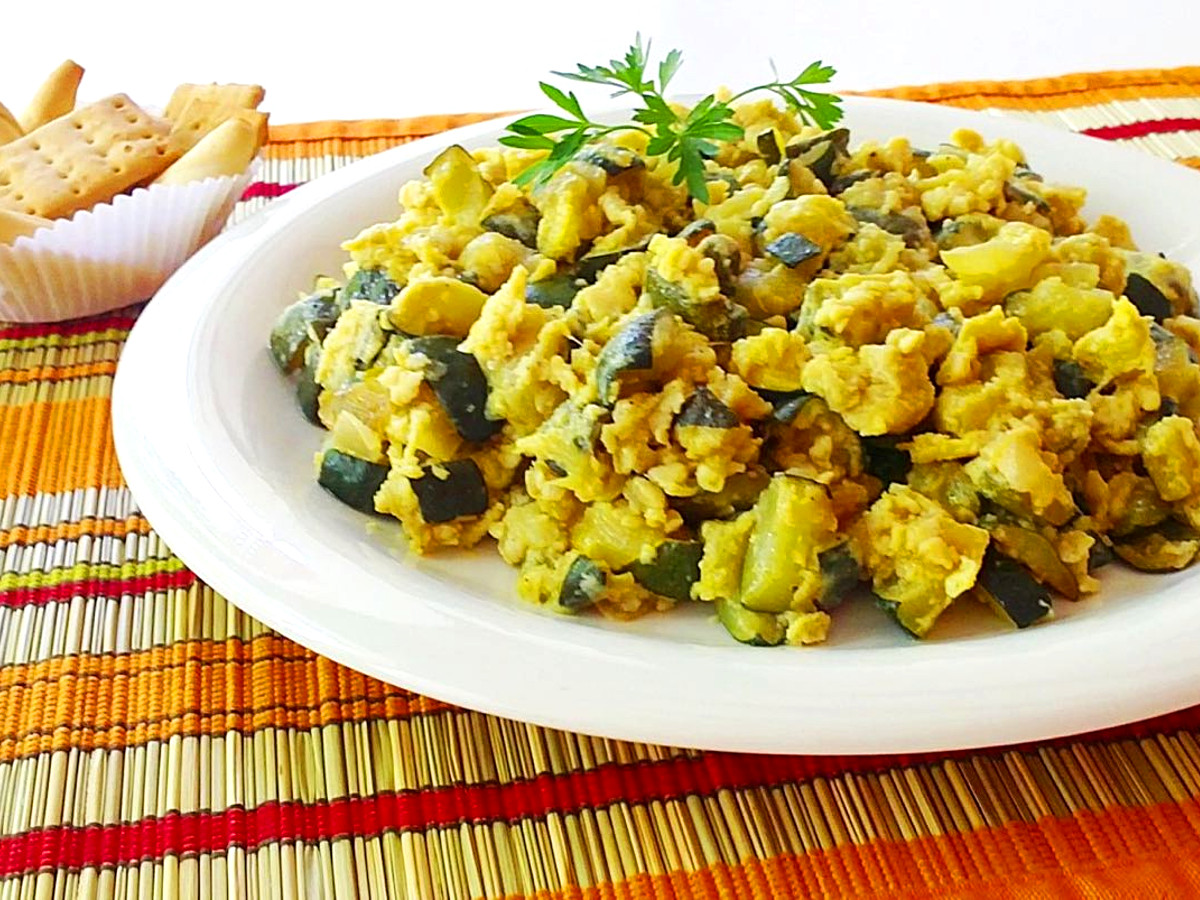
Hot dishes: zarangollo (omelette with courgettes), bean tortilla, michirones (bean stew with bacon), broth with meatballs. Sweets: almond biscuits, tocino de cielo, pan de calatrava, rollos de jerez.
Restaurants: MardeSal at the port, Porto Chico (great value), Juan Mari (Michelin-recommended), Hogar del Pescador El Parras and El Castillo, Venezuela at the yacht club. International: Italian El Rincon Italiano, Portuguese Domingos El Portugues, Indian Red Rose and Max Beach.
9. Hotels
4-star Thalasia Costa de Murcia and Lodomar Spa & Talasoterapia (spa, thalassotherapy, mud therapy, EUR 50-105/night). Traina (4-star, EUR 55-105). Bahia (3-star, EUR 55-85). La Puntica (2-star, EUR 36-60 with breakfast). Villa Sky rental: 3 bedrooms, terrace, garden, pool, up to 6 people, EUR 100-170.
10. Property in San Pedro del Pinatar
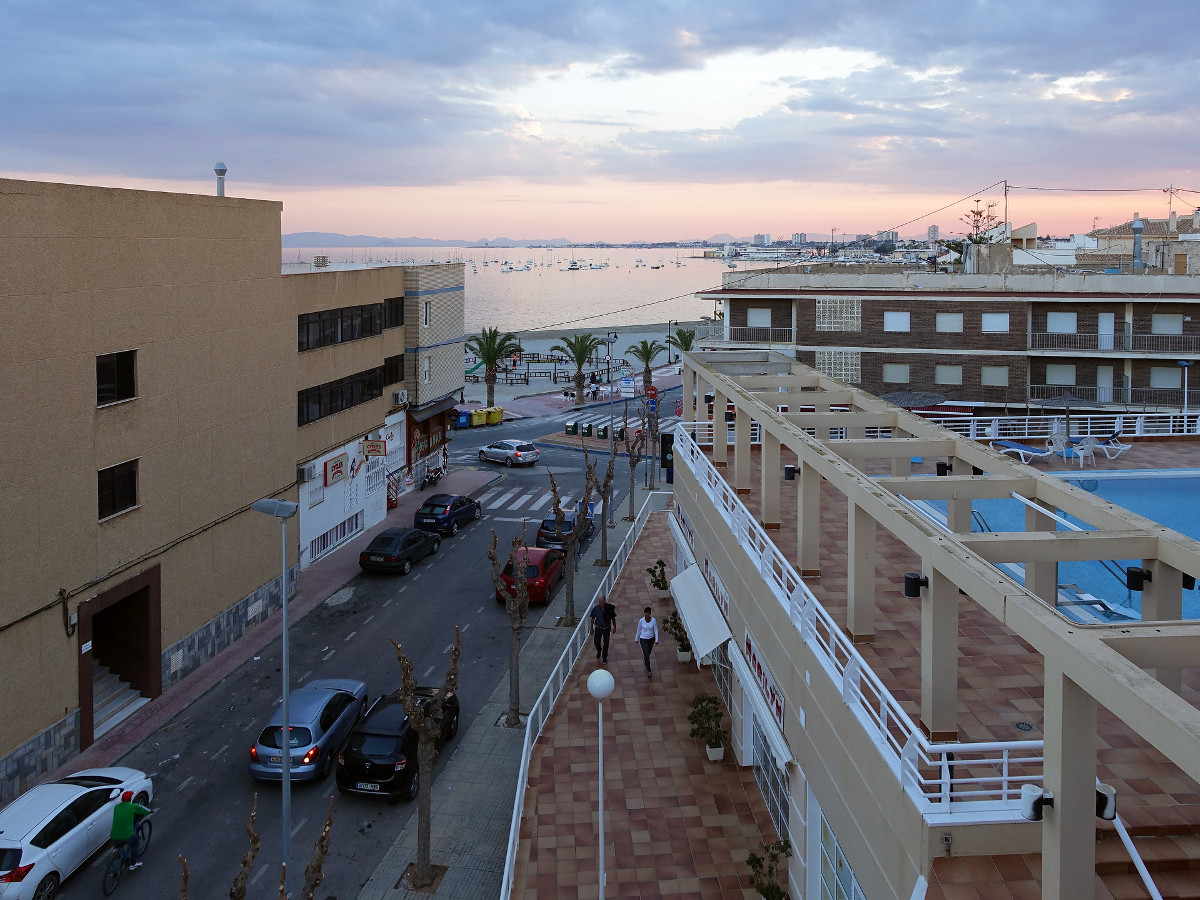
As primarily a coastal resort, property prices are determined by this factor. Generally more expensive than the Murcia provincial average at just over EUR 1,700/m2. Greatest demand: near the sea and Mar Menor lagoon.
Resale: studios from EUR 60,000, 1-bed from EUR 70,000, 2-bed from EUR 80,000, duplexes/townhouses from EUR 120,000.
New-build: villas from EUR 300,000, duplexes/townhouses from EUR 170,000, apartments from EUR 130,000.
Average rental yield: 5% annually.
Examples:
- Studio, 50 m2, 1,500 m to sea (resale): from EUR 50,000
- 1-bed apartment, 1,000 m to sea (resale): from EUR 70,000
- Townhouse, 500 m to sea (resale): from EUR 120,000
- Villa, up to 500 m to sea (new-build): from EUR 350,000
- 1-bed apartment, 1,000 m to sea (new-build): from EUR 130,000
11. Conclusion
San Pedro del Pinatar suits diverse scenarios: active holidays (yachting, cycling, hiking), beach relaxation, family holidays in shallow coves, and retirement living with mud therapy and thalassotherapy. The town sits at a major transport crossroads with equally convenient access to Murcia, Cartagena and Alicante.