Seaside Apartments in Turkey — Costs from Budget to Luxury 2026
Contents
Turkey’s coastline stretches nearly eight thousand kilometres — from the Aegean Sea in the west to the Mediterranean in the south and the Black Sea in the north. An apartment with a sea view here can cost you anywhere from $45,000 to well over half a million. The gap is enormous, and it comes down to far more than floor space or the number of bedrooms. The city, the specific neighbourhood, distance from the beach, age of the building, on-site amenities, floor level, which direction the windows face — all of these shape the final price, and sometimes a single factor outweighs everything else.
For someone just starting to explore property in Turkey, navigating this variety is no easy task. Listings on property portals are full of tempting numbers, but behind the polished renders the reality isn’t always as rosy. We wrote this guide so you can get a clear-eyed picture of what you’ll actually get for your money in each price bracket, where to look, what the pitfalls are, and what to pay attention to so that your seaside purchase lives up to expectations.
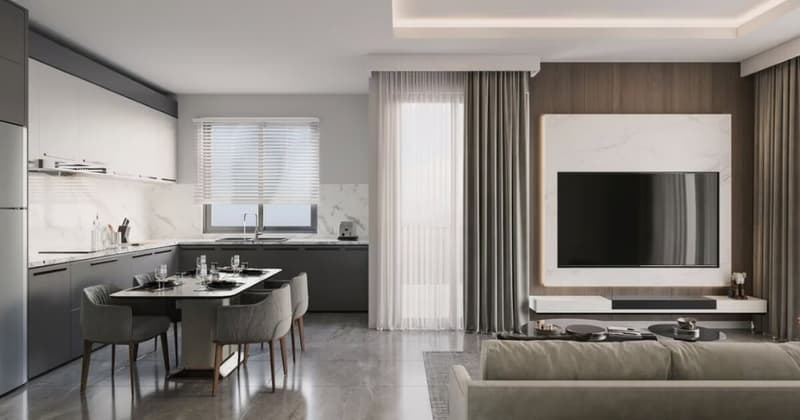
What Counts as “By the Sea”: Distance, First and Second Line
Before comparing prices and cities, it’s worth understanding the terminology — because “seaside apartment” in Turkey is a remarkably elastic term, and agencies sometimes stretch it to breaking point. In one listing, “by the sea” might mean 50 metres from the water; in another, it’s a kilometre and a half across a busy highway. There’s no legally defined meaning of “first line” in Turkey, so the market relies on rough conventions.
First line means the distance from your building entrance to the water’s edge is somewhere between 0 and about 300 metres. Ideally, there are no roads or other buildings between you and the sea, though in practice this isn’t always the case. The key point: you step outside and you’re at the beach within a couple of minutes. These properties are objectively scarce — coastline is physically limited and building regulations near the shore are tightening every year. This is precisely why first-line real estate commands a significant premium and generally holds its value best through any market fluctuations.
Second line means 300 metres to one kilometre. A 10–15 minute walk at a leisurely pace. This is the largest segment of the market: the bulk of new development in resort towns like Alanya and Antalya sits here. Prices are noticeably lower than first line — the difference can reach 30–40% for an otherwise identical apartment — and the quality of everyday life is often comparable. Especially if the residential complex runs its own shuttle to the beach, which is quite common in Turkey.
“Near the sea” typically refers to one to three kilometres away. Technically the sea is close by, and you might catch a glimpse of it from upper-floor balconies, but walking to the beach isn’t especially comfortable — particularly in the summer heat. The trade-off? Lowest prices and often better everyday infrastructure than on the first line: shops, restaurants, pharmacies, schools, banks — all within walking distance. Many buyers looking for affordable coastal property in Turkey end up choosing this option — and are happy with it, because for daily life, convenient infrastructure often matters more than five extra minutes to the beach.
An important nuance: distance to the sea isn’t everything. Terrain matters (walking uphill from the beach is a reality in many Alanya districts), as does whether there’s a main road between your building and the shore, what type of beach it is (municipal or private), and even which direction your windows face. An apartment 200 metres from the sea but overlooking the neighbouring hotel’s car park is a very different proposition from one 500 metres away but with a panoramic bay view.
Budget Segment: Apartments Under $60,000
Yes, buying a seaside apartment in Turkey for $45,000–60,000 is entirely possible. What’s more, there’s a reasonably wide selection at this price point. But you need to understand exactly what that money gets you, and keep your expectations realistic.
Where to Look
The main budget locations are Mahmutlar, Gazipaşa, and Mersin.
Mahmutlar is a district of Alanya, located roughly 12 kilometres east of the city centre. For years, it’s been the primary entry point for foreign buyers — Scandinavians, Germans, and Russians in particular. Development here is dense, with plenty of buildings from 2010–2015, and the resale market regularly turns up apartments at very attractive prices. The beach is long and pebbly, with municipal stretches. On the downside: the area is quite noisy in season, and the architecture isn’t always easy on the eye — many buildings went up during a mass-construction era when aesthetics weren’t a priority.
Gazipaşa is a quiet town about 40 kilometres east of Alanya. It gained popularity after the Gazipaşa-Alanya airport opened in 2010, handling international flights. Gazipaşa offers a different pace of life: fewer tourists, more locals, calm streets, and banana plantations on the outskirts. Property prices are significantly lower than in Alanya proper, and the sea is clean and uncrowded. For those seeking peace and low prices, it’s an excellent option. The flip side is less developed infrastructure: there are no large shopping centres, and serious retail therapy means a drive to Alanya.
Mersin is a large city of over a million people, located west of Antalya (between Antalya and Adana). The property market here is driven mainly by domestic Turkish buyers rather than foreigners, which explains the comparatively low prices. Mersin is a fully functioning city with universities, hospitals, shopping centres, and a long waterfront promenade. The sea here isn’t quite as picture-postcard as in Alanya, but for those seeking a genuine life by the sea at a reasonable price, it’s well worth considering.
What You Get
At this budget, expect a 1+1 apartment — one bedroom plus a living room with an open kitchen, total area 45–65 square metres. This is usually resale: a building that’s 5–15 years old, sometimes without a lift or with just one serving the entire block. Distance to the sea: 500 metres to a kilometre and a half.
There’s unlikely to be a pool or gym in the building — or if there is, it’ll be minimal: a small open-air pool in the courtyard, maintained collectively by the residents. The interior is functional but not fresh: porcelain floor tiles, a basic kitchen, standard bathroom fittings. For comfortable living, many buyers budget an extra $3,000–7,000 for a cosmetic refresh — new furniture, a fresh coat of paint, updated light fixtures.
Towards the upper end of the budget ($55,000–60,000), you occasionally find units in newer budget complexes with a shared pool and basic amenities. These tend to be further from the water, though — a kilometre to a kilometre and a half — and in areas that are still developing.
Who It’s For
The budget segment is ideal for buyers looking for a summer base for a couple of months a year — arrive in May, leave in September, and rent the place out short-term the rest of the time to cover maintenance costs. It’s also a solid option for investors who want to enter the Turkish market at the lowest possible threshold and test how rentals perform in a specific area.
For year-round living, apartments in this segment work with caveats: you can live perfectly comfortably, but you need to be prepared for the absence of certain conveniences that residents of pricier complexes take for granted.
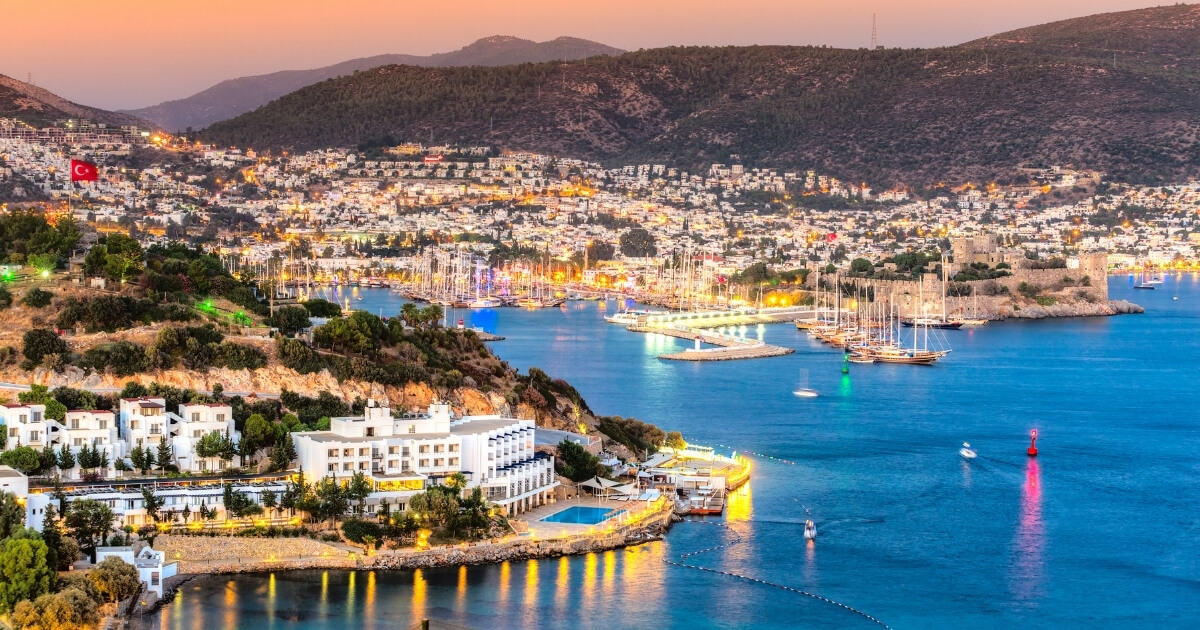
Mid-Range: $60,000 – $150,000
This is the most popular price bracket on the Turkish coast — it’s where the largest number of both listings and buyers are concentrated. It’s the segment where most foreigners make their first purchase, and it’s where the price-to-quality ratio is arguably the best anywhere on the Turkish market.
Where to Look
Kestel and Avsallar are two popular districts of Alanya, each with its own character. Kestel sits west of the centre, between Alanya and Mahmutlar, and is known for having the famous Cleopatra Beach within walking distance. Avsallar is further west still, closer to Side — a quiet, green area with a sandy beach and a solid selection of newer complexes.
Konyaaltı is one of Antalya’s two main districts, on the western side of the city. It’s arguably one of the most liveable locations on the entire Turkish coast. It has everything: a long pebble promenade with parks and cycle paths, shopping centres (Migros, MarkAntalya), schools, hospitals, restaurants for every taste. The tram connects the area to Antalya centre and the airport. Yet Konyaaltı still feels like a resort town — palm trees, the Beydağları mountains on the horizon, clean sea.
Eastern Alanya (Oba, Tosmur, Çırak) also falls into this range — there are plenty of mid-tier new complexes here, 500–800 metres from the sea. The Oba district is especially popular: it sits above central Alanya on a hillside, and many apartments offer views of both the mountains and the sea simultaneously.
What You Get
For $60,000–90,000 — a 1+1 or 2+1 apartment (two rooms plus a living room, 60–80 m²) in a new build or a building under five years old. The residential complex typically offers a pool (often both indoor and outdoor), a children’s playground, a barbecue area, sometimes a hammam and a small fitness centre. Distance to sea: 400–800 metres. Finishes are clean: tiles, laminate flooring, a fitted kitchen — but furniture and appliances usually aren’t included; the buyer furnishes the apartment themselves. In Kestel and Avsallar, $80,000–90,000 can get you decent options with a partial sea view.
For $90,000–150,000 — a spacious 2+1 (70–100 m²) or a compact 3+1 in a solid complex with well-developed infrastructure. Often with a partial or even direct sea view, 200–500 metres from the beach. Turnkey finishes: a fitted kitchen with appliances (dishwasher, oven), air conditioning in every room, quality bathroom fittings. In Konyaaltı, $130,000–150,000 can realistically get you a 2+1 with a sea view, 300 metres from the promenade — apartments like these enjoy steady demand and rent well.
Who It’s For
The mid-range is the go-to for families planning to spend several months a year in Turkey — or thinking about a full relocation. The complex infrastructure supports comfortable year-round living, not just beach season. Children have the pool and playground, and there are shops and cafés right outside the door.
Rental returns work well here too: apartments in Turkey in this segment are the bread-and-butter of the short-term rental market. Tourist families are looking for exactly this kind of product: not too expensive, but with a pool and walking distance to the sea. Seasonal income (June–September) can cover annual maintenance costs, and in good locations it goes well beyond that.
Comfort and Business Class: $150,000 – $300,000
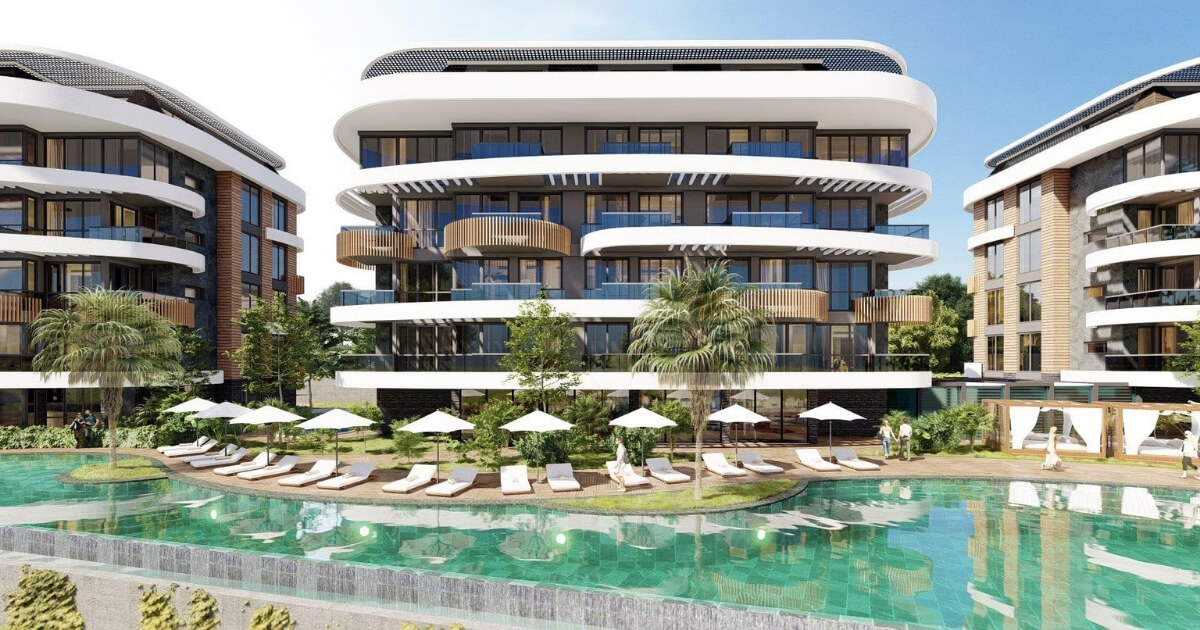
This is where the quality step-up becomes unmistakable — both in the apartment itself and in everything around it. The difference from the previous segment hits you the moment you walk in: a reception desk in the lobby, marble and designer lighting in the entrance hall, landscaped grounds and lounge areas that feel more like a five-star hotel than a residential building.
Where to Look
Lara is an upmarket district of Antalya on the eastern side of the city, stretching along the coast. Lara is divided into several micro-districts: “upper Lara” (Muratpaşa) is more urban and affordable; “lower Lara” (Kundu) is closer to the sea and pricier. It’s in lower Lara that you find the large five-star hotels and premium residential complexes on the first and second lines. The beach here is sandy — a rarity for Antalya — and that’s one of the reasons for the premium pricing.
Central Alanya — the area around the famous İç Kale fortress and the harbour. Apartments with views of the castle, the lighthouse, and the open sea offer a completely different atmosphere from the mass-built districts of Mahmutlar or Kestel. Here you’ll find narrow old-town streets, fish restaurants on the waterfront, nightlife, and the feel of a Mediterranean town with genuine history.
Fethiye is an atmospheric resort town in southwest Turkey, between Antalya and Marmaris. Fethiye means turquoise bays, pine forests rolling down to the sea, and a completely different aesthetic from Alanya. There’s less high-rise development here, more low-rise residences and villas. The Ölüdeniz area — one of Turkey’s most photographed spots — is 15 minutes from the centre. Fethiye appeals to buyers seeking nature and seclusion rather than a busy urban scene.
What You Get
For $150,000–200,000 — a large 2+1 or 3+1 (100–130 m²) in a premium complex on the first or second line. Complexes at this level operate on a “resort” principle: multiple pools (always an indoor heated one for winter months and an outdoor one with water slides), a spa zone with hammam, sauna, and jacuzzi, a gym with modern equipment, a lobby with reception, sometimes an on-site restaurant or café. Finishes are high quality, and in many projects furniture and appliances are included in the price: you arrive with a suitcase and start living.
For $200,000–300,000 — a 3+1 with a direct sea view or a duplex (a two-level apartment) in a premium development. Terraces of 15 to 40 m², floor-to-ceiling glazing, gated grounds with controlled access, underground parking, sometimes a private jetty or beach access. Locations: first line in Lara, Fethiye waterfront with island views, central Alanya with a fortress panorama.
At this budget, you can also consider apartments in Antalya’s premium Konyaaltı area and start looking at small villas in Fethiye — townhouses with their own gardens and a shared pool in the complex.
Who It’s For
This segment attracts buyers for whom everyday comfort is a priority — people who want to live in “good hotel” conditions but in their own home. Often it’s high-income families buying for permanent residence, or business owners who want a prestigious coastal base.
Comfort-class apartments also work for rentals, but in a different tier — premium lettings. Rates are higher, the season is shorter, and tenants’ expectations are more demanding. Still, in strong locations (Lara, Fethiye), yields can reach 5–7% annually.
Luxury: From $300,000
Turkey’s luxury real estate segment is a different world, one that barely overlaps with the mainstream market. The competition here isn’t Alanya new builds — it’s the French Riviera, Costa del Sol, and Sardinia, only at prices two to three times lower. This is precisely what makes Turkish luxury so attractive to international buyers: for $400,000–500,000 here, you get what would cost $1.5 million in Nice or Marbella.
Where to Look
Kalkan is a small town between Fethiye and Kaş, often called “Turkey’s Amalfi.” Kalkan means cascading hillside villas dropping towards a bay, narrow streets lined with boutique restaurants, a yacht marina, and an intimate, exclusive atmosphere. There’s no mass tourism and no high-rise hotels — just private villas and small boutique complexes. The unbroken view of open sea stretching to the horizon is Kalkan’s calling card.
Bodrum is Turkey’s answer to Saint-Tropez and arguably the country’s most internationally recognised resort. Bodrum is a peninsula with dozens of bays, each with its own character: Yalıkavak for yachting enthusiasts and those seeking quiet, Türkbükü for nightlife lovers and celebrities, Gümüşlük for bohemians and food lovers. Bodrum’s property market is one of the most dynamic in Turkey, with steady year-on-year price growth. Wealthy Turks from Istanbul and Ankara buy here alongside international clients, which gives the market depth and stability.
Lara premium means gated residential complexes on the first line in the elite part of Antalya. The beach here is golden sand, and the complex grounds resemble resort properties: private beach clubs, restaurants, sports courts, heated pools. Some developments offer full hotel-style service: housekeeping, room service, concierge.
What You Get
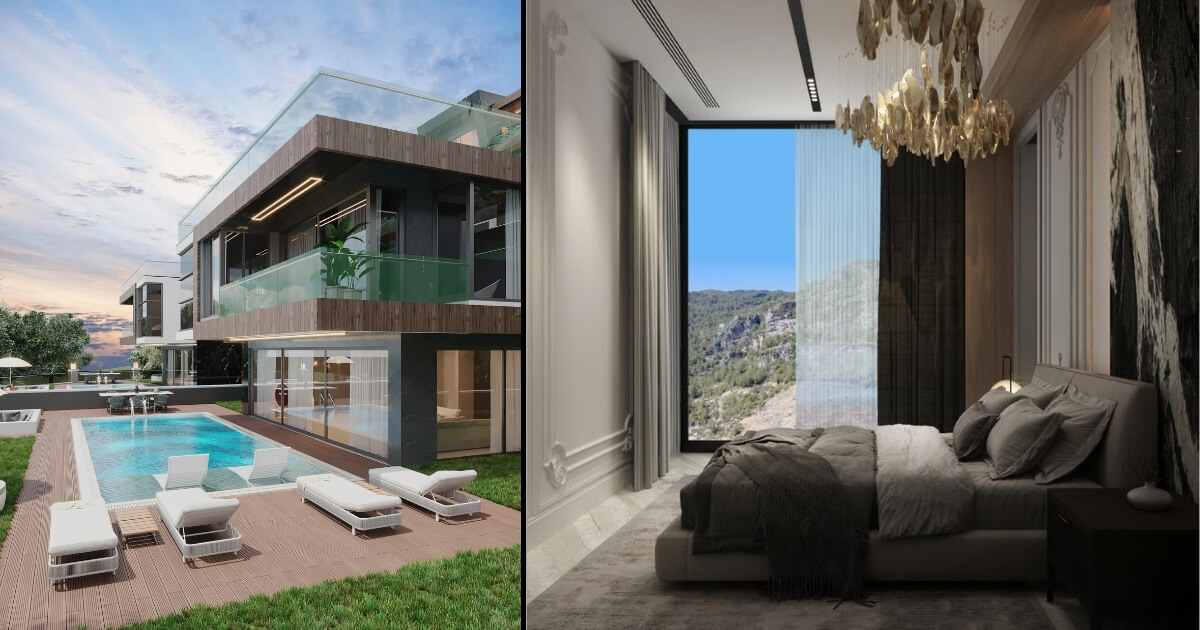
For $300,000–500,000 — a penthouse with a rooftop terrace of 50–100 m² and its own private pool (yes, rooftop pools are a real thing in Turkish luxury). Or a large 4+1 apartment (150–200 m²) with a direct, unobstructed sea view in a premium complex. In Bodrum, this budget can stretch to a villa with its own pool and garden — not on the first line, but with panoramic views over the bay. Finishes include natural stone, designer furniture, smart-home systems (automated lighting, climate, blinds).
From $500,000 — first-line villas in Kalkan with infinity pools that seem to spill into the horizon. Waterfront penthouses in Bodrum’s Yalıkavak with a private yacht berth. Exclusive residences in Lara where there are barely 20 apartments in the entire complex and every unit is a bespoke product with custom interior design. A lift that opens directly into your apartment, heated natural marble floors, a wine cellar, a private cinema room — these are all real options in Turkish luxury.
Who It’s For
This segment attracts buyers for whom the key criteria are privacy, exclusivity, and investment value. Luxury beachfront property in Turkey appreciates steadily — in Bodrum and Kalkan, prices have risen 60–80% in dollar terms over the past five years. Seasonal rentals bring substantial income: a $500,000 villa in Kalkan can generate $1,500–3,000 per week in July and August.
A separate category of buyers are those obtaining Turkish citizenship through property investment (the threshold is $400,000). A luxury seaside property serves triple duty: citizenship, an appreciating asset, and a place to live.
Additional Costs When Buying Near the Sea
The apartment price is far from the full amount you’ll spend. Many buyers — especially first-timers in Turkey — overlook the additional costs, which can add up to a meaningful chunk of the budget. Let’s break down each item.
Title deed transfer tax (TAPU) — 4% of the property’s cadastral value. Officially, this tax is split 50/50 between buyer and seller (2% each), but in practice the buyer almost always pays the full amount — it’s an established market convention. The cadastral value is typically lower than the market price, which softens the real burden somewhat, but you should budget for the full 4%.
Compulsory property appraisal — $200 to $400. Since 2019, all foreign buyers in Turkey are required to obtain a valuation report from a licensed appraisal company. Without this document, the title deed office won’t process the transaction. The appraiser visits the property, inspects it, and produces a report — the process takes 2–3 days.
Notary and sworn translator fees — $300–500. A sworn translator must be present at the title deed office if the buyer doesn’t speak Turkish. The translator must be certified — a Turkish-speaking friend won’t suffice. A notary is needed for powers of attorney and certain supporting documents.
Monthly complex maintenance fee (aidat) — $30 to $300 per month, depending on the level of infrastructure. The aidat covers shared areas: pool, lift, grounds cleaning, security, generator, garden irrigation. In a budget building without a pool, the aidat might be $30–50 per month. In a premium residence with a spa, multiple pools, and a concierge, expect $200–300. It’s a mandatory monthly payment, and failure to pay can result in penalties and restrictions.
Utilities — electricity, water, gas (if applicable), internet. Typically $60–120 per month for a standard 2+1 apartment. In summer, electricity is the main cost driver due to air conditioning; in winter, it’s heating (if the apartment is used year-round). Internet in Turkey costs roughly $10–20 per month for an unlimited plan.
DASK insurance — compulsory earthquake insurance required by law for all Turkish properties. The cost is $50–100 per year depending on area and region. Without a valid DASK policy, you can’t connect utilities or carry out certain property transactions.
All in: add at least 5–7% on top of the purchase price for transaction-related costs. Monthly running expenses will range from $100 (budget segment, minimal infrastructure) to $400+ (premium complex with full service).
FAQ
Can I buy a seaside apartment in Turkey remotely?
Yes, and it’s common practice. Most developers and agencies have long since streamlined the remote purchase process. Here’s how it works: you choose a property based on photos, video tours, and a live video call with a sales manager who walks you through the apartment in real time. If you’re happy, you sign a power of attorney for a representative in Turkey through the Turkish consulate in your home country. Your representative then signs the purchase agreement and completes the title deed registration on your behalf.
The whole process takes anywhere from two weeks to two months, depending on the property’s readiness and how quickly government offices move. That said, we’d still recommend at least one visit — if not before the purchase, then after it. Seeing the neighbourhood with your own eyes, gauging the walk to the sea, checking out the nearest shop, meeting the building management company — all of this helps avoid disappointments and prepares you for life in your new home.
Is the first line always more expensive?
Almost always, yes. All else being equal, the price difference between a first-line apartment and an equivalent second-line property can be 20–40%, sometimes more. But there’s a crucial nuance: “first line” doesn’t automatically mean “sea view.” An apartment might stand 100 metres from the water, but its windows could face an inner courtyard, the wall of the neighbouring building, or a car park.
So when choosing a seaside property, it’s important to check not just the distance to the beach but also the apartment’s orientation (which direction the windows and balcony face), the floor (you might not see the sea from the first floor even if it’s 50 metres away), and whether there are any structures between the building and the shore. Sometimes an apartment on the 8th floor 500 metres from the sea gives you a better view and a stronger sense of proximity to the water than a 2nd-floor unit 100 metres away — but with windows facing the courtyard.
Which Turkish city has the most affordable seaside property?
The lowest coastal prices are in Mersin, Gazipaşa, and eastern Alanya districts (Mahmutlar, Kargıcak, Kestel). Mersin is a special case: it’s a fully functioning city of over a million people with universities, hospitals, a major port, and a developed economy. It’s simply not yet well known among international buyers, with most demand coming from locals — so prices haven’t been inflated.
Gazipaşa attracts those who want quiet and proximity to nature but with airport accessibility. Eastern Alanya is the classic choice for a budget seaside purchase backed by well-developed tourist infrastructure.
It’s also worth mentioning the town of Didim on the Aegean coast — another affordable location, popular among British buyers, with long sandy beaches and prices well below neighbouring Bodrum.
Is it worth buying off-plan?
Buying at the foundation stage is one of the most common ways to save. The price difference between the start of sales and the completed complex typically runs 15–25%, and in successful projects can reach 30–35%. On top of that, developers offer instalment plans at early stages — for example, 30% upfront and the rest in equal payments until handover, which makes the purchase more accessible.
But the risks are real. The main one is delayed handover: instead of the promised 18 months, construction can drag on for two to three years. Second is the finished product not matching the renders: everything looks perfect in the glossy images, but in reality the finishes may be cheaper, the pool smaller, and the view less open than it appeared. In the worst case, the project may be frozen or the developer may go bankrupt.
How to minimise risks: choose developers with a track record — those with 3–5 completed projects you can visit and inspect. Always have the contract reviewed by an independent lawyer (not the developer’s lawyer). Check for the construction permit (İnşaat Ruhsatı) and make sure the land belongs to the developer outright, rather than being leased.
Ready to Find Your Seaside Apartment in Turkey?
We’ve broken down four price segments — from $45,000 studios to half-million-dollar villas — but that’s just the big picture. The VirtoProperty catalogue has hundreds of current listings across all of these areas: from compact apartments under construction to move-in-ready homes with furniture and Mediterranean views. Filter by price, city, property type, and distance to the sea — and find exactly what fits your budget and lifestyle.
Not sure where to start? Our Turkey property experts offer a free consultation: they’ll help you choose the right area, point out what to watch for when buying, and give you an honest read on current prices. No obligations — just a conversation that will save you time and money.