Turkey Property Prices 2026 — Regional Breakdown
Contents
Turkey remains one of the most affordable Mediterranean property markets for international buyers. This guide provides up-to-date pricing data for apartments, villas, and commercial properties in Turkey’s key cities and resort areas: Antalya, Alanya, Istanbul, Mersin, Bodrum, and Fethiye.
You’ll find comparative tables, an analysis of key pricing drivers, and forecasts for the years ahead. Whether you’re an investor, planning a relocation, looking for a holiday home, or considering Turkey’s residence-permit-through-purchase program, this breakdown will help you navigate the market. All prices are quoted in US dollars and Turkish lira at early-2026 exchange rates (1 USD ≈ 42.7 TRY). Our data draws on the Central Bank of Turkey, the Endeksa analytics platform, and our own calculations.
Market Overview: What’s Happening with Prices in 2026
At first glance, the numbers look impressive: according to the Central Bank of Turkey, residential property prices have risen approximately 26% over the past year. But dig a little deeper, and the picture becomes more nuanced. Inflation in Turkey remains stubbornly high — around 31.5% as of February 2026. In real terms, adjusted for the falling purchasing power of the lira, property has actually become slightly cheaper — by roughly 4%. For buyers coming in with dollars, euros, or pounds, this is essentially good news: Turkish real estate costs about the same in hard currency as it did a year ago, and in some cases even less.
Here are the numbers that matter: the average square meter of residential property across Turkey costs 38,000–45,000 TRY, which works out to approximately $890–$1,076. A typical home or apartment runs about 4.9–5 million TRY — that’s $115,000–$125,000. For comparison, equivalent property in Spain or Greece would cost one-and-a-half to two times more. The weakening of the Turkish lira has effectively created a hidden 15–20% discount for hard-currency buyers compared to just two or three years ago.
The market itself is active and liquid: over 1.6 million housing transactions were completed in Turkey in 2025 — a 30% increase from 2023. The Central Bank is gradually cutting rates (from a peak of 46% down to 37%, with a target of 25% by year-end), which should eventually revive the mortgage market and bring local middle-class buyers back into the picture. Turkey’s citizenship-by-investment program — requiring a minimum $400,000 property purchase — continues to support demand in the premium segment. A residence permit is available for purchases starting at $200,000.
Property Prices in Antalya and Surrounding Areas
Antalya is the undisputed leader among international property buyers in Turkey. With a population of over 2.5 million and more than 15 million tourists visiting annually, the city offers a robust short-term rental market alongside strong long-term demand. Buyers from Russia, Germany, and the Middle East make up the largest share of foreign purchases.
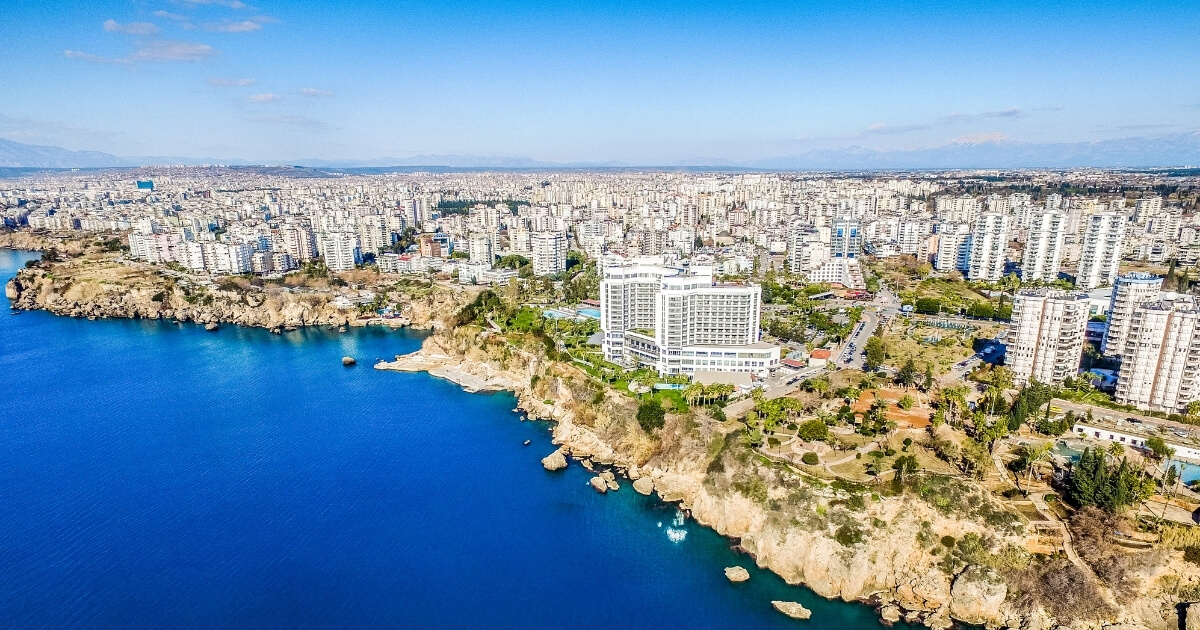
The median home price in Antalya is approximately 4.9 million TRY (around $114,000), with 80% of listings falling between 2.5 and 9 million TRY ($58,000–$210,000). Prices per square meter range from 25,000 TRY in budget districts like Kepez to 95,000 TRY in premium beachfront areas of Konyaaltı and Lara. Over the past year, prices rose about 30% in lira terms — nearly matching inflation — meaning real values have remained essentially flat.
Antalya attracts buyers with its well-developed infrastructure: an international airport with direct flights to dozens of countries, modern shopping centers, private and public hospitals, and international schools. New residential complexes with pools, fitness centers, and 24-hour security are being built across both coastal and inland districts. Rental yields average 6–7% annually, rising to 10–12% in peak season for properties within walking distance of the beach.
Konyaaltı, Lara, Kepez, Hurma — Comparison Table
| District | Price/m² (TRY) | Price/m² (USD) | 1+1 (from) | 2+1 (from) | Character |
|---|---|---|---|---|---|
| Konyaaltı | 70,000–95,000 | $1,640–2,225 | ~$120,000 | ~$180,000 | Premium beachfront |
| Lara | 65,000–90,000 | $1,520–2,110 | ~$110,000 | ~$165,000 | Upscale, hotels |
| Kepez | 25,000–35,000 | $585–820 | ~$47,000 | ~$65,000 | Budget, inland |
| Hurma | 35,000–50,000 | $820–1,170 | ~$60,000 | ~$90,000 | Developing, value |
What can you buy in Antalya on a specific budget? For $100,000 (around 4.3 million TRY) — a two-bedroom apartment (2+1) of about 90 m² in central Kepez, or a one-bedroom (1+1) of 65 m² in inland Muratpaşa. At $200,000, the options open up considerably: a new-build in Konyaaltı with full complex amenities, or a spacious sea-view apartment in Lara. The luxury segment starts at around $350,000 — think villas in Döşemealtı or first-line apartments with full-service facilities.
Property Prices in Alanya and Its Districts
Alanya is the second most popular destination for foreign buyers, located 130 km east of Antalya. The city enjoys a mild microclimate with a swimming season stretching from May to November and winter temperatures rarely dropping below 15°C. This has made Alanya a top choice for permanent relocation, with a large Russian-speaking, German, and Scandinavian expat community.
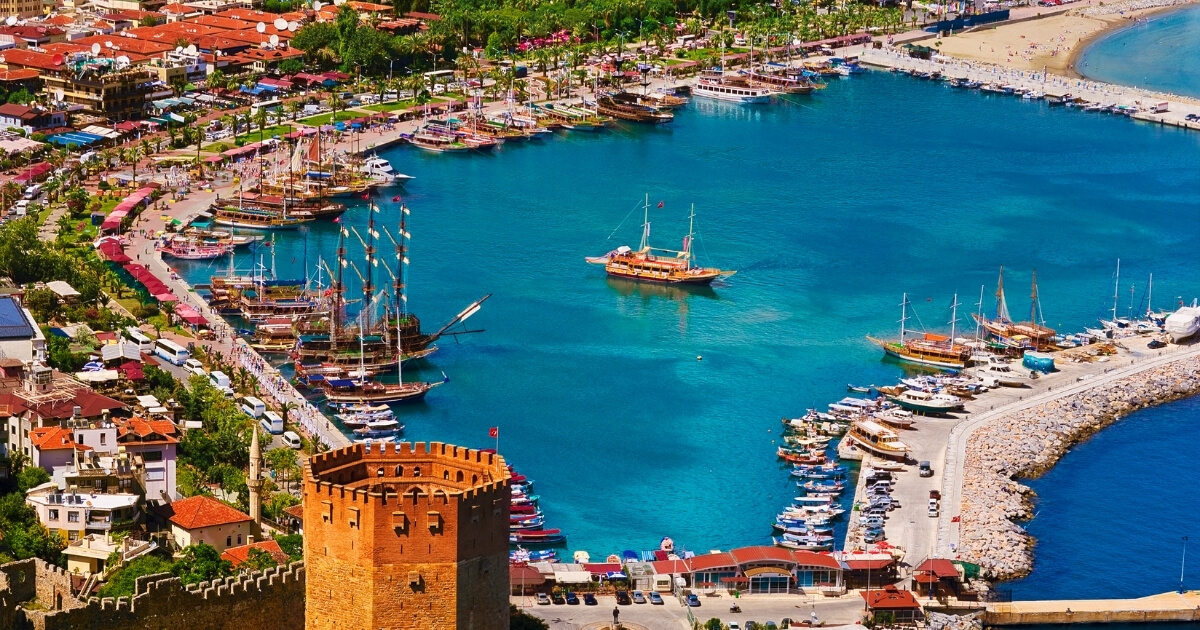
The median property price is approximately 5.5 million TRY ($128,000), while the average sits higher at 5.96 million TRY ($139,000). Price variation across districts is dramatic — from 35,000 TRY per m² in outlying villages like Kesefli to 106,000 TRY per m² in elite hilltop neighborhoods like Tepe with panoramic sea views. Despite an 18% nominal increase over the past year, real prices have actually declined by about 10% after accounting for inflation, creating an attractive entry window.
About 65% of Alanya’s market consists of standard apartments, while villas account for only 10% of available properties. Buyers typically negotiate 6–10% off the listing price. The entry point is around 2.5 million TRY ($58,000) for a 1+1 apartment in Demirtaş or Avsallar. Mahmutlar and Oba are the most popular neighborhoods among foreigners, combining beach proximity, modern amenities, and mid-range prices. Sea-view properties command a 20–30% premium over comparable non-view options.
Mahmutlar, Avsallar, Kestel, Alanya Center
| District | Price/m² (TRY) | Price/m² (USD) | 1+1 (from) | 2+1 (from) | Character |
|---|---|---|---|---|---|
| Mahmutlar | 45,000–65,000 | $1,050–1,520 | ~$75,000 | ~$115,000 | Most popular |
| Avsallar | 35,000–50,000 | $820–1,170 | ~$58,000 | ~$90,000 | Affordable coastal |
| Kestel | 40,000–55,000 | $935–1,290 | ~$68,000 | ~$100,000 | Quiet, beach |
| Alanya Center | 55,000–80,000 | $1,290–1,875 | ~$95,000 | ~$145,000 | Historic, tourism |
| Tepe / Bektaş | 80,000–106,000 | $1,875–2,480 | ~$140,000 | ~$210,000 | Elite hilltop |
The luxury end of Alanya’s market centers on sea-view villas of 200–300 m² in Tepe and Bektaş, priced at 20–60 million TRY ($467,000–$1,400,000). But the bulk of transactions happen in the mid-range: a two-bedroom apartment in Mahmutlar for $75,000–$120,000 is the typical foreign buyer’s choice. It’s worth noting that resale properties often require an additional 10–15% budget for renovation, while new-builds are generally delivered with finished interiors and fitted kitchens.
Property Prices in Istanbul
Istanbul is Turkey’s largest city with over 16 million residents and the country’s economic powerhouse. It is the only megacity in the world straddling two continents — Europe and Asia — giving its property market a unique dynamic. Istanbul is also the region’s main transport hub: Istanbul Airport ranks among the world’s top five, and the metro network has 158 stations with 36 more under construction.
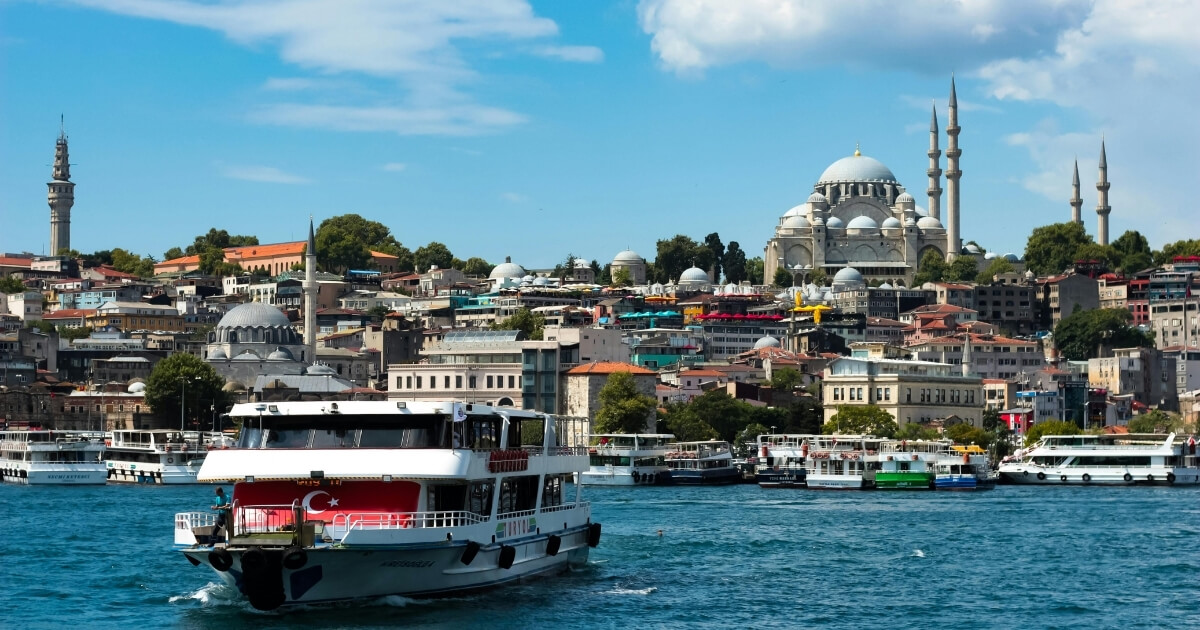
The citywide average price per square meter is approximately 74,100 TRY ($1,755), well above the national average. Year-on-year price growth stands at about 28% nominally, translating to a roughly 2.7% decline in real terms. Istanbul accounts for 18% of all housing transactions nationwide — nearly 240,000 properties were sold in the city in 2024 alone, more than any other Turkish city.
The price range within Istanbul is enormous: from $585/m² in budget-friendly Esenyurt to $4,700+/m² in elite Beşiktaş overlooking the Bosphorus. Premium new developments in central districts can reach $5,000–$18,000/m². The city’s homeownership rate has dropped to 56.1% according to KONUTDER, sustaining strong rental demand. Gross rental yields stand at approximately 8.17% — among the highest in the country. Metro proximity has become one of the most decisive factors for buyers.
European and Asian Sides — Key Districts
| District | Side | Price/m² (USD) | 1+1 (from) | Character |
|---|---|---|---|---|
| Beşiktaş | European | $2,100–4,700 | from $200,000 | Ultra-premium, Bosphorus |
| Sarıyer | European | $1,750–3,750 | from $170,000 | Luxury enclaves |
| Beyoğlu / Şişli | European | $1,500–3,000 | from $130,000 | Business center |
| Kadıköy | Asian | $1,400–2,500 | from $120,000 | Popular residential |
| Esenyurt | European | $585–870 | from $47,000 | Most affordable |
| Fatih | European | $900–1,500 | from $80,000 | Historic center |
It’s worth highlighting Istanbul’s resale market, which accounts for roughly 70% of all transactions. An apartment in a solid 2010s-era building in Kadıköy or Ataşehir will cost 20–30% less than a comparable new-build — yet the neighborhood is already established, infrastructure is in place, and the city center is a 20–30 minute metro ride away. For rental-focused investors, areas around newly opened metro stations are particularly interesting: historically, each new line opening has driven prices up 10–15% within walking distance. Istanbul is also the only Turkish city with a significant small-business commercial property market — offices, shops, and restaurants.
Prices in Mersin, Bodrum, Fethiye and Other Regions
Beyond the three main destinations, several other regions are attracting growing buyer interest — offering either significantly lower prices or a distinctive lifestyle and investment potential.
Mersin
Mersin is the third most popular city among foreign buyers, after Antalya and Istanbul. Located on the eastern Mediterranean coast with a population of approximately 1.9 million, it offers the most affordable prices among Turkey’s coastal destinations: the average cost per square meter is just $470–$700, and a 1+1 apartment can be purchased from around $40,000.

Mersin attracts buyers with its mild climate (300+ sunny days per year), a thriving agricultural sector, and a major seaport that makes it an important logistics hub. Infrastructure is developing rapidly: new residential complexes, shopping centers, and hospitals are being built. The cost of living is significantly lower than in Antalya or Istanbul. For investors, Mersin offers strong growth potential — prices have not yet reached a plateau and have room to appreciate.
Bodrum
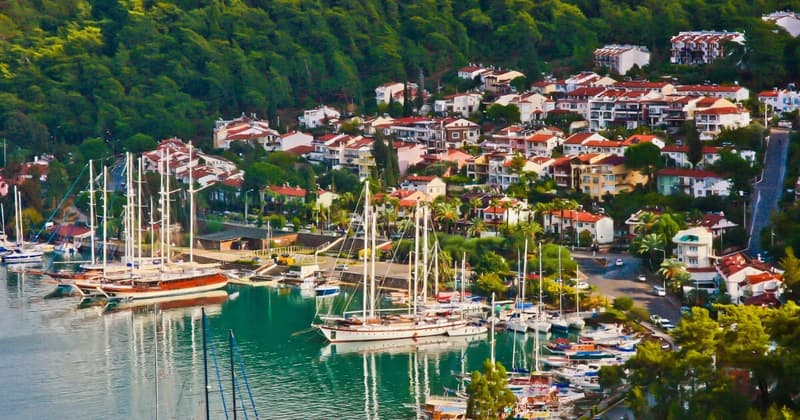
Bodrum is a premium resort on the Aegean coast, often called ‘Turkey’s Saint-Tropez.’ This peninsula city in Muğla province is famous for its turquoise bays, world-class yacht marinas, and luxury hotels. The average property sale price here is approximately $373,000 — comparable to central Istanbul districts.
The cost per square meter in Bodrum is around $2,825, making it one of Turkey’s most expensive markets. Prices rose about 14% year-on-year in 2025, with the strongest growth recorded in Çamlık, Akçaalan, and Bitez. Bodrum ranks among the country’s top 10 investment destinations, attracting affluent buyers from both Turkey and abroad. The peak rental season is shorter than Antalya’s (June–September), but daily rates are considerably higher.
Fethiye
Fethiye is a long-standing favorite among European and especially British buyers. Located where the Aegean meets the Mediterranean, the town is home to the famous Blue Lagoon at Ölüdeniz — one of Turkey’s most recognizable beaches. Popular purchase areas include Fethiye Town, Çalış, Ovacık, and Kalkan.
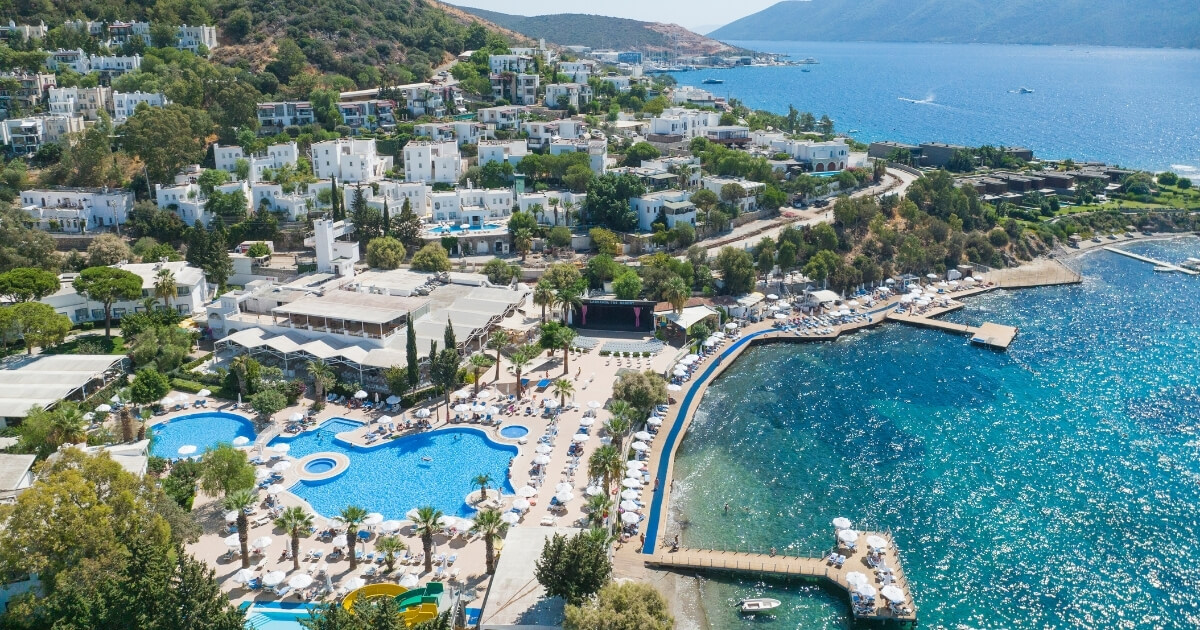
Apartment prices start from around $60,000–$80,000, and villas from $150,000. Fethiye offers a relaxed Mediterranean lifestyle combined with solid infrastructure: Dalaman International Airport is 50 km away, and the town has hospitals, schools, and markets. The area is particularly popular for permanent living — many expats choose it for its calm atmosphere, stunning scenery, and prices well below those in Bodrum or Antalya.
Muğla Province as a whole (including Bodrum, Fethiye, and Marmaris) stands out with an average price of 76,619 TRY per m² ($1,815) — well above the national average, underscoring the premium status of Turkey’s Aegean coast.
Regional Price Comparison Table
| Region | 1+1 (from) | 2+1 (from) | Villa (from) | Commercial | Avg. $/m² |
|---|---|---|---|---|---|
| Antalya (Konyaaltı) | $120,000 | $180,000 | $350,000 | $150,000 | $1,640–2,225 |
| Antalya (Kepez) | $47,000 | $65,000 | $150,000 | $60,000 | $585–820 |
| Alanya (Mahmutlar) | $75,000 | $115,000 | $250,000 | $100,000 | $1,050–1,520 |
| Istanbul (Central) | $130,000 | $200,000 | $500,000+ | $200,000 | $1,500–3,000 |
| Istanbul (Esenyurt) | $47,000 | $65,000 | — | $50,000 | $585–870 |
| Mersin | $40,000 | $60,000 | $120,000 | $45,000 | $470–700 |
| Bodrum | $150,000 | $250,000 | $500,000+ | $200,000 | $2,500–3,500 |
| Fethiye | $60,000 | $100,000 | $150,000 | $80,000 | $800–1,400 |
As the table shows, the price spread across regions is enormous: the most affordable entry point is $40,000 for a one-bedroom apartment in Mersin, while at the other end of the spectrum, a villa in Bodrum or a central Istanbul apartment can run half a million dollars or more. This is precisely why it’s so important to define your priorities before you start searching: one buyer needs maximum rental yield, another wants a prestigious address for personal use, and a third is looking for a property that qualifies for the citizenship program. Each of these goals leads to a different region and property type.
Factors That Influence Property Prices
Turkey’s property market is full of contrasts. Two seemingly similar apartments in the same city can differ in price by a factor of two. To understand what you’re actually paying for, it helps to know the key pricing drivers.
Proximity to the sea. This is the single biggest price factor on the coast. An apartment within walking distance of the beach (under 500 meters) will cost 20–40% more than a comparable unit further inland. Add an unobstructed sea view and you’re looking at another 20–30% premium. A direct, panoramic ocean vista is the ultimate price multiplier — it can double the cost of a property.
Floor and layout. Upper floors with panoramic views and penthouses are always the most expensive positions in any complex. Ground-floor units are typically 10–15% cheaper, though if they come with a private garden, that can actually become a selling point — especially for families with children.
New-build vs. resale. The devastating 2023 earthquakes permanently changed how Turkish buyers think about construction quality. New developments built to updated seismic codes command a 35–40% premium over older resale properties — and demand shows no signs of weakening. People are willing to pay more for the confidence that their building can withstand a major seismic event.
Complex amenities. A swimming pool, fitness center, children’s playground, 24-hour security, and professional management — all of these raise both the purchase price and the rental income potential. Properties in well-managed complexes rent faster and at higher rates: peak-season yields can reach 10–12% annually.
Neighborhood infrastructure. What surrounds the building matters just as much as what’s inside it. Metro access, schools, hospitals, and shopping centers within walking distance all have a tangible impact on price. In Istanbul, proximity to a metro station can add 10–15% to a property’s value. In resort cities, the key factors are distance to the beach and having restaurants, shops, and pharmacies nearby — everything that turns a ‘real estate asset’ into a comfortable place to live.
Exchange rates. For buyers holding dollars or euros, the weakening lira is essentially a hidden discount. While prices in lira keep climbing, in hard-currency terms they’ve remained stable or even declined. This is one of the most compelling advantages of the Turkish market in 2026.
Price Forecast for 2026–2027
Where are prices headed? Most analysts agree that nominal growth will continue at 10–18% per year. But the real question is whether prices will finally start outpacing inflation — in other words, whether buyers will see genuine appreciation in hard-currency terms, not just numbers that rise alongside a weakening lira.
There are good reasons for optimism. The Central Bank plans to cut rates to 25% by the end of 2026, which should revive the mortgage market and bring back the average Turkish buyer who has been priced out of borrowing for the past two years. The IMF projects Turkey’s GDP growth at 4.2% in 2026. And in industry surveys, 72% of developers expect prices to rise over the next six months — not a single one predicts a decline.
Risks remain: inflation could prove stickier than hoped; regional geopolitical instability could cool foreign demand; and some Istanbul suburbs are showing signs of oversupply. But over a five-year horizon, the outlook is confident: cumulative growth of 50–100% in nominal terms is widely expected. A property worth 5 million TRY today could be valued at 8.75–10 million TRY by 2030. Investors who entered in 2024–2025 may start seeing real capital gains as early as 2026 — if the inflation trend continues downward.
Frequently Asked Questions (FAQ)
How much does property cost in Turkey in 2026? The average home price nationwide is approximately 4.9–5 million Turkish lira, which translates to roughly $115,000–$125,000. The price per square meter varies enormously by region: in budget-friendly areas like Mersin or Kepez (Antalya), you’re looking at around $585/m², while in premium Beşiktaş (Istanbul) or Bodrum it can exceed $2,500/m². For most international buyers, the practical purchase budget falls between $60,000 and $250,000.
Which region is best for property investment? That depends entirely on your strategy. If you value liquidity and steady rental income, Istanbul is hard to beat — yields reach up to 8%. For short-term holiday rentals, Antalya and Alanya are the sweet spot, with seasonal yields of 6–12%. Bodrum is a play on long-term capital appreciation in the luxury segment. And if you’re looking for the most affordable entry point with room to grow, Mersin deserves a close look.
Can I get Turkish citizenship by buying property? Yes, the program is active. You need to purchase one or more properties with a combined value of at least $400,000. The citizenship process typically takes 9 to 16 months. If you don’t need citizenship but want to live legally in Turkey, a purchase of $200,000 or more qualifies you for a residence permit.
How have prices changed over the past year? In Turkish lira terms, prices rose 26–31% depending on the region — impressive at first glance. But with inflation at 31.5%, that growth is essentially zero in real terms. The key takeaway for foreign buyers: in dollar and euro terms, Turkish property has barely budged. You’re buying at roughly the same hard-currency prices as a year ago.
What are the additional costs when buying? Beyond the property price itself, budget an extra 8–15% for associated expenses. The main items: title deed transfer tax (4% of the cadastral value), notary fees, mandatory DASK earthquake insurance, property appraisal, utility connections, and agency commission. The exact total depends on the region and the property’s value.
Ready to find your property in Turkey?
We’ve covered prices, regions, and trends — now it’s your turn. If you already have a direction in mind, browse our Turkey property catalog for up-to-date listings across every region covered in this guide: apartments, villas, and commercial properties in Antalya, Alanya, Istanbul, Mersin, Bodrum, and Fethiye.
Need help choosing a region, calculating your budget, or navigating the purchase process? Get in touch with us. Our team works in the Turkish market every day and can help you find the right property for your goals — whether it’s an investment, a relocation, or a residence permit.