How to choose your dream home in Spain
Contents
- Introduction
- Calculate your budget
- Why are you buying real estate in Spain?
- Choose a region to live
- Types of real estate
- Property condition: new construction vs secondary housing
- Liquidity
- Planning a reconnaissance trip
1. Introduction
Buying a home in Spain begins with property selection through a website or contacting specialists. After you’ve identified suitable properties, organize a trip to Spain to conduct technical procedures.
Main first steps:
- Obtaining NIE (foreigner identification number)
- Opening a bank account in a Spanish bank
- Checking the legal status of the property through “Nota Simple” (property registry extract)
- Signing a preliminary contract with a 10% deposit
- Completing the transaction at the notary with payment of the remaining amount
- Registering property rights within 30 days
2. Calculate your budget
Property cost depends on the area, number of bedrooms, presence of terraces, garages, pools, proximity to the sea, and level of finishing. Penthouses (atico) cost more due to private rooftop access.
Apartments by the sea cost approximately 30-40% more than similar properties within walking distance of the beach.
Cost by regions
- Costa Brava: most expensive region, mild climate, luxury infrastructure
- Costa del Sol: choice of Hollywood celebrities, expensive housing, cool water suitable for surfing
- New construction costs from €1,300 to €4,000 per m² depending on the region
Approximate cost of real estate in Spanish coastal areas (2020)
| Location | Property type | Price (EUR) |
|---|---|---|
| Torrevieja, center (Costa Blanca) | Secondary apartment, 54 m² | 60,000 |
| Alicante, 10 min from sea (Costa Blanca) | New townhouse, 87 m² | 150,000 |
| Ibiza, 350 m from beach (Balearic Islands) | Secondary villa, 136 m² | 500,000 |
| Barcelona, Diagonal Mar (Costa Brava) | 3-room new apartment, 117 m² | 500,000 |
| Marbella, 3 km to sea (Costa del Sol) | 3-room new penthouse, 98 m² | 300,000 |
| Valencia, 7 km to sea (Costa de Valencia) | 3-room secondary apartment, 103 m² | 90,000 |
Mortgage and insurance
- Mortgage insurance: €300-400/year
- Life insurance: €500-1,000/year
- Annual IBI tax (Impuesto sobre Bienes Inmuebles)
- Community fees (comunidad): €40-100/month (in elite complexes up to €500)
Cost of maintaining an apartment in Spain (per year)
| Category | Cost range (EUR) |
|---|---|
| Annual IBI tax | 300-1,000 |
| IRPF (income tax) | 150-600 |
| Comunidad (community payment) | 300-800 (can reach €10,000) |
| Water | 150-300 |
| Electricity | 500-700 |
| Gas | 200-300 (only with underfloor heating) |
| Phone + Internet + TV | 200-500 |
| Total per year | 1,600-3,900 |
Cost of maintaining a villa in Spain (per year)
| Category | Cost range (EUR) |
|---|---|
| Annual IBI tax | 1,200-1,500 |
| IRPF | 900-1,200 |
| Garden maintenance | 1,200-2,400 |
| Pool maintenance | 300-600 |
| Garbage collection | 100-150 |
| Water | 400-600 |
| Electricity | 600-1,000 |
| Gas | 200-300 (only with underfloor heating) |
| Phone + Internet + TV | 200-500 |
| Total per year | 5,100-8,250 |
3. Why are you buying real estate in Spain?
Holiday home
Walking distance to the sea. Apartments are preferable — minimal maintenance concerns.
Permanent residence
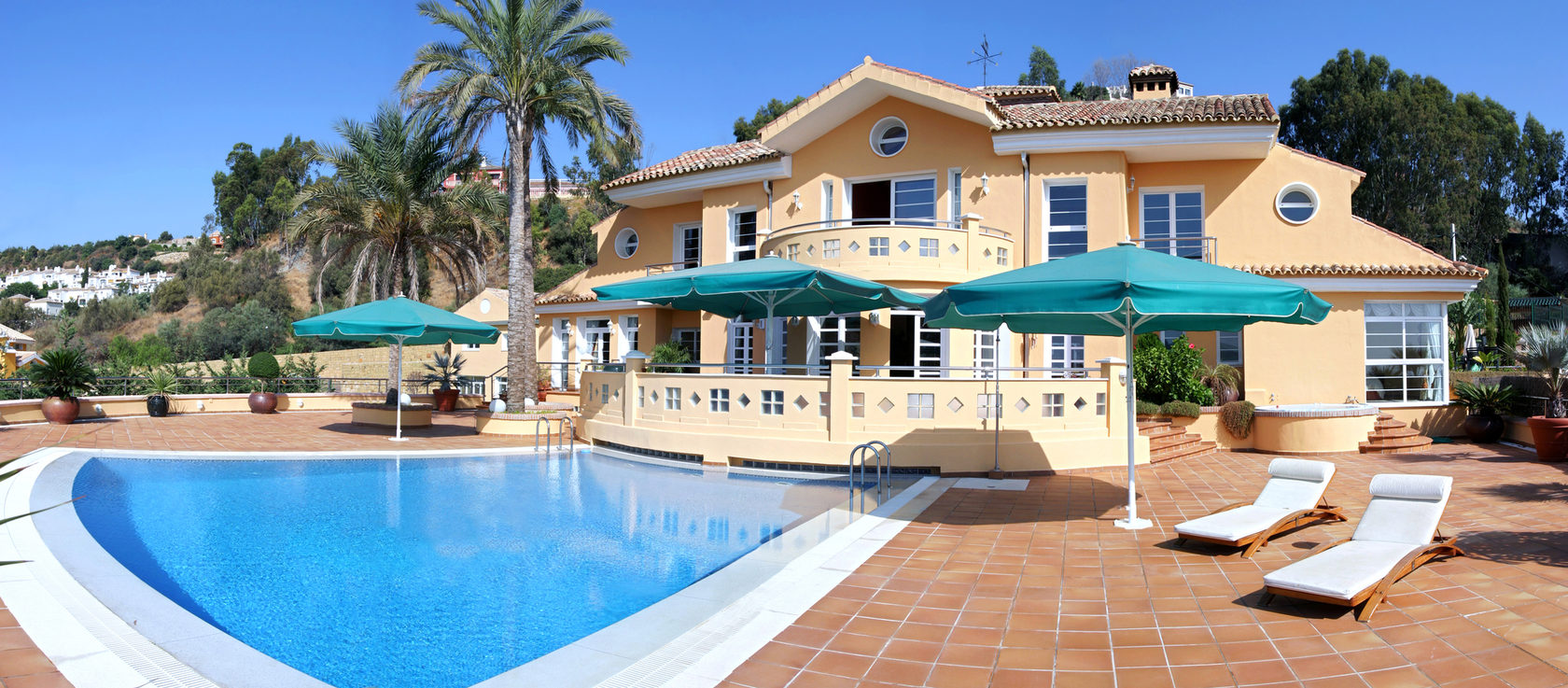
Townhouses or bungalows in urbanización (urbanización) — gated residential complex. Chalets or villas if budget allows.
Student housing
Proximity to universities, bus stops, metro.
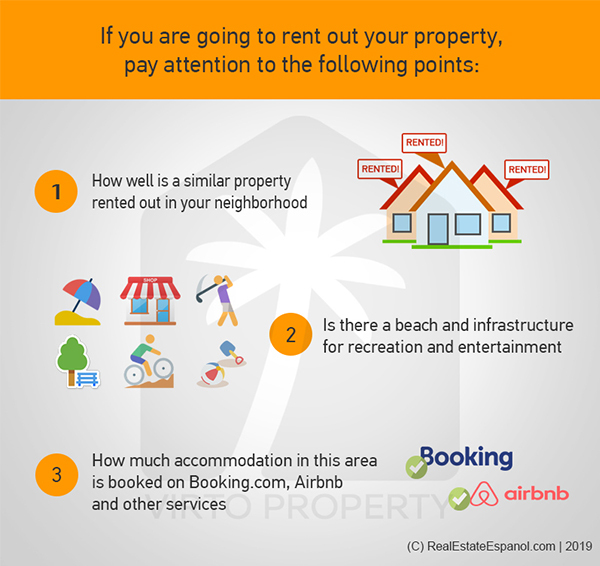
Investment rental property
2-3 bedroom apartments by the sea with resort infrastructure have high rental potential — good investment.
Rental restrictions
- Barcelona: only villas and apartments with tourist license allowed for rental (fines for violations)
- Valencia: since June 2018, tourists can only stay on first and second floors
4. Choose a region to live
Climate
Permanent summer (Alicante) or changing seasons (Madrid, Barcelona).
Coast or inland
Properties 3-10 km from the sea maintain their appearance longer between renovations, plumbing doesn’t deteriorate from salty air. Warning about resort construction: such properties are often built quickly (in one year), thin walls (8-12 cm), low basements, central heating not always installed.
City or countryside
Rural chalets are cheaper. Gated urbanizations by the sea are more expensive. In rural areas you’ll find Finca and Masia (traditional estates with agricultural land). In cities — resort infrastructure.
Infrastructure
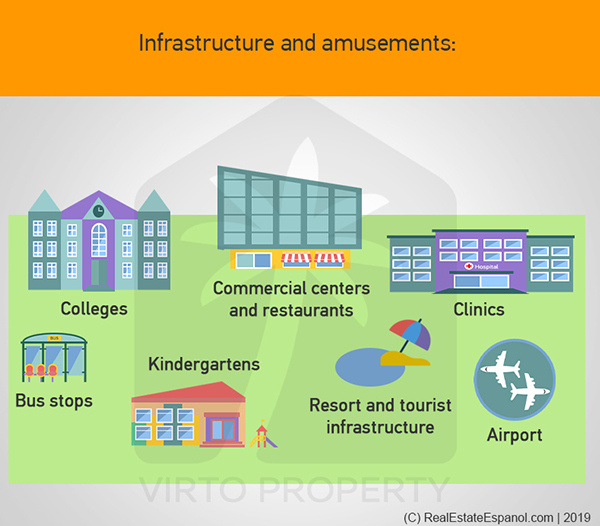
Colleges, kindergartens, clinics, bus stops, shopping centers, restaurants, proximity to airport. Common practice — driving 10-20 minutes for services; up to an hour to private schools.
Entertainment
Proximity to attractions allows combining recreation with rental income. Consider noise and crowds.
5. Types of real estate
- Studio: open plan kitchen/living room, bathroom, possible balcony. 30-45 m²
- Bungalow: compact single or multi-level house
- Apartment: entrance hall, kitchen, living room, terrace, bedrooms, 1-2 bathrooms
- Townhouse (Casa Adosada): multi-level attached houses, 2-4 bedrooms
- Penthouse (Atico): top floor, 1-2 levels, large terraces, solarium
- Villa/Chalet: detached house with plot, parking, pool
- Residential complexes: gated territories with parking, gardens, pools, padel tennis courts, golf
- Finca: large agricultural plot; popular among British and Scandinavians for vineyards
- Masia: traditional Catalan stone buildings; sometimes with watchtowers (miramar). Coastal Masia historically served as defensive structures; dovecotes were used for alarm signals during attacks
6. Property condition: new construction vs secondary housing
New construction
- “Move in and live” — with pre-installed equipment
- Certificate of residential use (cédula de habitabilidad)
- 10-year mandatory warranty (Garantía obligatoria)
- Technical inspection available on request
- Security: developer funds in escrow account; bank releases money only for material purchases for each stage; developer gets profit only after construction completion
- Reconstruction prohibited for first 5 years
- When buying during construction: check developer reliability, years in market, permits availability, legal compliance
Secondary housing
- Freedom to implement your own taste
- Best locations with established infrastructure
- Potentially expensive repairs
- No new buildings in developed resorts
Land plot classification
- Urbanizado: for construction
- 100% plano y urbanizado: fully developed
- Rural: agricultural with restrictions
Warning: don’t buy if utilities aren’t connected — the plot may belong to agricultural land fund.
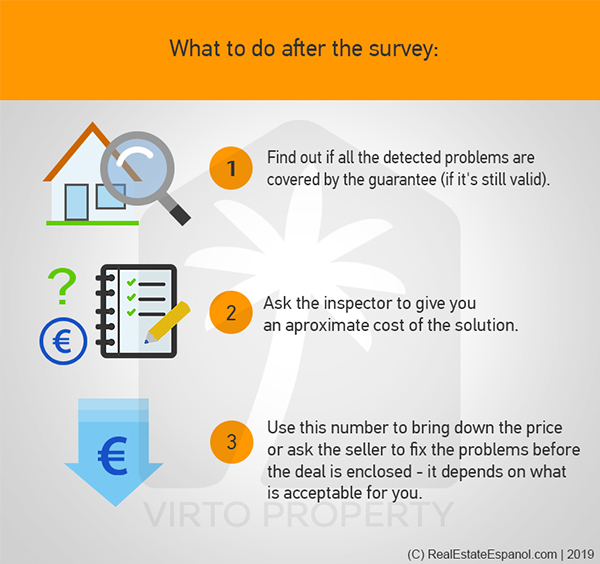
Types of technical inspection
- Snagging Survey: basic new construction check. In Spain, 15 days are given after signing the act to file defect claims
- Building Survey: best option for secondary market; detailed condition analysis
- Structural Survey: in-depth check for sound/structural problems
- Recommendation: engage a certified inspector (RICS member, London)
7. Liquidity
Factors affecting price
Location, area, neighbors, distance to beach, building age, layout.
Spanish preferences
Historically — large living rooms, miniature bedrooms. Modern trend — spacious rooms of all types.
Bonuses increasing value
Additional bathroom, terrace, roof-solarium. Gated complex with pool: +10-15% to value.
Infrastructure impact
Schools, hospitals, transport, shops — increase value.
Investment attractiveness
Spanish real estate steadily grows in price. Popular resorts show annual growth up to 15%. Typical ownership period: 3-4 years. Budget ~10% for taxes and stamp duty.
Red flags
- Coastal protection law: waterfront properties are demolished; unscrupulous sellers offer such buildings at reduced prices (no compensation provided)
- Road expansion: government plans road expansion; fraudsters use this for their purposes
- Okupas (squatters): illegal residents. 2018 amendments allow eviction within 3 months
Safe option: new construction protected by escrow system.
8. Planning a reconnaissance trip
Personal inspection is mandatory despite time constraints.
Two categories of defects
- Property: construction defects, unfinished complexes
- Area: lack of infrastructure, seasonal “extinction” (winter closures), actual distance to beach greater than straight-line distance
Choosing an agent
Find an agency you’re comfortable with — for studying the area and property characteristics.
Reconnaissance methodology
- Pay attention to types of parked cars, clothing and behavior of pedestrians
- Look into local bars
- Watch schoolchildren returning home
- Notice signs in Arabic (reason to think twice)
- Assess number of “for sale” signs (if too many — bad sign)

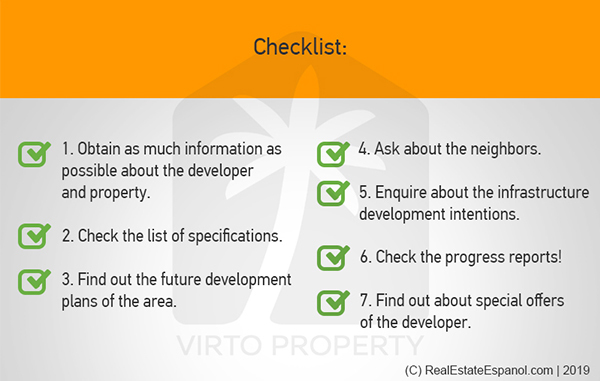
Final checklist
- Developer and legal documentation: request documents and construction plans. Choose south-facing orientation.
- Specification check: clarify furniture options from developer.
- Territory development plans: find out about road expansion or coastal protection law.
- Neighbors: determine demographics. Resort areas usually have foreign majority.
- Infrastructure development: sports facilities, cafeterias, shopping centers — construction plans.
- Construction progress reports: request photo reports from developer via website or Dropbox.
- Discounts and promotions: ask about special offers.
Conclusion
Property selection is the defining stage. Analyze options in just a few days — time shortage, physical stress increase stress. Popular offers disappear quickly, but you shouldn’t rush either.
Key questions: Why are you buying? What type and size? Ready to pay extra for sea proximity? Ready for maintenance costs?