Moraira and Teulada (Spain): Beaches, Attractions and Complete City Guide

Contents
1. General Information

Moraira is a town within the Teulada municipality, located 80 km north of Alicante and 100 km south of Valencia on the Mediterranean coast. These two settlements are usually referred to together as Teulada-Moraira. They lie in the north-east of Alicante province, in the Marina Alta comarca. Teulada is considered the municipal urban centre and lies 6 km from the Moraira coast. The population of Teulada-Moraira is 11,112, roughly evenly split between men and women. Moraira, situated on the shore, has its own port and marina. It is a popular resort. Five fishing boats operate from the local port. Moraira’s fish market is one of the most renowned on the Costa Blanca.
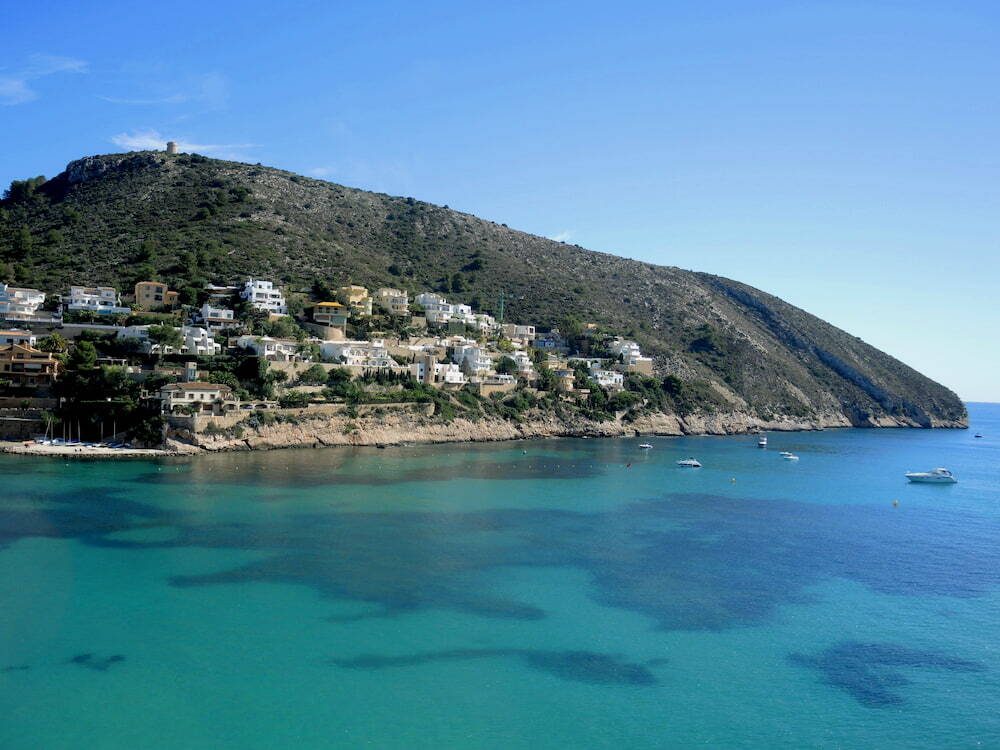
In summer, Teulada-Moraira’s population at least triples. Many foreigners live here permanently - predominantly English, Germans, Dutch and French. The resort is particularly popular among British retirees. Moraira is governed by a local municipal council based in Teulada.
Moraira is deservedly called the pearl of the Costa Blanca - beautiful beaches and coves with warm emerald water combine with stunning views (mountains and vineyards surround 8 km of resort coastline) and protected natural areas. Nearby are the attractive, distinctive towns of Altea, Denia and Javea, plus famous Costa Blanca resorts Benidorm and Calpe.
Several mountain streams flow through the Moraira valley, which do not dry up even in the August drought. To the north, the town borders Cape d’Or, where the eponymous nature micro-reserve is located.
The entire area around Moraira-Teulada is used for agriculture. Over 2,000 hectares are cultivated, of which 1,000 hectares are vineyards. Using hillsides for farming began during the Moorish era. The area is famous for Muscat grapes, particularly the local Mistela liqueur.
Until the end of the first half of the 20th century, Moraira was an ordinary fishing village. But in the 1970s-1980s, during the tourist boom, Moraira’s economy shifted dramatically from agriculture and fishing to international tourism. The town expanded significantly with new hotels and villas, and tourist infrastructure developed. Strict building regulations prevented excessive development and high-rise construction, preserving pine forests, making Moraira an authentic coastal settlement.
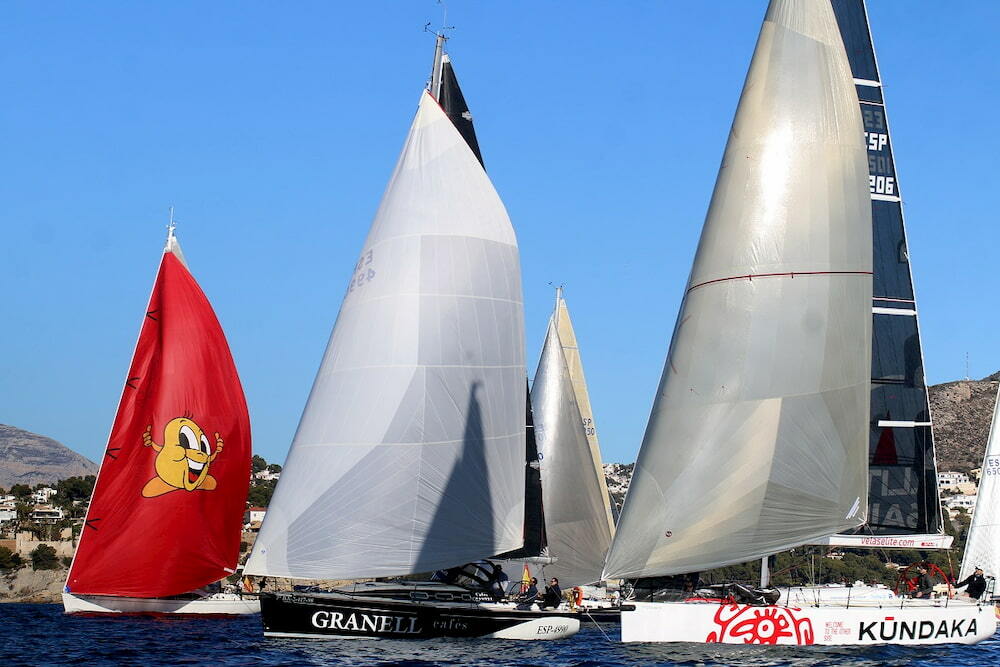
Moraira’s port has a private marina built in 1985 and managed by Club Nautico de Moraira. The marina has 620 sports berths for yachts up to 25 metres. The yacht club has a 50-tonne crane, 10-tonne crane, showers and parking. Sailing courses and numerous sporting events are held year-round: the “300 Millas a Tres” regatta in January, the “Moraira Swim Crossing” in summer, and the “Moraira Santa Eulalia” regatta in late September.
In 1974, a parish church dedicated to the Virgin Mary of the Forsaken (Virgen de Los Desamparados) was built in Moraira, using materials from Moraira’s fortress located a few hundred metres from the town centre.
2. History
The territory of modern Teulada-Moraira has been inhabited since prehistoric times. Items found during excavations of the Cova de la Cendra cave on Cape d’Or confirm human presence dating to the Upper Palaeolithic (15,000-20,000 years BC).
Bronze Age excavations (1600-1200 BC) proved more productive, including sites at Morro del Castellar, Tossal de la Font Santa, Cova de les Rates, Punta de Moraira and others. Iberian traces have also been found on Cape d’Or. However, the Romans left a more significant mark: villas and rural estates were located in the area of present-day Teulada near the Roman municipality of Dianium.
Following the Arab conquest of the Iberian Peninsula, Moors settled the territory, and their cultural influence is still visible in regional architecture and layout. Many place names derive from Arabic: Alcasar, Benimet, Benimarco, Moravit, Pouet del Morro and Tabayra. According to one legend, Moraira was named after a Moorish princess called Ira la Mora.
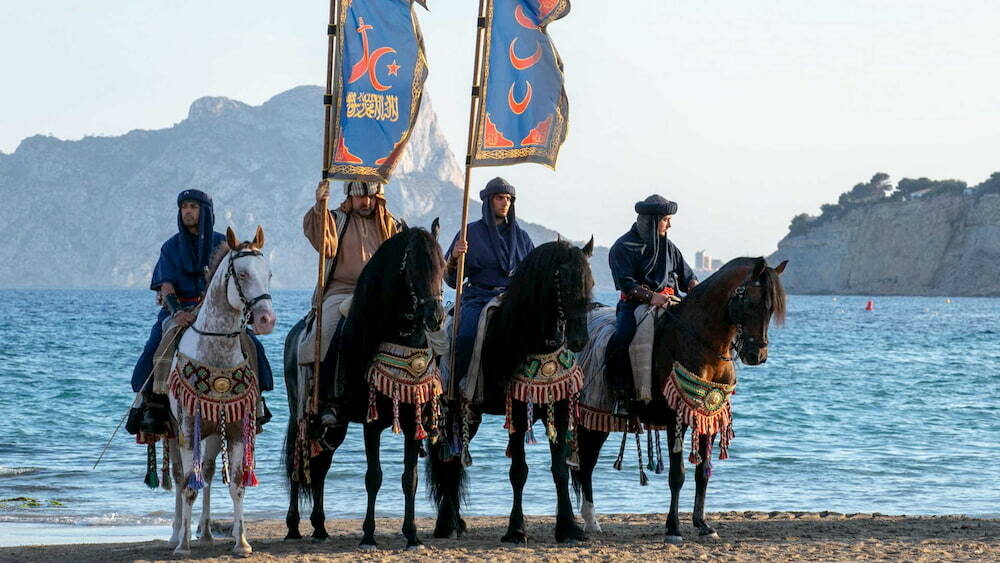
During the Reconquista, in the mid-13th century, Teulada was an Andalusian rural settlement and Moraira a natural port. Between 1270 and 1280, King James I of Aragon expelled the Moors and incorporated the territory into the Kingdom of Aragon. This event is celebrated annually during the famous “Moors and Christians” festival. Subsequently, immigrants from Catalonia and Aragon settled here, bringing the Valencian language.
In 1386, Teulada was established as an independent municipality five kilometres from the coast. In 1410, Teulada was visited by theologian and preacher Saint Vincent Ferrer - patron not only of Teulada but of the entire Valencian region.
In the 16th century, to counter Berber pirates, King Philip II ordered the construction of a watchtower on Cape d’Or. It became part of a planned chain of fortifications that later included Moraira Castle, completed in 1744. The castle was armed with four bronze cannons and seriously damaged by the British fleet in 1801 during the French Revolutionary Wars, but subsequently restored.
By the late 18th century, Teulada was a farming village exporting agricultural produce by sea through Moraira port. In the 19th century, the Marina Alta comarca experienced significant economic growth driven by raisin exports to Europe and America. Pirate raids continued until piracy was finally suppressed following the French conquest of Algeria in 1830.
According to the 1940 “Nomenclature of the Province of Alicante”, Moraira bay had 55 residential and nine farm buildings, with a population of 215. From the 1960s, the tourist boom drove active urban expansion.
3. Climate
Moraira enjoys a stable Mediterranean climate with approximately 300 sunny days per year. Winters are mild, and surrounding mountains protect the area from severe weather. The same hills create a natural barrier for sea breeze circulation, aiding cooling in the hot summer.
Summer sea temperature reaches 26 C. Average annual temperature is 18 degrees. Winter temperatures range from 6 C to 16 C; summer average maximum is 30 C, minimum 20 C. July-August has virtually no rainfall.
Teulada-Moraira 7-Day Weather Forecast
4. How to Get to Teulada-Moraira
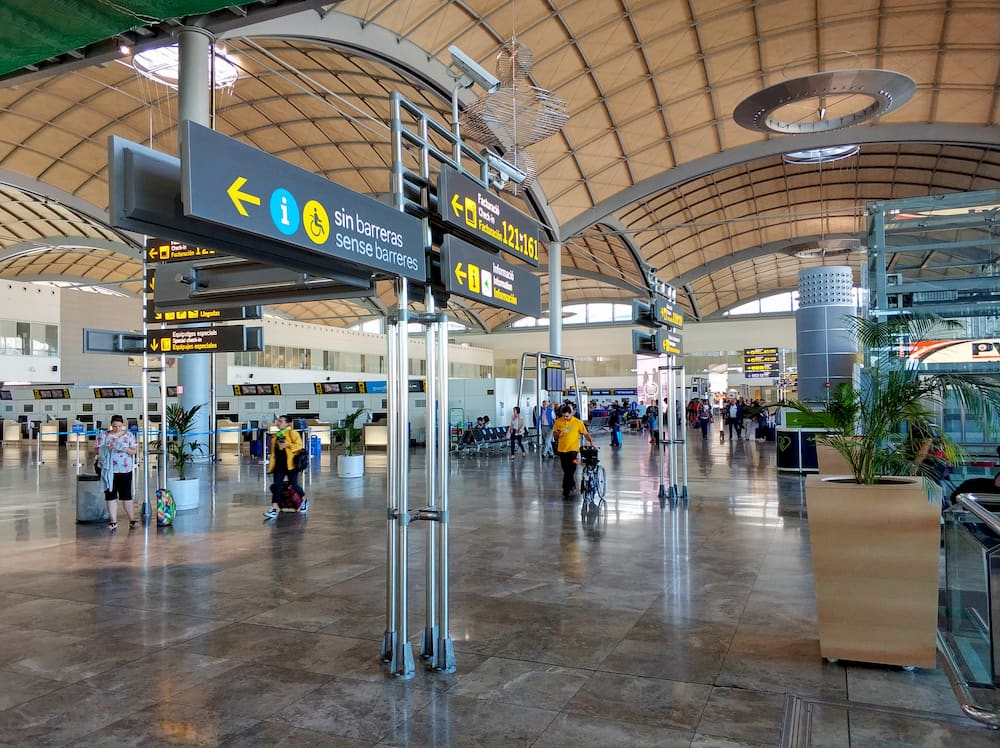
From Alicante Airport, you can reach Teulada by ALSA bus with a transfer in Benidorm. Ticket price: 14.65 EUR, travel time 2-4 hours depending on bus frequency. Timetables at https://www.alsa.es/.
Moraira is reachable from Alicante Airport by car in 1 hour.
From Valencia Airport, there is no direct transport to Teulada-Moraira. However, from the terminal you can reach central Valencia and transfer. City bus 150 (Metrobus) links the airport with central Valencia for EUR 1.45. Metro (Metrovalencia, lines 3 and 5) is also available. ALSA buses from Valencia to Teulada run several times daily. Travel time approximately 3 hours, cost EUR 13.5. By car from Valencia Airport to Moraira is 1.5 hours.
Map of Teulada-Moraira
5. Beaches
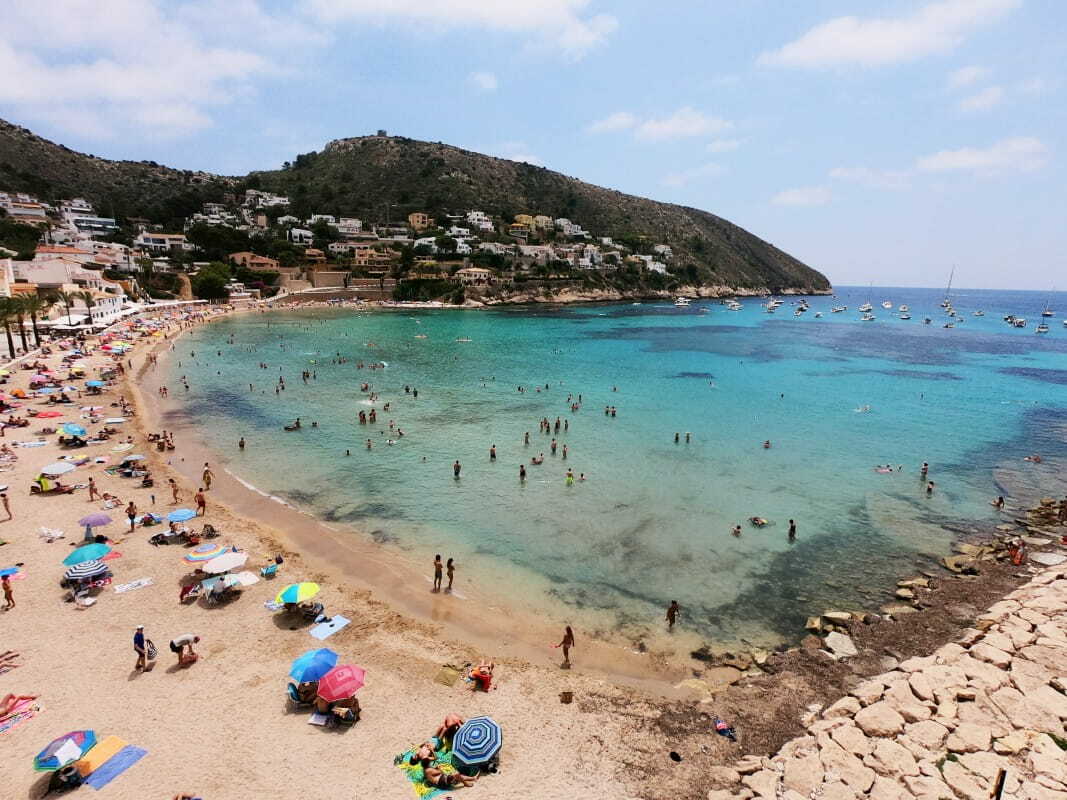
Moraira resort offers 8 kilometres of beaches; the coastline is ideal for relaxation and water sports. For most of the year, Mediterranean waters are superb for sailing and diving thanks to the unique climate with an average annual temperature of 18 C.
Tourists are drawn by the local nature, magnificent sandy beaches and scenic coves with clean emerald water. Moraira’s beaches and coves are a true paradise for diving, snorkelling, water skiing and kayaking. Numerous centres offer instruction and equipment hire. Rich underwater life with numerous species can be observed through crystal-clear water. The coves of Cap Blanc, Andragos, El Portet, Cap d’Or and El Laberinto are ideal for these activities. L’Ampolla, Portet, Platjetes and L’Andrago beaches hold “Blue Flag” status.
Playa del Portet. The Cap d’Or peninsula protects the cove and Portet beach with fine sand and crystal-clear waters. A small shell beach surrounded by cliffs is a wonderful spot for relaxation, swimming and kayaking. A walking trail to the Cap d’Or watchtower and micro-reserve begins from the beach. The 300 m long, 10 m wide beach is near Moraira port with magnificent views of the Penon de Ifach rock. Equipped with toilets, showers, parking, restaurants, lifeguard service and CCTV.
Playa de L’Ampolla at the foot of Moraira Castle is the town’s most famous beach with fine golden sand. 250 m long, 30 m wide. Surrounded by palms and pines. The “Marjal del Senillar” nature reserve is nearby. Bars and restaurants line the promenade. Accessible for people with disabilities, with sunbeds, parasols, sports and play areas, lifeguard service.
Les Platjetes are two small coves, a semi-urban beach approximately 200 m long and 20 m wide. Sand with pebbles, small boat access. Can be crowded in high season but features a charming viewpoint and parking.
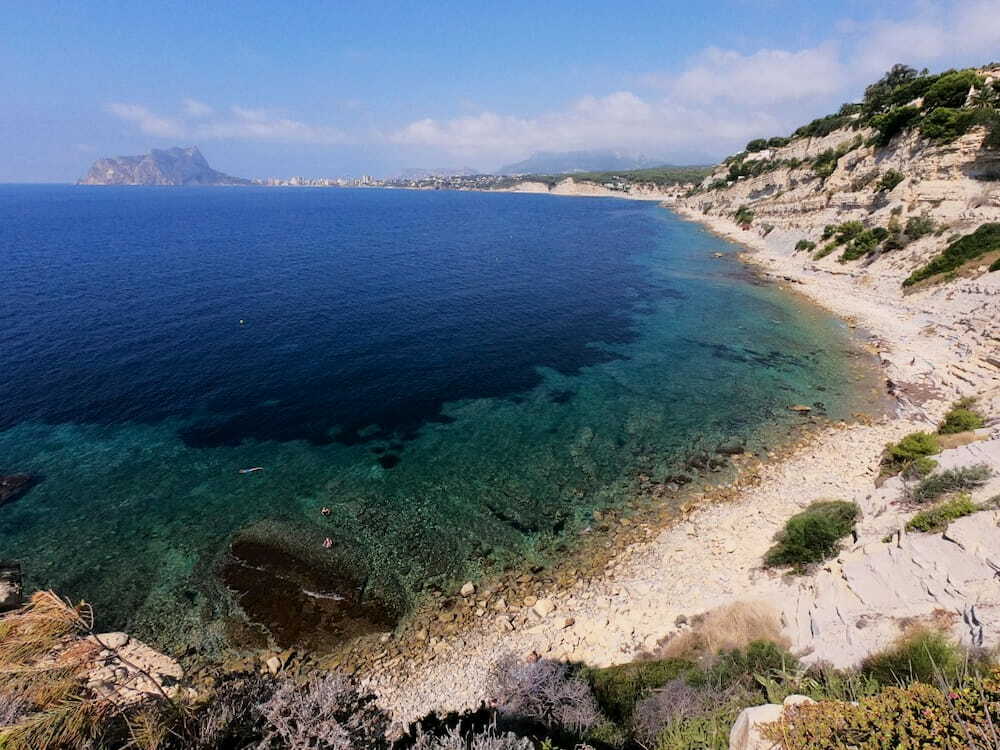
Cala Cap Blanc. The tranquillity and beauty of this cove create a truly paradise-like atmosphere for swimming, sunbathing, diving and fishing. A small wild rocky cove 200 m long and 8 m wide, difficult to access, so virtually tourist-free. Impressive views of the Mediterranean, Penon de Ifach, Calpe and the Moraira cape. Ideal for diving and snorkelling.
L’Andrago Cove is a small cove near Moraira’s marina. Crystal-clear water and fantastic views of Moraira houses amid the mountains. Rocky coastline and deep clear waters are ideal for snorkelling and fishing. The cove’s viewpoint is one of the most popular: the views are perhaps the most memorable on the coast. 150 m long, 10 m wide. Restaurants, parking and lifeguards available.
Cala del Portitxolet is a rocky cove 80 m long and 6 m wide near the entrance to Moraira yacht club. Here you can find a rare plant - steppe sun rose - and observe seabirds.
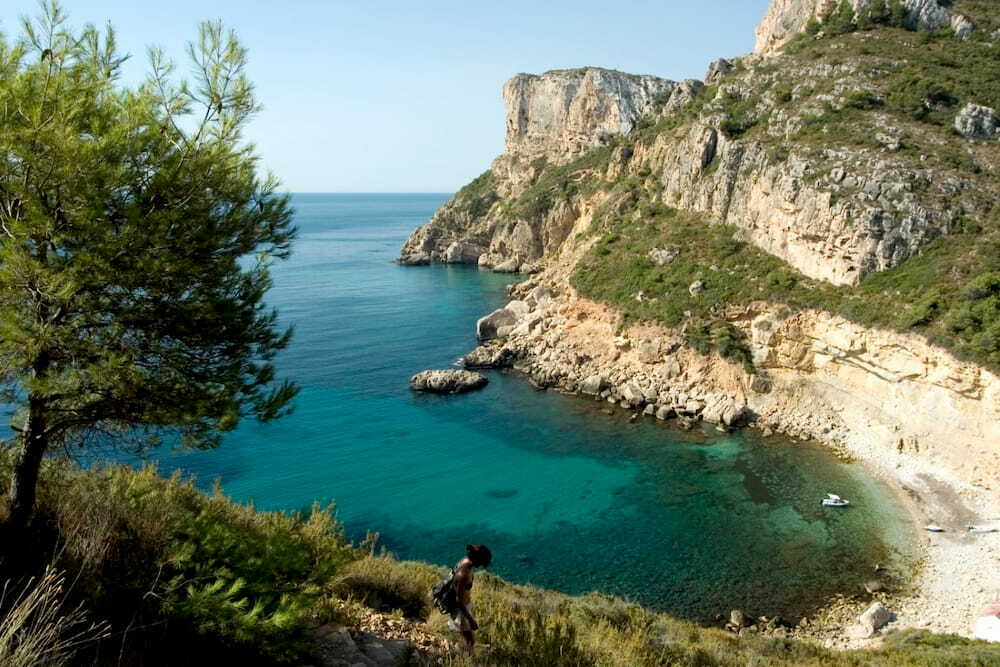
Cala Llebeig can only be reached on foot or from the sea. Route SL-CV50 passes through the “Widows’ Ravine” (Barranco de la Viuda). A rocky cove with crystal waters, 120 m long, 10 m wide. In the local micro-reserve, the Barlia robertiana orchid, broom and Valencian bindweed are of particular interest.
6. Attractions of Teulada-Moraira
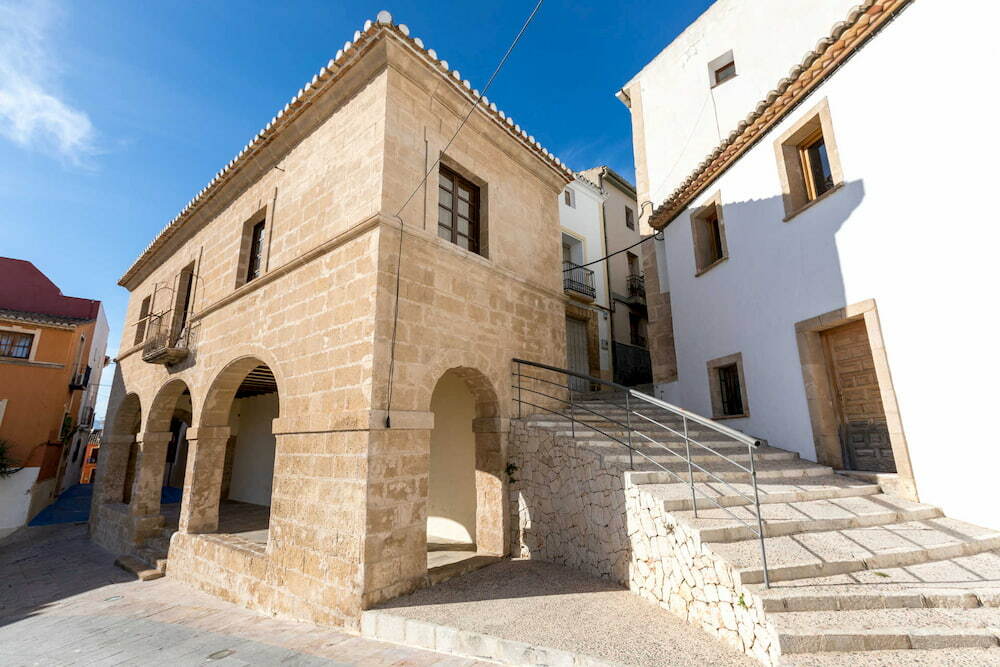
Gothic Walled Teulada (Teulada Gotica Amurallada) is declared a Site of Cultural Interest. This unique architectural ensemble of exceptional beauty, harmony and order dates from the Christian conquest period including the 16th-17th centuries. Rough stone houses preserve the structural and aesthetic characteristics of Gothic style.
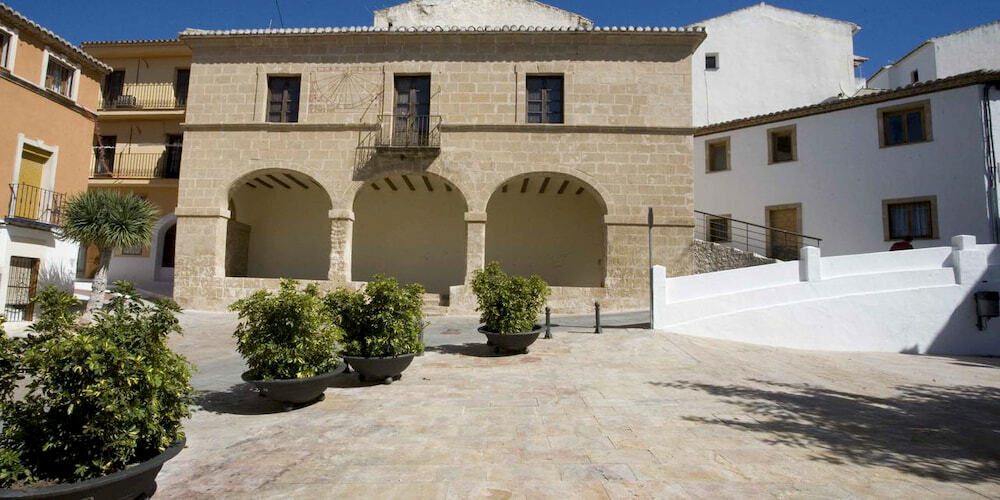
Hall of Jurors and Judges (Sala de Jurados y Justicias) was built in 1620 as the first civic building for local authority sessions. The facade is harmonious and simple, of rough stone. The ground floor has three semicircular arches forming an open gallery. Above is a balcony with two flanking windows. Sundial from 1639 survives.
Moraira Castle (Castillo de Moraira), built in the 18th century for protection against pirates, dominates L’Ampolla beach. The fortress has a “bull’s hoof” shaped base with a semicircular south-facing facade. The coat of arms bears the completion date - 1744. Walls are 10 metres thick of rough stone blocks. The castle functioned until the mid-19th century; restored in the early 1980s preserving the original appearance.
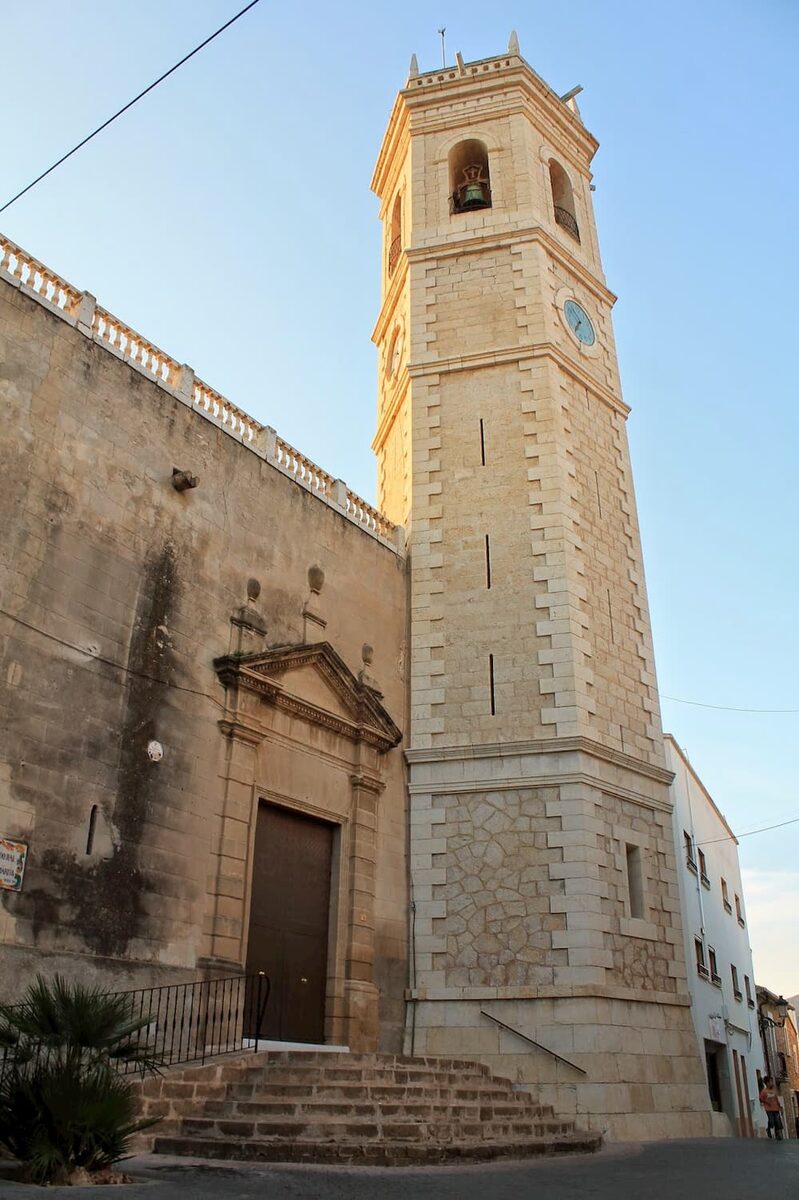
Church of Saint Catherine the Martyr (Iglesia Parroquial de Santa Catalina Martir) in Teulada was built as a fortress-church to protect inhabitants from Berber pirates. Construction continued 35-40 years. The central element is a single-nave church with four sections, altars between buttresses and a fan vault. Around 1895, a new bell tower was erected - a superb example of hexagonal towers in medieval tradition, 31 metres tall with a 24-metre base perimeter.
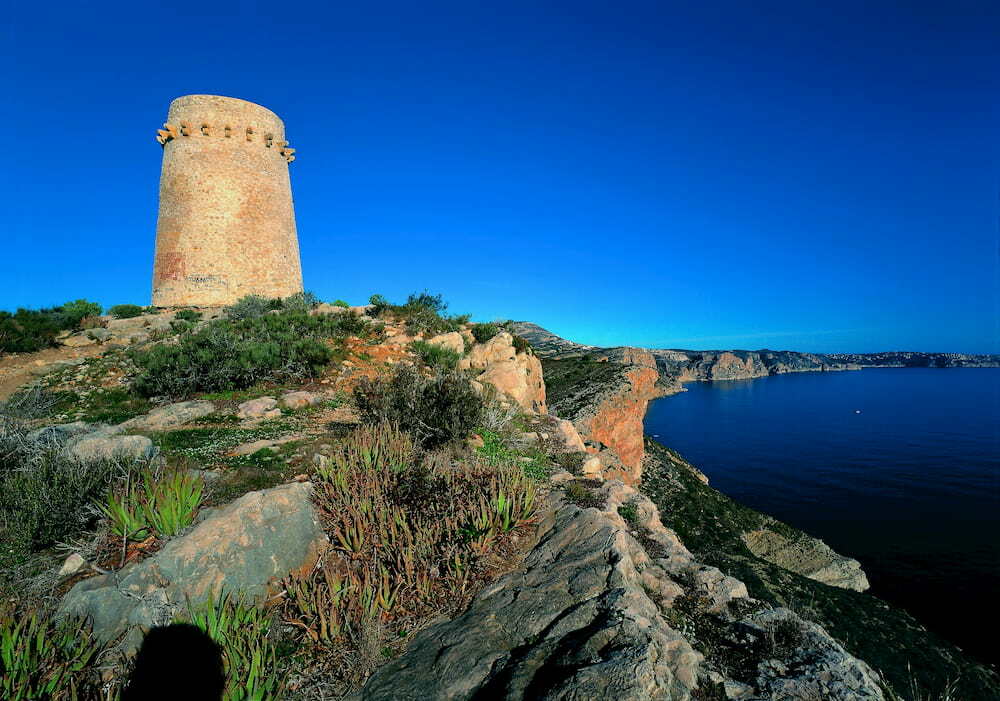
Cap d’Or Watchtower (Torre de Vigia del Cap d’Or) stands at the highest point of the Cap d’Or peninsula - one of the coast’s most scenic spots. Built in the late 16th century. A circular tower with 26-metre perimeter (7 m diameter) and 11-metre height. Armed with two cannons discovered in 1980 on El Portet beach. Breathtaking views of the sea horizon.
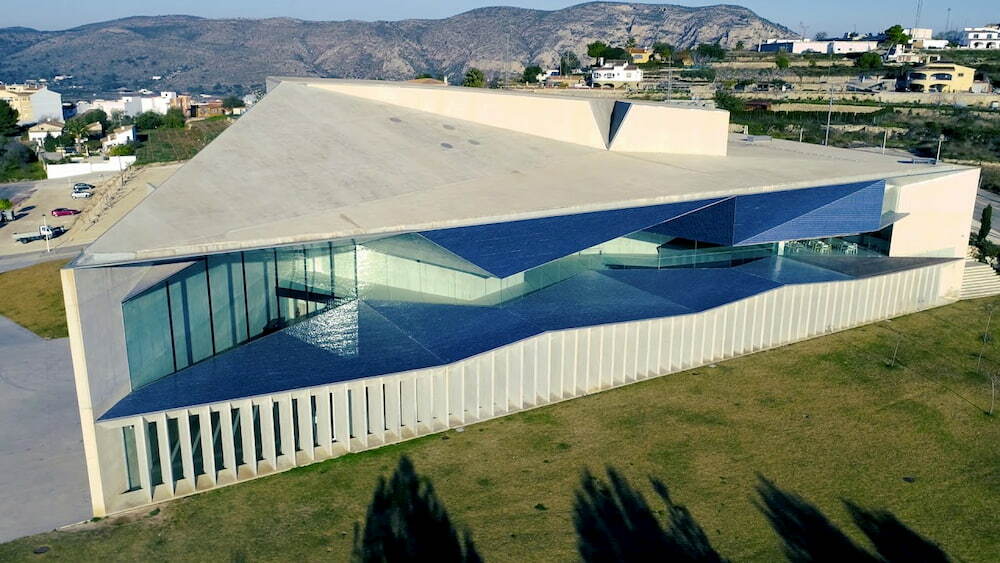
Teulada-Moraira Auditorium is a masterpiece of modern glass and concrete architecture by internationally acclaimed architect Francisco Mangado Beloqui, opened in 2011. The unusual design with broken angles and the south-east facade facing the sea, covered in blue ceramics, embody the unity of the rocky coast and blue Mediterranean. The auditorium stands at Teulada’s highest point, with views of central Moraira and terraced vineyards. Diverse cultural events are held year-round.
Other attractions include the Church of Our Lady of the Forsaken in central Moraira, the 17th-century Ermita de la Divina Pastora chapel in Renaissance and Baroque style, the Chapel of Saint Vincent Ferrer with its characteristic dome of blue, green and white tiles, and the Font Santa Chapel between Moraira and Teulada - legend has it that Saint Vincent Ferrer created a water spring for his thirsty sister Constanza, and a chapel was built on the spot.
7. Natural Attractions
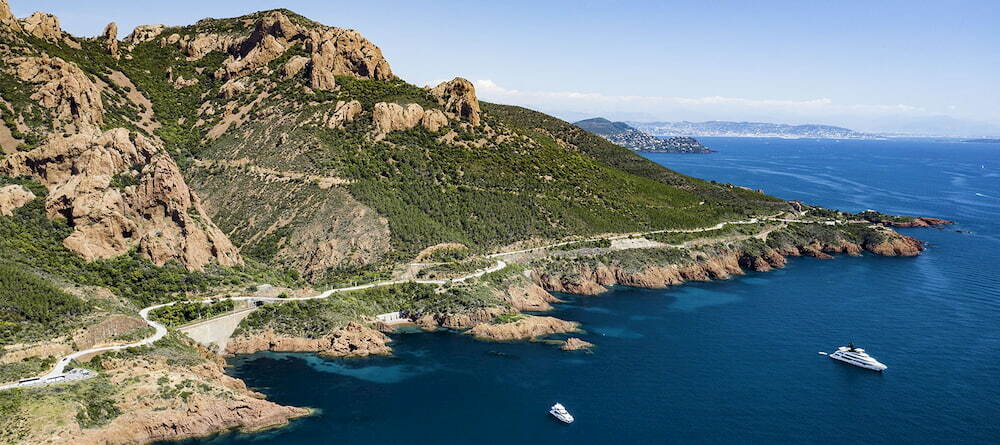
Cape d’Or is a narrow peninsula extending almost 1 km into the sea, reaching 166 m above sea level. Listed as a Valencian Community micro-reserve since 2002. Flora: broom, Valencian bindweed, Ifach silene, chamaerops and rosemary. Fauna: rabbits, foxes, hedgehogs, badgers, and among birds: peregrine falcon, blue rock thrush, common swift and partridge. The territory has been inhabited since prehistoric times.
On the peninsula’s north side is La Cova de les Rates cave, formed by water erosion in limestone. Accessible only from the sea. Declared a wildlife reserve in 2004 - various bat species inhabit and breed here. Entry prohibited April-August.
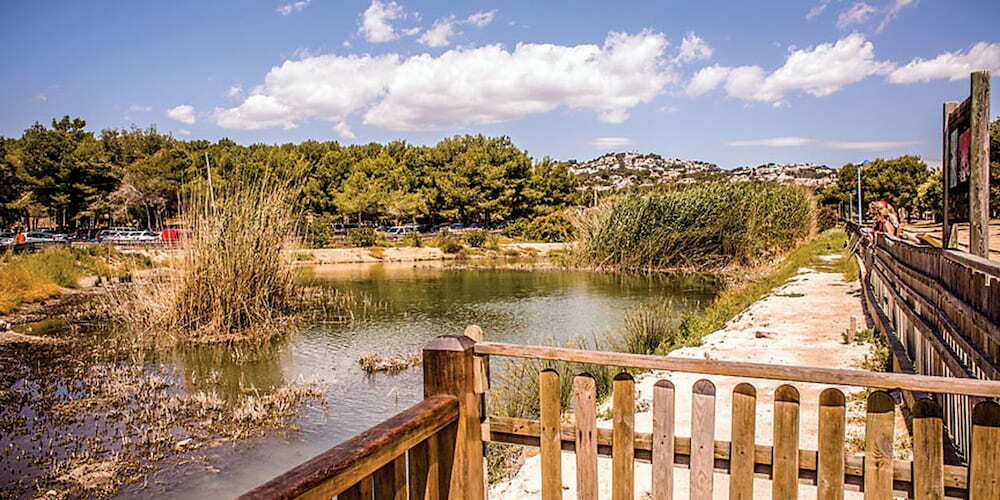
Marjal del Senillar Reserve lies beside L’Ampolla beach. These are lagoons separated from the beach by a sand strip. Some flora and fauna are endangered - for example, the “fartet” fish (Spanish toothcarp). Reeds grow on banks, maritime holly, sea fennel and sea daffodil in dunes. Fauna includes moorhens, mallards, reed warblers, Iberian green frogs, common toads, grass snakes, mullet and the endemic Mediterranean “gambeta” shrimp.
8. Hiking
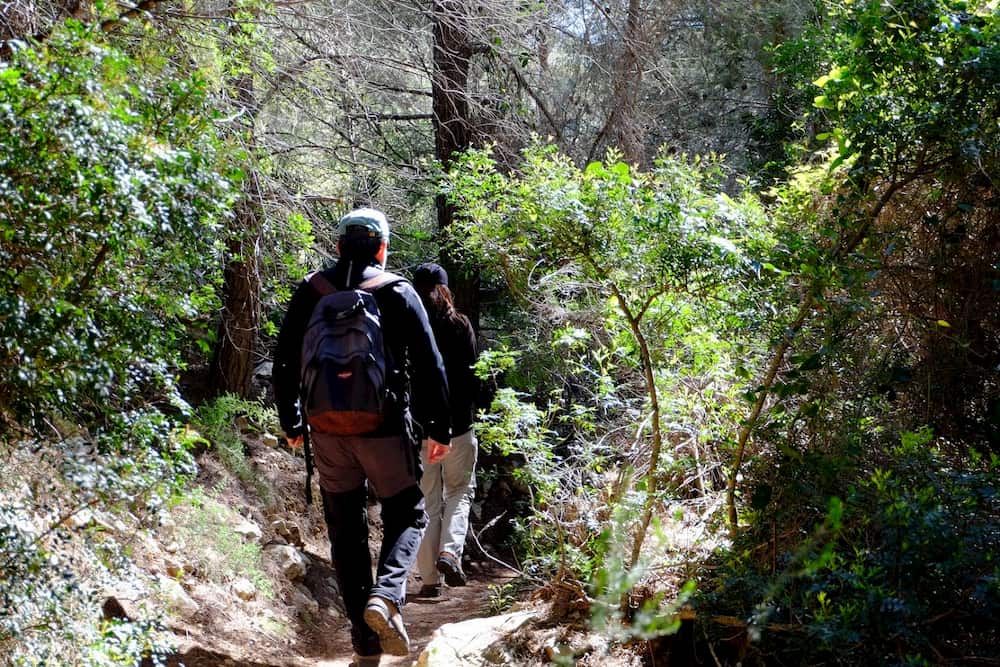
Moraira is ideal for hiking enthusiasts with several waymarked trails: Font Santa, Benimarco, Castellons and Cap d’Or, offering stunning bay views. Pine forests and vineyards form typical Mediterranean landscapes.
Widows’ Ravine Trail (Barranco de la Viuda) passes through one of the municipality’s most beautiful areas. Distance: approximately 4.1 km; round trip takes 3 hours 15 minutes. Start: Calle Canario.
Cap d’Or Tower Route covers approximately 1.5 km, completed in 1 hour (round trip). Start: Calle Puerto de Alcudia. Views of Moraira bay, Penon de Ifach, L’Albir, Sierra Aitana and even the Ibiza coast on clear days.
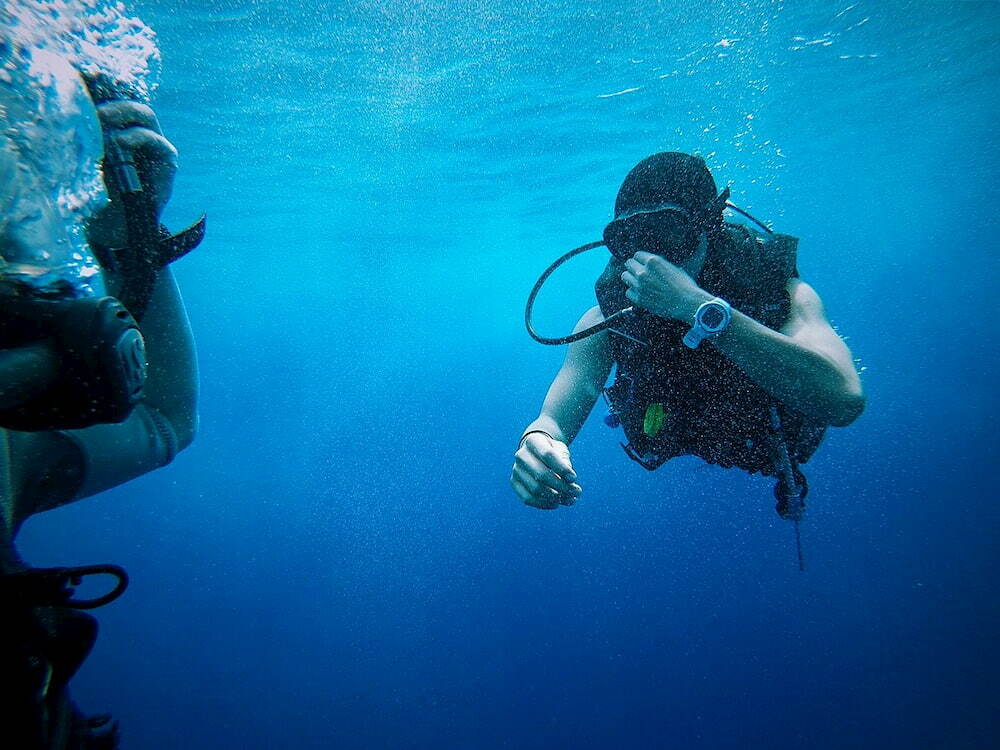
Among the most interesting routes are underwater (snorkelling) trails. At Cape Cap Blanc - a natural sea-view balcony overlooking Penon de Ifach. In shallow water (under 2 metres): white sea bream, Mediterranean rainbow wrasse, blennies and other species. Further from shore, octopus and cuttlefish appear.
At Cala Andrago, large stone slabs alternate with smooth rocks amid white sandy shallows where Mediterranean Posidonia grows. Octopus, moray eels and grouper inhabit these waters.
In Portet cove, comfortable swimming and diving are possible. The Cap d’Or underwater route features extensive Posidonia colonies, octopus, sea bream, red scorpionfish and soft corals (gorgonians). There is even a small cave.
9. Gastronomy and Restaurants
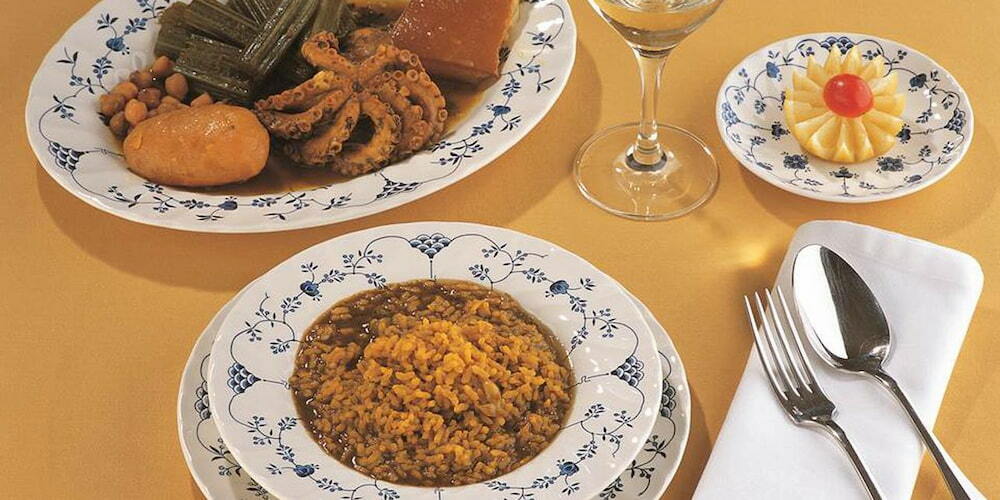
Teulada-Moraira’s gastronomic offering is one of the Marina Alta comarca’s greatest assets. Here you can enjoy the finest fish, seafood and rice dishes, plus renowned wine from local Moscatel Romano grapes.
Fish and seafood caught by traditional methods are a quality mark in Moraira bay. Main local dishes: “puchero de polp” (octopus with rice and vegetables), “sopa de peix” (fish soup), salt tuna, broth and anchovies.
Rice dishes: “arros a banda” (rice in fish broth), “arros amb fessols i naps” (rice with beans and turnips), sardine and spinach paella, black rice, “arros meloso de pulpo” (creamy octopus rice) and “casuela de arros” (oven-baked paella).
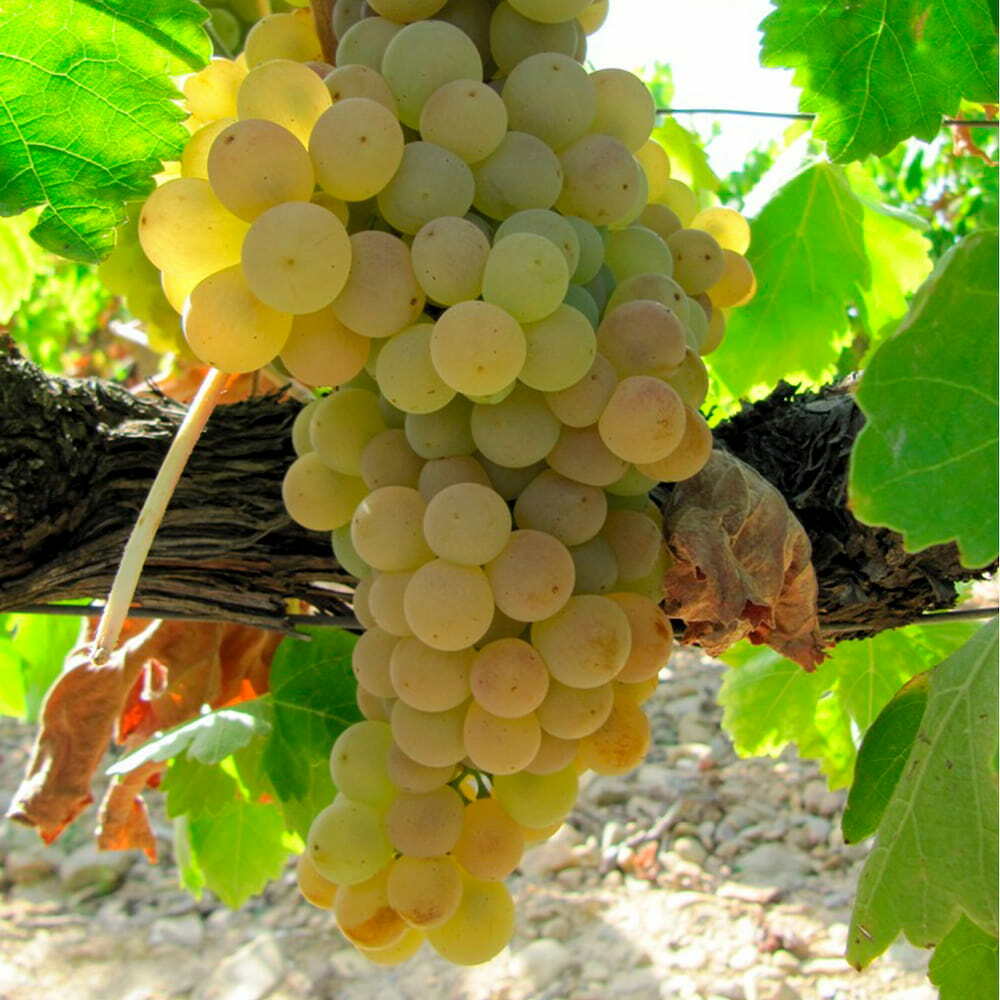
Wine and drinks. Teulada-Moraira is renowned for its local “Moscatel Romano” grape with an intense aroma. Star products: Mistela de Moscatel and internationally awarded Muscat dessert wines. Also excellent white, rose and red wines, vermouths and sparkling wines.
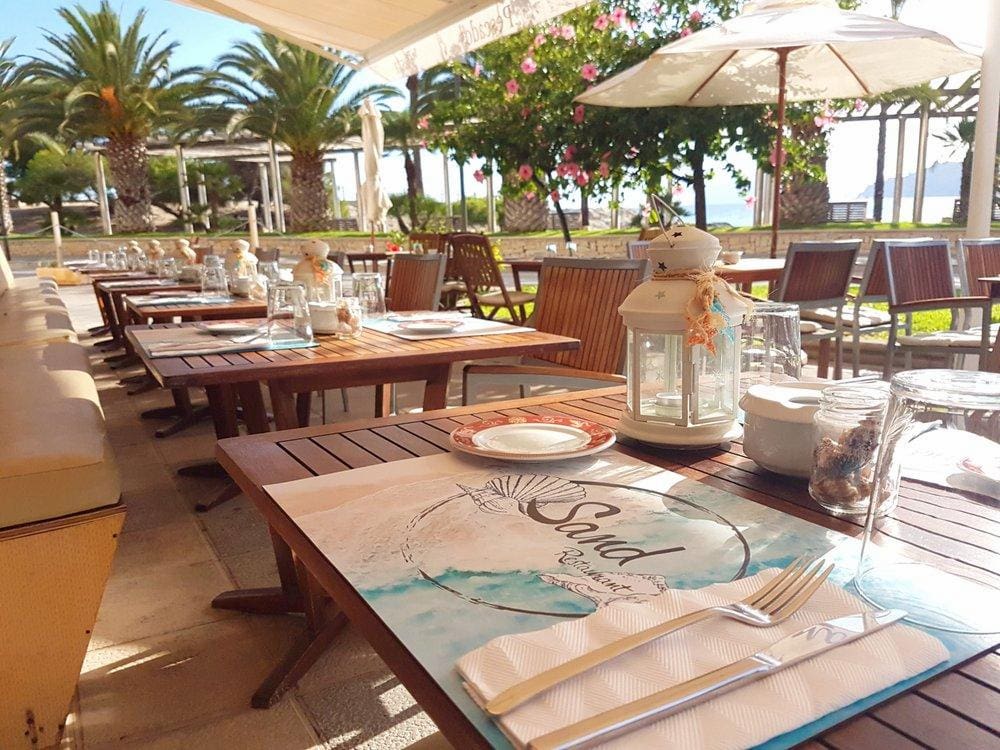
Among restaurants: Michelin guide recommends Sand Restaurant at La Sort Hotel Moraira - Mediterranean and international cuisine metres from L’Ampolla beach. Kosta on the Moraira-Calpe road offers atmosphere and a wonderful terrace. Le Dauphin in central El Portet beach is one of the most exclusive restaurants with French and Mediterranean cuisine, an impressive terrace with views of the sea, Penon de Ifach and the bay. Maxim on Calle Cabo San Vicente serves local cuisine in refined presentation.
Affordable options: El Raco de l’arros (all rice dish varieties), Chillers Bar & Restaurant (Latin and Mediterranean cuisine), Tasca 42 (gourmet tapas), La Brisa in Teulada (local food at low prices), Verd i Vent (traditional cuisine with live guitar music).
10. Festivals
According to Spanish tradition, no month passes without celebrations. Teulada-Moraira is no exception.
- February - carnivals with colourful processions, concluding with the traditional “Burial of the Sardine”.
- April/May - patron saint festival of San Vicente Ferrer: solemn procession, fireworks, cavalcades.
- Late April - “Vive Teulada-Moraira” festival with gastronomic and commercial fair on the Moraira castle esplanade.
- June - “Moors and Christians” festival with annual parade and traditional conquest of L’Ampolla beach.
- June - San Juan: bonfires in Teulada, bonfires on the sand by the sea in Moraira, midnight wave-jumping and wish-making.
- July - Days of Our Lady of the Forsaken and Our Lady of Carmen: maritime procession, nearly two weeks of celebrations.
- August - medieval market in Teulada; Shopping Night in Moraira.
- September - Moscatel Festival with wine and Mistela tastings.
- October - Oktoberfest with German beer and performances.
- November - Santa Cecilia festival and Saint Catherine of Alexandria’s day (25 November).
- December - commercial fair in Moraira and Christmas market in Teulada’s historic centre.
11. Property in Teulada-Moraira
Moraira is a small seaside town visited by thousands of tourists annually. This directly affects the housing market. Most chalets, villas, houses and apartments in Moraira serve as European holiday homes.
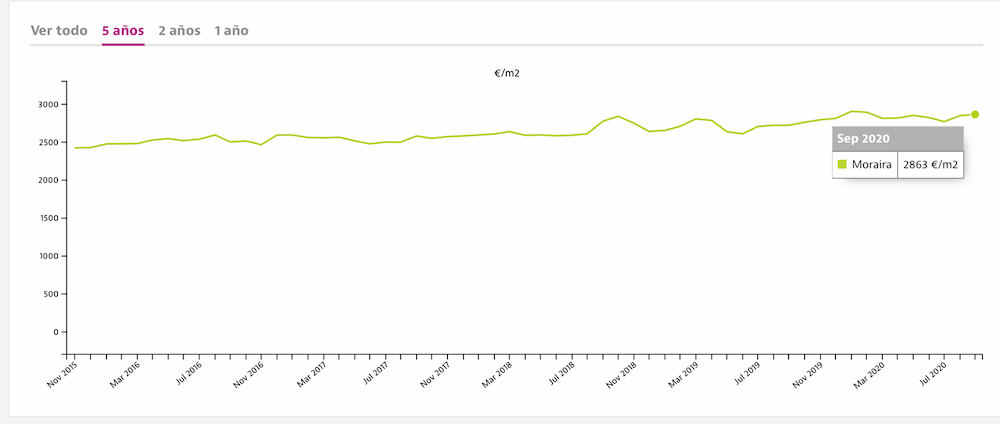
Property in Moraira is among the most expensive in Alicante province: EUR 2,863/m2 (as of October 2020) and steadily rising. Despite the pandemic, the per-metre price did not decrease compared to 2019. For comparison: the average cost of 1 m2 in Teulada (which includes Moraira) is just EUR 1,428 - half the price.
The most expensive property is in the El Portet - Pla del Mar area (from Moraira Castle to the Cala de Llebeig viewpoint). Price per m2 here is EUR 3,395. Property consists mainly of detached villas with pools, large plots and sea views. Prices depend on year of construction, location and size - from 500,000 to 4 million EUR.
Few apartments exist in the town - approximately 15% of all listings. Apartments within walking distance of the sea start from 150,000 EUR (for 60 m2). 85% of the market consists of duplexes, detached chalets and private villas. Choice is extensive - approximately 800-900 options. Small chalets further from the sea start from 180,000 EUR; near the sea from 270,000 EUR.
Holiday rental is extremely sought after, as there are virtually no hotels. Many foreign tourists choose villas for the whole family, costing from EUR 1,000/week in high season. Moraira is one of the most popular destinations among European and British tourists, creating stable demand for property in this part of the Costa Blanca.