Moving To Spain After Brexit
Contents
Emigration to Spain from Great Britain
Best places to live in Spain
Visa requirements for Spain
Job searching in Spain
Banking system and taxation
Healthcare in Spain
Driving in Spain
Moving to Spain with children
Transporting pets to Spain
Moving to Spain after Brexit
Main mistakes when moving to Spain
Conclusions
1. Emigration to Spain from Great Britain
Spain attracts settlers with its lifestyle and nature. The country offers:
mild climate, warm sea;
high standard of living, culture and tolerance;
developed infrastructure even in small towns;
reasonable prices compared to other European countries;
low crime rate;
high level of medicine;
accessible high-quality education.
Regardless of the purpose of relocation — education, business, real estate investment or retirement — Spain accepts various categories of immigrants within its multicultural society.
2. Best places to live in Spain
Costa Blanca. The most sought-after area: 25% of foreign buyers choose it, and demand continues to grow. Costa Blanca offers a wide selection of affordable housing that is not available on other Spanish coasts. For example, in Benidorm, Alicante and Torrevieja you can buy a studio apartment for 50,000 EUR. The southern part of Costa Blanca includes popular destinations: El Campello, Elche, Santa Pola, Ciudad Quesada, Guardamar del Segura, La Zenia, Pilar de la Horadada, Torrevieja, Arenales del Sol, La Marina and Santa Pola. The northern part of Costa Blanca is known for its resorts: Denia, Els Poblets, Javea, Benitachell, Moraira, Calpe, Altea, Benidorm. Real estate in the north is more expensive than in the south. Due to high demand in these cities, there is a shortage of land for development, especially in Benidorm.
Costa de Valencia (Valencia, Gandia, Mislata, Montserrat). The capital of the coast is Spain’s third most populous city. In addition to excellent beaches and numerous attractions, Valencia houses some of the country’s best educational institutions.
Costa Calida (Murcia, San Pedro del Pinatar, Los Alcazares, La Manga). A coast popular for both family holidays and elderly tourists. The landscape consists of mountains and plains, pine forests and sand dunes, protected salt lakes with mud baths and over 200 kilometers of sandy beaches.
Andalusia (Costa de Almeria, Costa Tropical, Costa del Sol, Costa de la Luz). The country’s second most popular region — up to 20% of foreign real estate investors choose it. Costa del Sol resorts (bustling Malaga, luxurious Marbella and Estepona) have long been favored by show business stars, athletes and politicians, so real estate prices on the southern coast start from 200,000 euros.
Catalonia (Costa Brava, Costa del Maresme, Costa del Garraf, Costa Dorada). Catalonia is chosen by 15% of foreign buyers. Mainly French (40%), which is explained by the proximity of the border. Barcelona is a prestigious city for living and studying, and correspondingly expensive: in elite areas like Eixample or Sarria-Sant Gervasi, the square meter has already exceeded 4,000 EUR, and the city average is around 3,000 EUR. The region is also known for the Costa Dorada and Costa Brava coasts with resorts Lloret de Mar, Playa de Aro, Blanes, Palamos, Sitges, Tarragona, Salou.
Madrid. The main destination for those planning to work in the capital or invest in real estate. Madrid accounts for 8% of purchase and sale transactions involving foreigners. Housing in the capital is somewhat cheaper than in Barcelona — around 2,500 EUR per square meter.
Canary Islands. The Canaries attract 10% of foreigners coming to Spain. The magnificent climate and diversity of nature make Tenerife and Gran Canaria true paradise islands. Canarian housing can hardly be called cheap. Decent apartments in Tenerife cost on average 200,000–300,000 EUR.
Balearic Islands. These islands attract 7% of foreign real estate buyers in Spain. Ibiza and Mallorca are especially popular among Germans. Housing in Ibiza — the island of eternal fun and loud music — is quite expensive: from 2,000 EUR per square meter.

Spain’s climate
Spain has three climatic zones:
Northern regions are influenced by the Atlantic Ocean: mild winters (rarely below +2°C) and moderate summers. The sea warms up to 20–22°C during peak season. This area is suitable for families with children due to the absence of extreme temperatures.
Central Spain — continental climate. In winter, temperatures rarely drop below +2°C, except in mountainous areas where drops to -10°C occur.
Mediterranean southeast — mild winters (12–18°C) and hot summers (usually +25–28°C, can reach +35°C). Winter lasts from December to February.
Canary Islands — tropical climate year-round: from +19°C in the coolest months to +25°C in summer. Swimming in the ocean is possible at any time of year.
Local language
The official language is Spanish (Castilian). Regional languages have official status in autonomous communities:
- Catalan — in Barcelona and Catalonia;
- Valencian — in Valencia;
- Balearic — in the Balearic Islands;
- Basque (Euskera) — in the Basque Country;
- Galician — in Galicia.
Foreign language proficiency depends on the region. Tourist areas have English; provincial areas — rarely. French is common in the north, Portuguese in the west, French and Italian in the Balearics. The younger generation of Spaniards generally speaks English.
Popular areas among British expats
More than 310,000 British citizens permanently reside in Spain. This is the third largest foreign group after Moroccans and Romanians. The average age of British expats (53.5 years) exceeds the average age of the population as a whole.
Britons concentrate on the coasts of Andalusia, Catalonia and Valencia, with the highest density in the provinces of Alicante and Malaga.
Alicante Province. Orihuela, Torrevieja, Rojales, Javea, San Fulgencio, Benidorm.
Malaga Province. Mijas, Benalmadena, Fuengirola, Estepona, Marbella.
Santa Cruz de Tenerife Province. Arona, Adeje, Santiago del Teide, San Miguel de Abona.
Balearic Islands Province. Calvia, Palma, Santa Eulalia del Rio, Alcudia.
Murcia Province. Mazarron, Cartagena, Murcia, Los Alcazares, San Javier, Torre Pacheco.
Almeria Province. Albox, Vera.
Las Palmas Province. Tias, La Oliva, Teguise, Antigua, Mogan, Yaiza.
Barcelona Province. Barcelona, Sitges, Sant Cugat del Valles, Castelldefels.
Valencia Province. Oliva, Valencia, Liria, Ontinyent, Gandia.
Madrid Province. Madrid, Alcobendas.

3. Visa requirements for Spain
Citizens of countries not in the EU/EEA/Switzerland are required to obtain visas and work permits. After Brexit, this increasingly applies to British citizens.
Schengen short-term visa
For stays of no more than 90 calendar days, a Schengen visa is required, covering tourism, sports, family visits, short-term studies, language courses or business purposes.
Residence permit in Spain
Stays exceeding 90 days require obtaining a residence permit (residencia). The application process begins in the applicant’s country of residence, where embassies issue national visas. The resident card is processed upon arrival in Spain at the municipality of intended residence.
Types of temporary residence permits
For property owners — the simplest way to obtain a one-year visa (90 days of stay for every 6 months, as well as the right to move around Schengen countries).
Without work rights — requires only proof of solvency.
With work rights — requires an employment contract with an employer for at least one year.
Student residence — when studying at a school or university.
“Golden visa” — issued for investments exceeding 500,000 EUR in Spanish real estate, purchasing shares of Spanish companies, a bank deposit of at least 1 million EUR, or holding Spanish government debt worth at least 2 million euros.
Other options — family reunification, settlement (arraigo), scientific activities, etc.
Permanent residence permit is valid for 5+ years and grants the right to work throughout Spain. The right to obtain it usually comes after 2–5 years of legal residence depending on circumstances.

How to obtain a NIE number
NIE (Número de Identidad de Extranjero) — foreigner’s identification number that serves as a tax identifier. It is necessary when buying real estate, studying or conducting economic activities.
Required documents:
- valid visa (if required);
- passport with copy;
- two 3×4 cm photos;
- return ticket;
- 10 EUR fee.
NIE assignment officially takes 5 working days, although delays are possible during peak season.
4. Job searching in Spain
EU citizens enjoy freedom of movement and the right to employment on par with Spanish citizens without visa requirements. Citizens of non-EU countries must obtain a residence permit and work permit.
In-demand professions
doctors;
sales managers;
telecommunications engineers;
IT specialists;
programmers;
planning and business analytics specialists;
power plant workers.
Lists of in-demand specialties are updated quarterly; vacancies vary by province.
Work visas for non-EU citizens
The employer must provide an official job offer and prove the necessity of hiring a foreign specialist. The employer must confirm that the search in the Spanish labor market was unsuccessful. The State Employment Service issues a certificate within 15 days stating the impossibility of finding a suitable specialist among national personnel. Large companies usually go through this procedure; small businesses often do not.
It is difficult for foreigners without knowledge of Spanish and professional expertise in demanded areas to find work.
5. Banking system and taxation
Opening a bank account
For residents: banks request a resident card, employment contract, payslips and the latest income certificate.
For non-residents: accounts are opened mainly to start a business or buy real estate. NIE number is mandatory.
Banking system features
Spanish banks increasingly refuse to accept cash. Non-residents cannot deposit funds through ATMs or transfers from third parties — only from accounts in the tax residence country of the owner.
Annual documentation requirements for non-residents are significant. Banks establish additional fees, mandatory insurance products (medical, home insurance) and service commissions.
Recommendations
Compare several banks before opening an account. Carefully study the contract terms, including ATM withdrawal fees, conditions for use abroad, foreign currency purchase fees, online transaction fees, monthly transaction limits.
Taxation of real estate income
Tax obligations depend on resident status. Tax residents of Spain — those who spend 183+ days a year in the country — pay taxes on worldwide income. Non-residents pay taxes only on income obtained in Spain.

Income tax rates (Impuesto sobre la Renta) for Spanish and EU tax residents since 2016 — from 19 to 45%. The rate for non-residents is 24%. Employed residents of Spain pay tax on a progressive scale if their annual income exceeds 22,000 EUR.
When renting out real estate, non-resident income is taxed at 24% (for EU residents — 19%). This tax is paid quarterly.
If a non-resident does not rent out real estate, they also pay non-resident income tax (IRNR — Impuesto sobre la Renta de No Residentes) of 2% of the cadastral value or 1.1% if the cadastral value was changed after January 1, 1994. The 24% rate applies to these 2% (or 1.1%).
If the value of assets exceeds 700,000 euros, it is also necessary to pay wealth tax (Impuesto sobre el Patrimonio). It is paid in June for the previous year and is calculated based on the net value of assets on a progressive scale: rates from 0.2 to 2.5%. Applies to real estate, income, bank deposits, sources of temporary income, luxury items, art and antiques.
The equivalent of capital gains tax — Impuesto sobre las Utilidades de Sociedades. Standard rate — 25%, for newly created companies — 15% (this rate is valid for 2 years from the moment of receiving the first profit). Companies with profits exceeding 1,000,000 EUR are also required to pay municipal tax (IAE). Rates depend on the type of economic activity and features established at the municipal level. Usually the mandatory payment amount ranges from 1,000 to 4,000 EUR per year.
Avoiding double taxation
Agreements to avoid double taxation operate between Spain and Great Britain. Permanent residents of Spain receiving income in Spain can request exemption from taxes in Great Britain by submitting form SI to HMRC with an attached tax residence certificate from the Spanish tax authority.
Capital gains, rental income from real estate in Great Britain and similar items remain under British taxation. For residents of both countries, consultation with a tax advisor is strongly recommended.
6. Healthcare in Spain
EHIC coverage for EU citizens
EU citizens with a European Health Insurance Card (EHIC) get access to emergency care in Spain. EHIC does not cover planned procedures; coverage scope depends on the insurer.
Medical care upon reaching retirement age
EU/EEA/Swiss citizens who have reached retirement age in their countries receive free medical care in Spain when registering form S1 from their home country authorities.
Registration for workers, self-employed and students
Three steps to access state healthcare:
Step 1 — Social Security number: visit the General Treasury of Social Security (Tesorería General de Seguridad Social, TGSS) with NIE and passport. Online application is available through the “Tu Seguridad Social” portal if you have NIE.
Step 2 — Confirmation from INSS: The National Social Security Institute (Instituto Nacional de Seguridad Social, INSS) issues a document on the right to medical care after providing ID/passport, NIE, registration certificate (empadronamiento) and TGSS number.
Step 3 — Medical card (TSI): Tarjeta Sanitaria Individual is processed at the nearest health center (Centro de Salud) upon presentation of social security number, ID, NIE, INSS document and empadronamiento certificate. The card is valid for 4 years.
Dentistry
State healthcare does not cover dentistry. Private dental insurance costs 10–20 EUR per month.
Private insurance
Advantages: reduced waiting times (in the state system, average waiting for a doctor’s appointment is 65 days, operations — 4 months) and English-speaking specialists. Monthly cost of private insurance starts from 30 EUR and varies depending on age and coverage scope.

7. Driving in Spain
Main differences
Spain has left-hand drive and right-hand traffic, which is opposite to British norms. The right-hand drive of British cars creates difficulties when overtaking and paying on toll roads. British commercial vehicles are prohibited in Spain. Reselling a right-hand drive car is practically impossible.
British driving licenses
British licenses are valid in Spain until expiration. Renewal in Spain requires a medical examination. Renewing licenses before leaving Great Britain allows avoiding this procedure.
Importing a car to Spain
Residents (spending 183+ days a year in the country) can drive an unregistered vehicle in Spain for no more than 6 months per year. Registration within 30 days of import is mandatory at provincial DGT offices.
Required:
- insurance;
- technical inspection (Inspección Técnica de Vehículos, ITV);
- transport tax: 21% (new cars); 0–14.75% (depending on CO2 emissions);
- payment of road tax through local municipalities.
Recommendation: use gestor services (administrative intermediary) to comply with legal requirements.
Registering a British car in Spain is an expensive and lengthy procedure. Alternative: buying a used Spanish car or a demonstrator car from dealers at a discount.
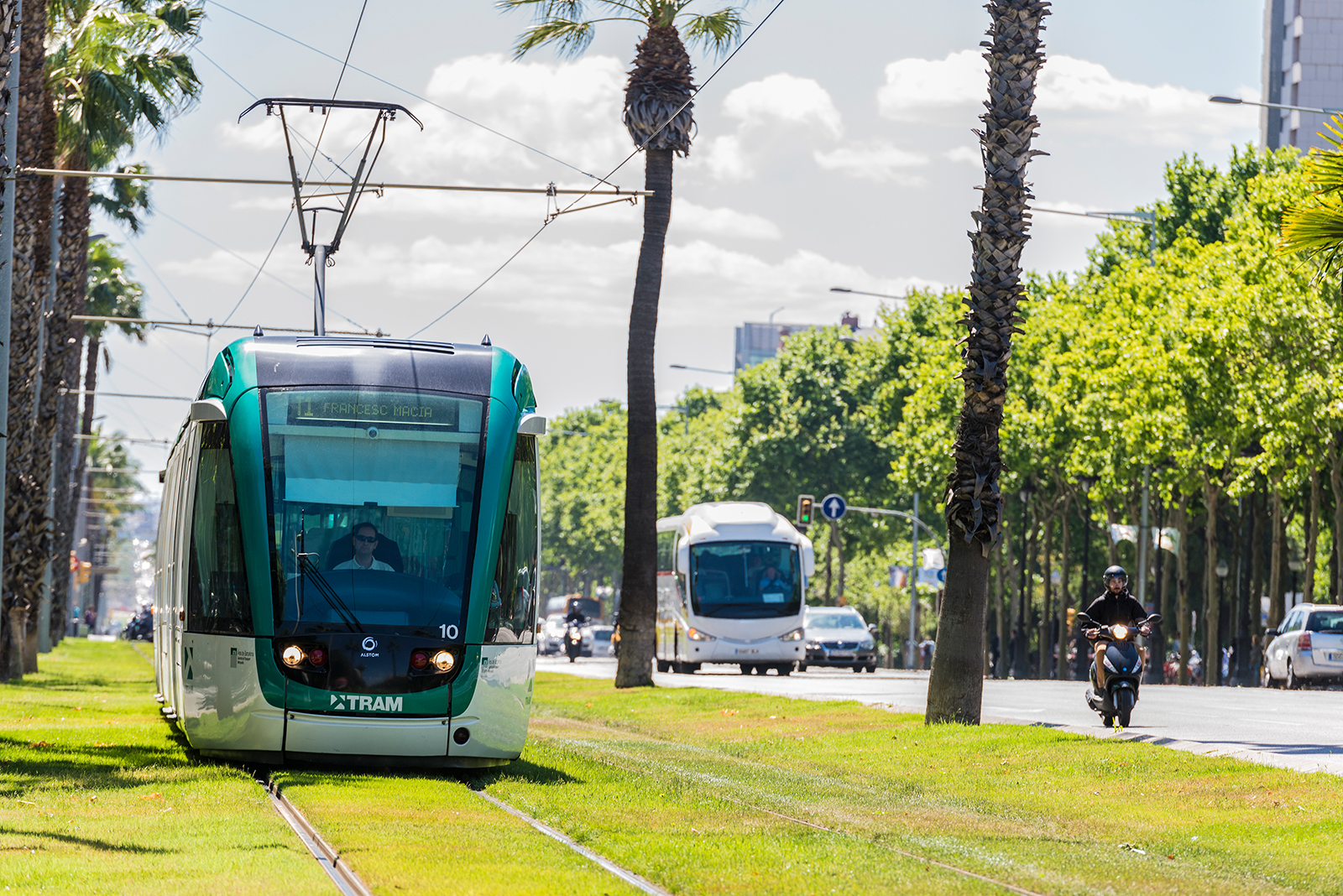
Public transport
Public transport in Spain is well developed, except for residential complexes with villas like Ciudad Quesada, where a personal car is necessary.
Buses: run on schedule, spacious, new, with air conditioning. Return buses stop at the same places but at different times. Night buses are painted in dark colors (blue/gray).
Cost: single trip — 1–1.5 EUR. A round-trip ticket (ida y vuelta) often costs less than two separate tickets. Monthly pass — 40–50 EUR.
Railway: RENFE trains serve most destinations. Major cities (Madrid, Barcelona, Valencia) have metro systems.
Taxi: expensive in small towns and residential areas, which is why tourists rent cars and residents buy their own.
8. Moving to Spain with children
Preparation
Apply for necessary visas in advance. Register children in padrón (local municipality registry) for enrollment in kindergarten or school.
Kindergartens
Private kindergartens: 200–500 EUR per month; many introduce English, which facilitates subsequent admission to international school.
State kindergartens: up to 100 EUR per month (optional).
Levels of school education
Preschool (4–6 years) — optional
Primary school (6–12 years) — mandatory
Secondary school (12–16 years) — mandatory
Bachillerato (16–17/18 years) — required for admission to higher education institutions
Spain has 3 types of schools:
State schools. Distribution depends on place of residence and institution workload. “Open days” are held from March to May. Competition for free places increases year by year due to the influx of immigrants.
Semi-state schools — partially funded by the Catholic Church or local authorities.
Private schools — primarily international: English, American or Spanish schools providing the opportunity to obtain an international baccalaureate diploma (A Level, IB). In English and American schools, instruction is conducted exclusively in English, Spanish as a foreign language. Cost — over 500 EUR per month; English schools are the most expensive. Boarding schools are not common in Spain.
Required documents:
Two 3×4 cm photos
Registration certificate in Spain (padrón from municipality/Ayuntamiento)
Copies of parents’ and child’s passports
Copy of child’s birth certificate
Copy of parents’ N.I.E.
Vaccinations certified by a Spanish pediatrician
Documents are submitted to the local education center (Concejalía de Educación del Ayuntamiento). As a result of distribution, the school may be far from home. Direct appeal to the school principal indicating already studying relatives or friends sometimes helps.
9. Transporting pets to Spain
Requirements
- Veterinary passport
- Microchip or readable tattoo (before July 3, 2011)
- Rabies vaccination no earlier than 21 days and no later than 1 year
- Animal age — over 12 weeks
Changes after Brexit
Entry from third countries now requires additional documents:
- Veterinary health certificate
- Rabies antibody test
- Deworming against Echinococcus multilocularis
- Declaration prohibiting commercial use of the animal
Airline selection
Airlines allowing pet transport in the cabin on flights from Great Britain to Spain: Iberia Express, Vueling (sometimes), KLM, Air France, Lufthansa.
On return trips, transport in the cargo hold is required.
Alternative transport
Car or ferry — cost 20–40 pounds sterling.

10. Moving to Spain after Brexit
Transition period (February 1 — December 31, 2020)
The Withdrawal Agreement established transitional guarantees for British citizens, maintaining the effect of EU legislation with exceptions:
- Lost the right to vote in European Parliament elections.
- The right to vote in municipal elections was preserved thanks to a bilateral agreement between Great Britain and Spain.
- Lost the right to implement EU Legislative Initiative.
After the end of the transition period (from January 1, 2021): rights to residence, work, study and social security are protected by the Withdrawal Agreement.
Actions for British citizens
Already have Spanish citizenship: continue living in Spain without restrictions.
Living or planning to move to Spain during the transition period (before January 1, 2021): when intending to live more than 3 months, you must register with the Central Register of Foreigners. You will immediately be issued a Certificate of Registration of a European Union Citizen indicating name, nationality, address, foreigner identification number and registration date. This certificate allows confirming beneficiary status of the Withdrawal Agreement after the end of the transition period. The application is submitted to the immigration service of the province of residence or to the appropriate police station.
After the transition period: rights depend on future agreements between Great Britain and Spain or general immigration norms.
Permanent residence
Currently, more than 370,000 British citizens permanently reside in Spain. Legal residents (registered EU citizens) with 5+ years of residence in Spain can apply for long-term residence (permiso de residencia de larga duración) after losing EU citizen status.
Residents with less than 5 years of experience will need alternative permission (employment, study, retirement) depending on future agreements between Great Britain and Spain.
Requirements for long-term permit:
- no criminal record;
- private medical insurance;
- proof of income/funds meeting annual requirements.
Working in Spain after Brexit
Employees: employer processes residence documents for legal status.
Self-employed (autónomo): apply for self-employed residence or non-work residence. Must confirm sufficient funds for business, residence and job creation for Spanish residents.
Retirement in Spain
For pensioners, pension payment issues depend on the terms of agreements between Great Britain and Spain.
Non-pensioners before leaving Great Britain: must obtain a non-lucrative visa with confirmation of sufficient funds in the account, or family reunification status (if spouse/children are Spanish residents).
Healthcare: register form S1 in the country of origin to obtain the right to medical care in Spain. Conditions of medical provision in the absence of an agreement after Brexit are determined by reciprocal measures of the British government.
11. Main mistakes when moving to Spain
Mistake 1: Not registering as an EU foreigner
Obtain a registration “green card” at the local police station or foreigners’ office. Access to social services requires this mandatory document.
Mistake 2: Not registering in padrón
Registration in the municipality (padrón) provides access to free healthcare, school enrollment for children, pensions and other social services.
Mistake 3: Ignoring currency exchange
Transfer funds through currency brokers, getting optimal exchange rates, instead of standard bank transfers.
Mistake 4: Delaying car registration
Register a car with foreign plates within 30 days of applying for residence.
Mistake 5: Not taking care of medical provision in advance
Determine medical service preferences. Evaluate state system capabilities compared to private insurance. For pensioners — process form S1 to receive free medical care.
Important: registration as an EU foreigner is simultaneously a legal requirement and an official recommendation of the British government before Brexit, preventing problems with Spanish residence in the future.
12. Conclusions
Moving to another country is a serious responsibility regardless of relocation reasons. Permanent residence in Spain (183+ days per year) entails significant tax consequences that must be considered in advance.
Moving to Spain requires careful preparation with an individual approach to each case. Professional help effectively resolves documentation issues, language barriers and legal nuances.