Pilar de la Horadada: The Southernmost Point of Alicante Province

Contents
1. General Information

Pilar de la Horadada is a municipality in Alicante province, Spain, located just 1 km north of the Murcia border, making it the southernmost point of Alicante province. The town has a population of 21,905. Until 1986, Pilar de la Horadada was part of the Orihuela municipality.
Distances to major cities: Valencia approximately 230 km, Alicante 68 km, Murcia 45 km, Cartagena 41 km, Orihuela 36 km, Torrevieja 18 km. The municipality lies 3 km from the coast on a coastal plain.
The name derives from numerous watchtowers built to protect the coast from pirates during the Reconquista. One tower, Torre Horadada, was named after the rock formation on which it stood. In the 18th century, the settlement adopted the name Pilar de la Horadada in honour of the patron saint - the Holy Virgin Mary del Pilar.
The region enjoys an exceptional climate described as “eternal spring”, with an average annual temperature of +18 C and over 3,200 sunshine hours per year.
2. Climate and Weather
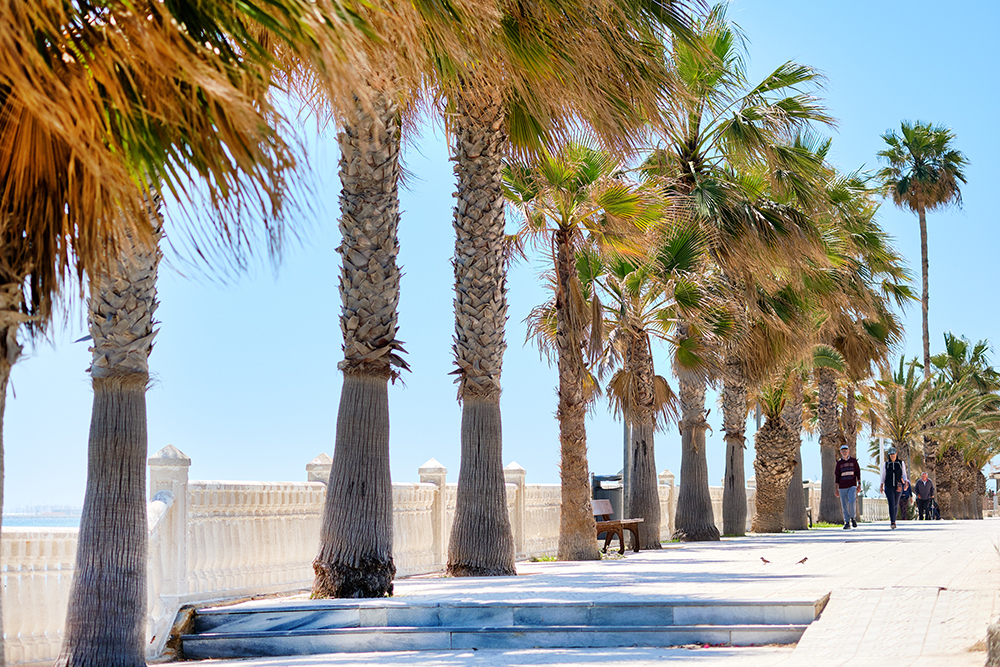
Pilar de la Horadada has a dry Mediterranean climate with mild winters and hot summers. North-easterly, south-westerly and westerly winds prevail. Summer days are scorching and mostly clear; winter can bring cloud and cold wind.
Annual temperatures range from +6 C to +30 C, rarely below +1 C or above +32 C. The hot season runs mid-June to September, with average maximum daytime temperatures above +27 C. July-August averages +26 C, with August peaking at +32 C.
The cool season begins around 20 November and continues until mid-March. December-January averages 10-12 C. Sea temperature in July and September reaches +25 C, in August +26 C.
3. How to Get to Pilar de la Horadada
By car: via the N-332, Mediterranean motorway AP-7 (exits 768, 770 and 774) and the ring road connecting to San Pedro del Pinatar via El Mojon. CV-925 leads to Orihuela, CV-920 to San Miguel de Salinas.
The nearest railway station is Balsicas-Mar Menor, 20 km away in Murcia. Two airports serve the region: Murcia Airport (Murcia-Corvera, 45 km) and Alicante-Elche Airport (70 km).
From Murcia-Corvera Airport, INTERBUS buses run to San Pedro del Pinatar 2-3 times daily for 10 euros, journey time 1.5 hours. From San Pedro, LATBUS route 70 reaches Pilar de la Horadada in 15 minutes. By car, the journey takes approximately 35 minutes.
From Alicante Airport, Costa Azul buses depart several times daily to Pilar de la Horadada for EUR 5.30, journey time approximately 1.5 hours.
4. Best Beaches
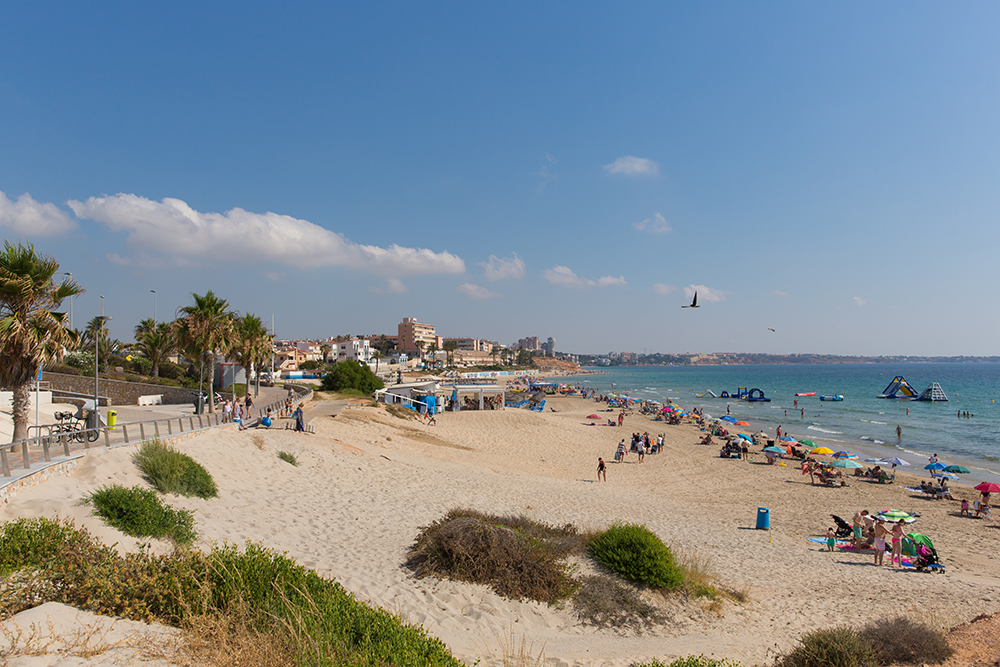
Five kilometres of excellent beaches with superb white sand stretch across the municipality, many holding “Blue Flag” status. All beaches are safe even for small children - gentle, smooth entries without sharp depth changes or irregularities.
Rare Posidonia oceanica seagrass grows in coastal waters - a Mediterranean endemic. This species grows in clean, oxygen-rich waters, strengthens sandy beds against erosion and shelters fish, crustaceans and molluscs - a paradise for divers.
Playa Las Higuericas and Mil Palmeras are the area’s most popular beaches. Playa Mil Palmeras is a sandy beach bounded by Vista Mar to the north and Rio Seco to the south. One of the liveliest beaches thanks to easy access and parking, set in an urban environment with promenade and restaurants. Disabled ramps, lifeguard service and beach bars available.
Near the Rio Seco mouth lies Playa Rio Seco, fully equipped with showers and water sport hire. To the south at Punta del Gato are Calas de Rocamar coves - hard to reach and therefore secluded but scenic, with beautiful sand and calm water.
Playa Jesuitas is a 465-metre sandy beach, 65 metres wide, bounded by cliffs to the north and Torre de la Horadada marina to the south. Surrounded by red walls, its name relates to a former Jesuit monastery. Blue Flag status since 1992.
South of Playa Jesuitas lies small Playa del Conde, notable for scenic views including the famous Torre Vigia de la Horadada watchtower. Further stretches Playa del Puerto (approximately 700 m), a spacious 95-metre-wide beach. Playa de las Villas Higuericas runs 1,400 metres at 80 metres wide, with white sand and dunes where town events and concerts take place, including the “Luna de Agosto” youth music festival.
Playa del Mojon is the municipality’s last beach, bordering Murcia, with a small but attractive promenade, wooden walkways and dunes. Fishermen prefer this beach because of the Esculls del Mojon coastal reefs - stone formations that trap fish.
5. History
Roman settlement began with a villa called Thiar on the Via Augusta - the longest Roman road in Spain (approximately 1,500 km), connecting Cartagena with Elche. The villa served as a rest stop for travellers.
In the 7th-8th centuries, Visigothic ruler Theodemir of Orihuela governed the territory under King Egica. After the Arab conquest, Theodemir negotiated a peace agreement with Abd al-Aziz ibn Musa, becoming ruler of a small principality. In 778, after Theodemir’s death, his lands were incorporated into the Emirate of Cordoba.
Border conflicts during the reigns of Fernando III of Castile and James I were resolved by the 1244 Treaty of Almizra, establishing boundaries between the kingdoms of Valencia and Murcia. Pilar de la Horadada remained part of the Orihuela municipality.
On 30 July 1986, after years of waiting, Pilar de la Horadada separated from Orihuela, gaining its own town council. Agricultural and tourist development rapidly accelerated thereafter.
6. Main Attractions
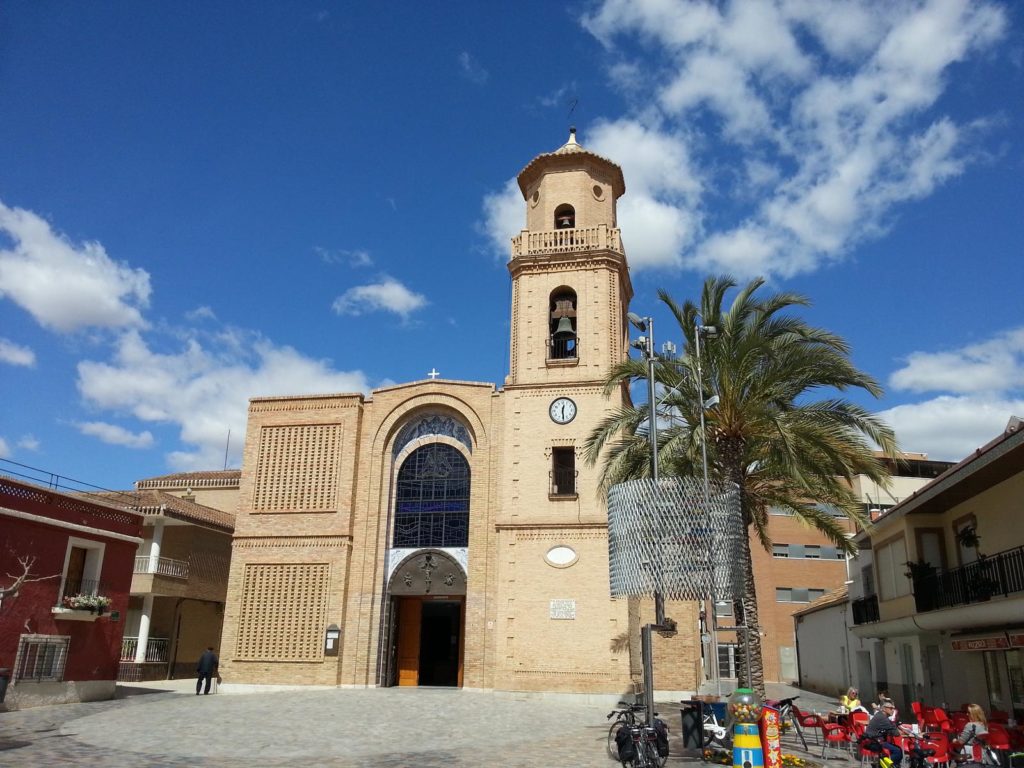
Iglesia de Nuestra Senora del Pilar is the municipality’s main landmark, located in the town centre. Built in 1981 on the site of a demolished temple. Houses valuable sculptures by local artist Jose Maria Sanchez Losano, including the image of Our Lady del Pilar.
Archaeological and Ethnological Museum “Gratiniano Baches” is located in the House of Culture. Five sections: environment (fauna and flora), fossil remains (molluscs), archaeology, ethnology (household tools, winemaking and papermaking equipment) and numismatics (coins from the Iberian period to the 20th century).
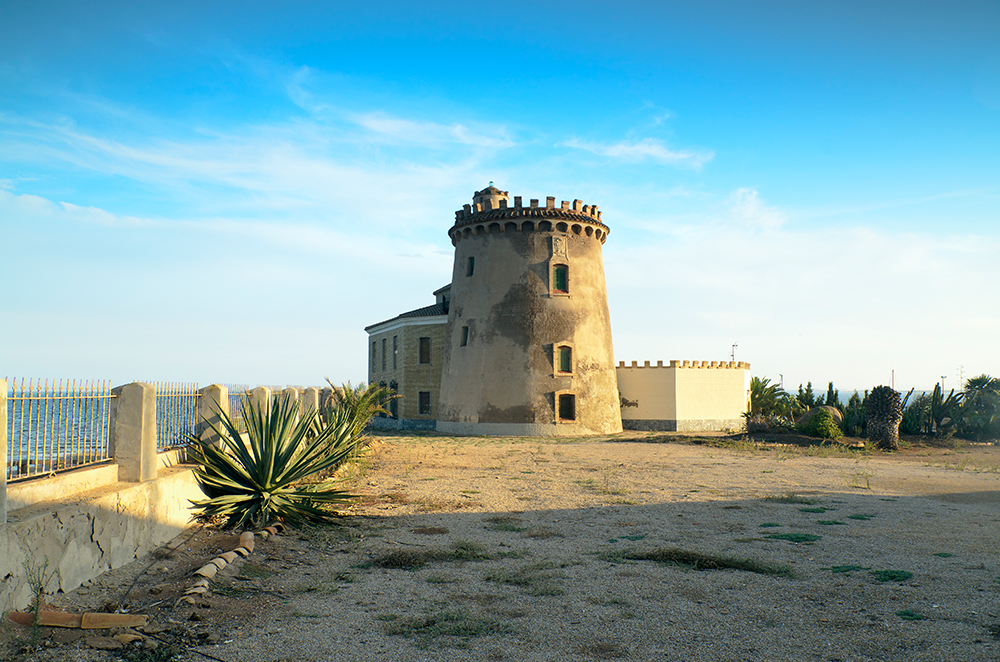
Torre vigia de la Punta de la Horadada is a coastal watchtower between El Puerto and El Conde beaches, built in 1591 as part of Philip II’s defence system against Mediterranean piracy.
Roman Quarries (Canteras Romanas) survive near the Rio Seco mouth in the Mil Palmeras urbanisation, where Romans extracted stone for road construction, probably including the famous Via Augusta.
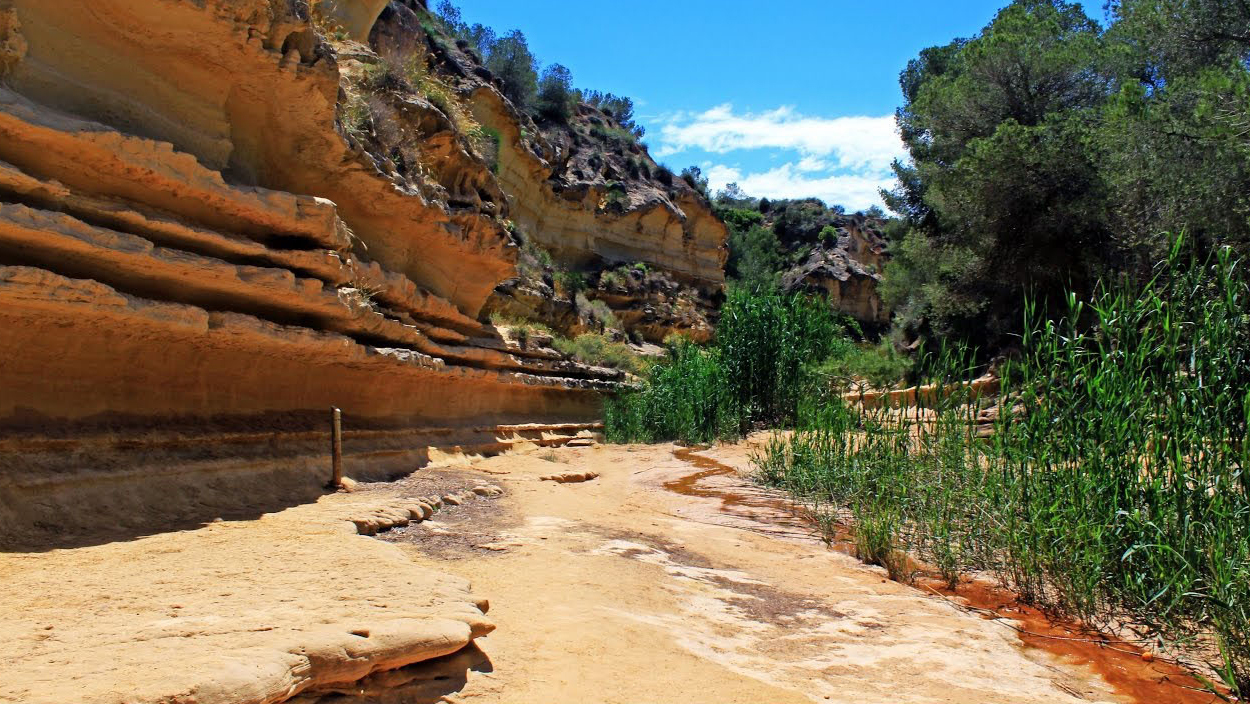
Hiking trails near Pinar de Campoverde include two Rio Seco routes: a circular (4 km) and linear (10 km) trail reaching the Mil Palmeras nature zone. Over 40 kilometres of cycle paths cross the municipality.
7. Festivals
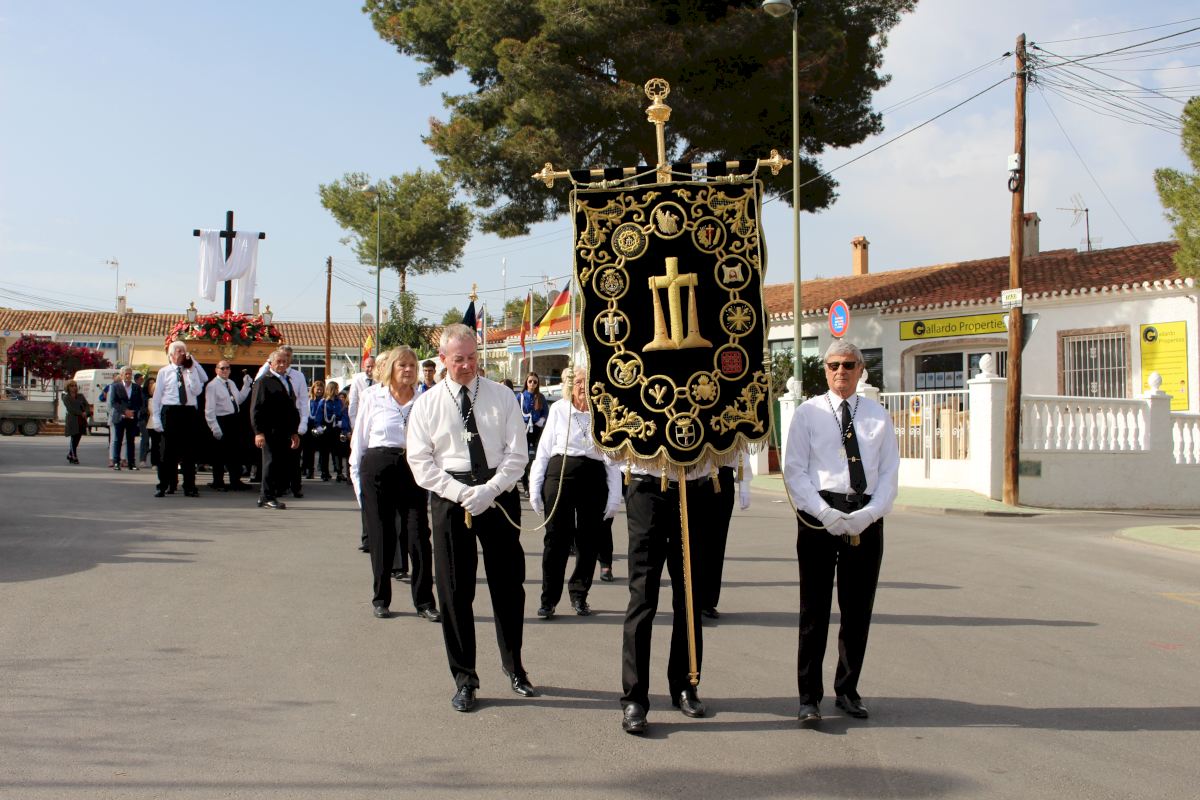
Pilar de la Horadada celebrates all traditional Spanish festivals. January brings the Three Kings Cavalcade. February features vibrant carnival. March hosts a medieval market. April brings Holy Week (Semana Santa) with impressive processions. May opens with the Seville Fair and Cruz de Mayo. Summer festivities include San Juan bonfires (24 June) and the “Luna de Agosto” music festival. The patron saint celebrations in honour of the Virgin del Pilar run from 1-21 October. 12 October features solemn mass and procession.
8. Hotels
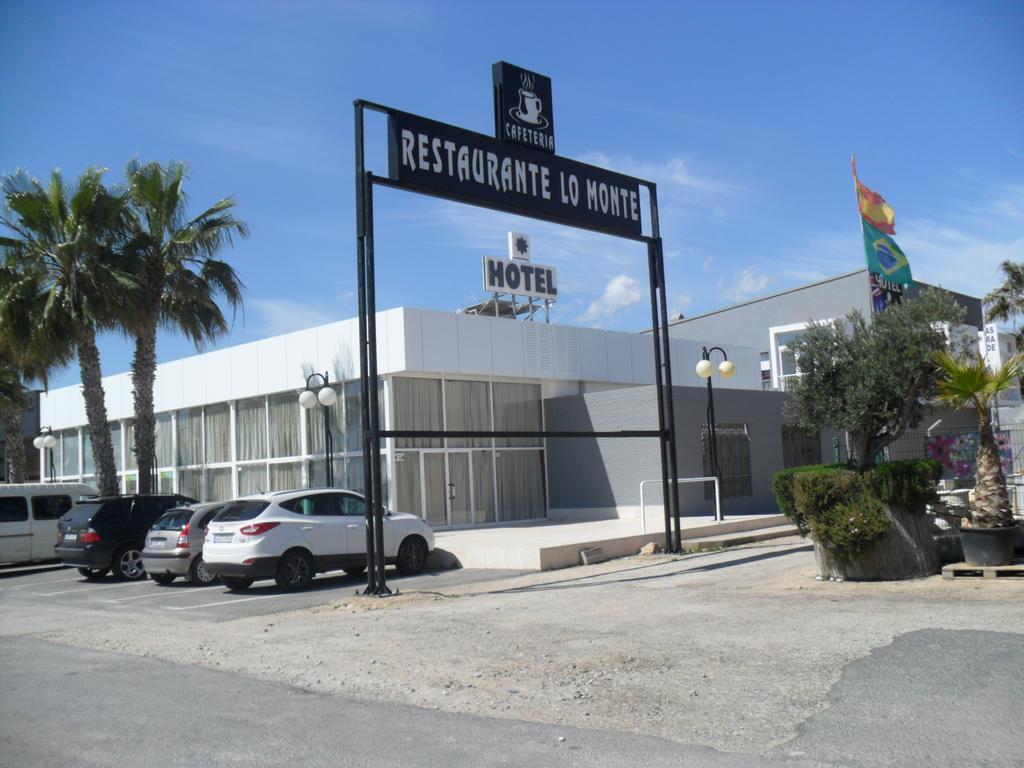
Several hotels and apartments suit all budgets. Palmera Beach Aparthotel in Mil Palmeras offers seasonal pools and free parking near golf courses, approximately 100 metres from the sea. From EUR 58 to EUR 140 per night depending on season.
Hotel Congra in central Pilar de la Horadada offers double rooms from EUR 45. Lo Monte Hotel, 500 metres from Torre de la Horadada, provides high service standards at EUR 45-55. Lo Monte Campsite in Pueblo Latino offers furnished wooden bungalows with 2 bedrooms from EUR 50-75.
9. Property for Sale
Pilar de la Horadada is the central town for coastal urbanisations: Mil Palmeras, Torre de la Horadada, El Mojon and Pinar de Campoverde.
Most property - apartments, villas, townhouses - is built as holiday homes. Scandinavian, British and German investors are particularly active buyers. New Murcia Airport is expected to drive prices upward in the next 2-3 years.
In early 2020, the average price was EUR 1,782 per square metre with 2% annual growth. Most expensive areas: El Mojon (EUR 2,074/m2), Mil Palmeras (EUR 2,205/m2), Torre de la Horadada (EUR 1,929/m2).
The most expensive and liquid property is within walking distance of beaches (up to 1.5 km). Resale first-line apartments from EUR 120,000; townhouses from EUR 160,000. Comparable new-builds: apartments from EUR 150,000, detached villas from EUR 380,000. Properties 3-5 km beyond the N-332 are cheaper: new apartments EUR 100,000-120,000, villas with pool from EUR 270,000, townhouses from EUR 200,000.