September 2020 News
Contents
-4% on the coast
A website worth more than 1 billion
Landlords are rubbing their hands together
Honeycomb in Barcelona
Franco’s family is being evicted from the castle
Capitals and COVID: who lost and who gained?
Salary overview in Spain
1. -4% on the coast

According to the analytical agency Tinsa, since the beginning of the pandemic (from March 2020), Spanish real estate has lost an average of 1.8% in value. Nevertheless, specialists assess these figures with optimism: at the beginning of the pandemic, some experts predicted a 10% decline by the third quarter. Moreover, if we consider only provincial capitals, Spanish real estate shows 0.4% growth — this is higher than the most optimistic forecasts.
According to the study, resort real estate on the Mediterranean coast and islands suffered the most (-4% in value). As noted in the report, favorable conditions have now formed in the market for those who want to buy housing on the coast at reduced prices.
2. A website worth more than 1 billion

Swedish investment giant EQT Partners is acquiring the Spanish portal Idealista from Apax company for 1.3 billion euros. This is the largest deal of its kind in Spain. The news caused a great resonance in Spanish media: journalists and experts call the event historic and see it as confirmation of the prospects and demand of the local real estate market. Idealista is not only one of the leading housing sales websites in Spain, but also the main newsmaker of the market.
Jesús Encinar, founder and president of Idealista, will retain his position and part of the company’s shares. It is expected that thanks to the financial capabilities and IT tools of EQT Partners, the portal will receive new momentum for development.
3. Landlords are rubbing their hands together
The cost of rental housing in Spain has reached a historic maximum. Today, a square meter of housing can be rented for an average of 11.4 euros per month. Small cities have shown positive dynamics in recent months. On the contrary, in provincial capitals prices remained at the previous level or decreased slightly (by 1.3% and 1.5% in August in Madrid and Barcelona respectively). This is also related to the pandemic, during which many avoided large cities.
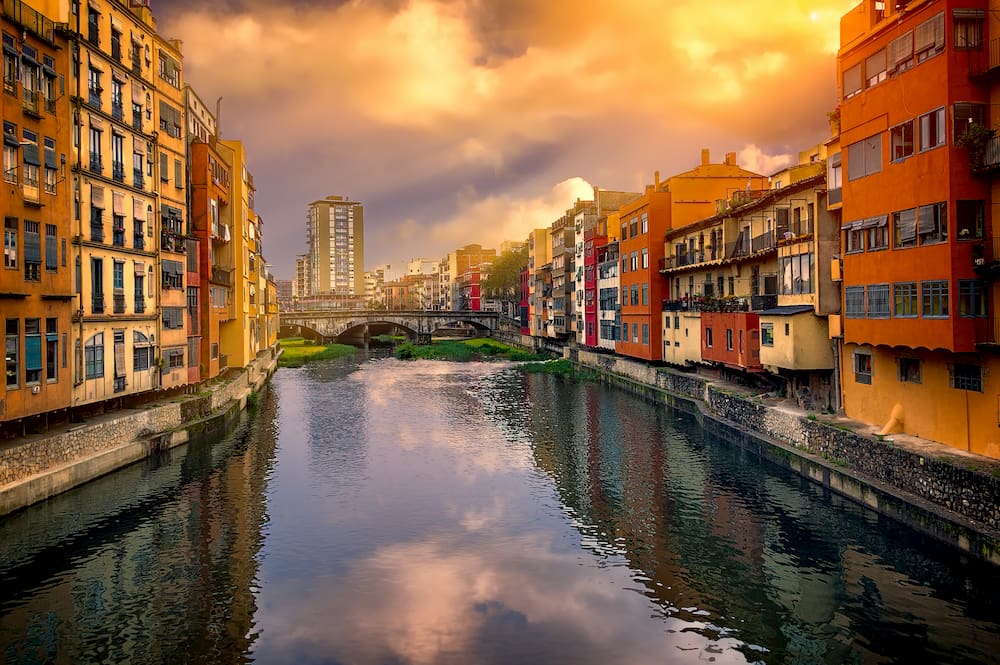
According to annual dynamics, the province of Girona showed the highest rental rate growth over the last 12 months (+8.9%). At the opposite pole is the province of Cuenca (-2.5%).
4. Honeycomb in Barcelona
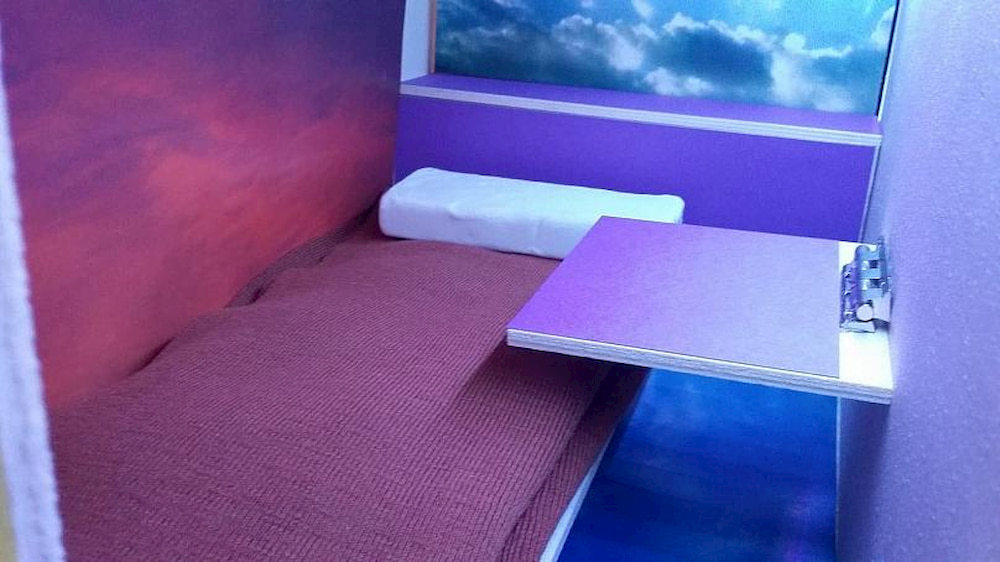
Barcelona is preparing to launch the startup Haibu 4.0. Project leaders offer rooms of 2.2 square meters for 200 euros per month. According to the owners, the honeycomb-shaped apartment complex is designed to solve the problem of housing shortage and high real estate prices in Barcelona. The rooms are intended exclusively for Barcelona residents who have lived in the city for at least 10 years and have no criminal record. According to Euronews, more than 800 applications for occupancy have already been submitted.
The building will function on the principle of a hostel: kitchens, bathrooms and toilets are shared on each floor. Due to their miniature size, the rooms have been called “honeycombs.” The room accommodates a bed, desk, one shelf and a locker.
However, the Barcelona city council is in no hurry to issue a permit for the project, since local legislation requires at least 5 square meters of housing per person (Resolution 141/2012 of the Generalitat). According to startup leader Marc Olivé, the project will be launched even without permission, and such a housing format already exists and is in great demand in Japan.
5. Franco’s family is being evicted from the castle
The court of first instance of La Coruña province ruled to evict Francisco Franco’s family from the Pazo de Meirás estate in Sada. Franco, who ruled the country from 1939 to 1975, used the castle as a summer residence. After his death, his numerous descendants remained there — six grandchildren and other relatives, as reported by the Spanish newspaper El País.
Franco took possession of the castle in 1941. It is believed that the 19th-century historic building was transferred to him by the widowed daughter-in-law of writer Emilia Pardo Bazán, who signed the deed of gift. The court draws attention to the fact that the building was gifted not personally to Franco, but to the head of state and cannot be considered anyone’s personal property. In addition, in 2008 the Spanish government assigned Pazo de Meirás the status of a material heritage site. Franco’s relatives disagree with the court’s decision and intend to file an appeal.
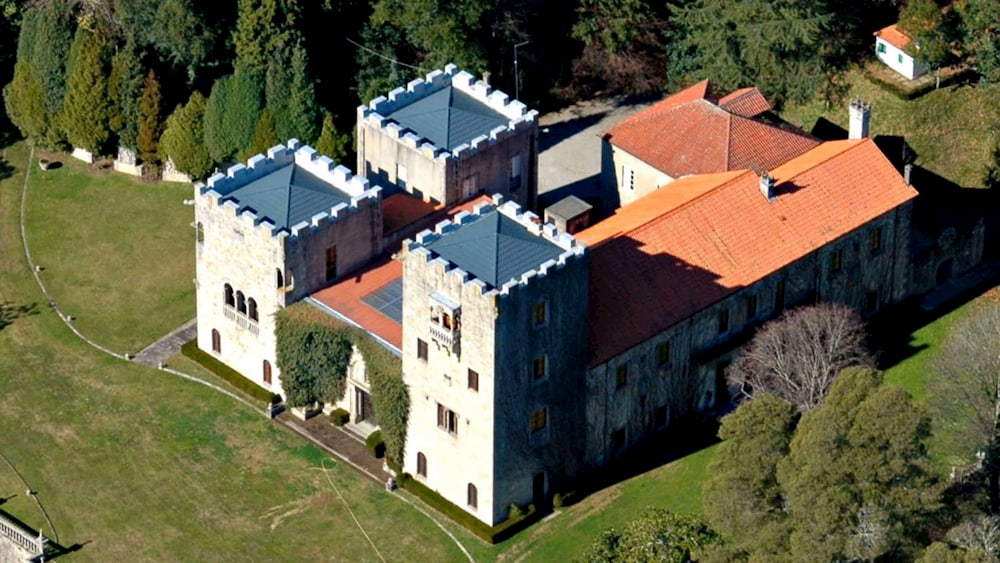
Pazo de Meirás castle consists of three towers with snake figures on the roof. The plot area is approximately 6.6 hectares. The total area of all premises exceeds 2,000 square meters.
6. Capitals and COVID: who lost and who gained?
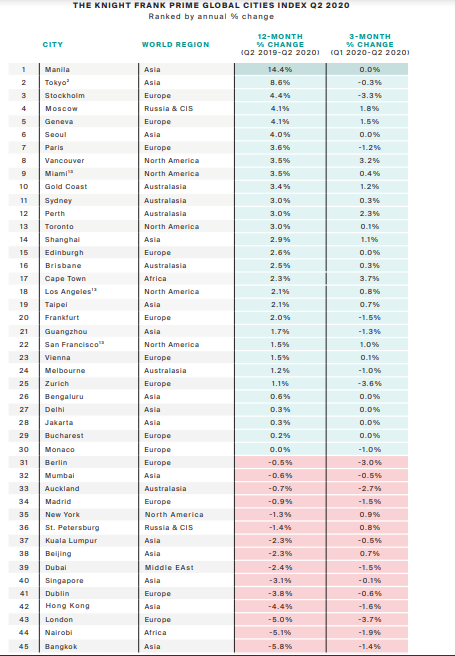
Analytical agency Knight Frank published a study on housing price changes in the world’s largest cities. The report compares prices before the pandemic and as of September 2020. The biggest losses were suffered by London (-3.7%), Zurich (-3.6%) and Stockholm (-3.3%). According to the study, Madrid lost 1.5% over the same period.
On an annual basis, prices rose most strongly in Manila (capital of the Philippines, +14.4%), Tokyo (+8.6%) and Stockholm (+4.4% per year, despite negative dynamics in recent months). Moscow took fourth place (+4.1%), and Madrid — thirty-fourth (-0.9%).
7. Salary overview in Spain
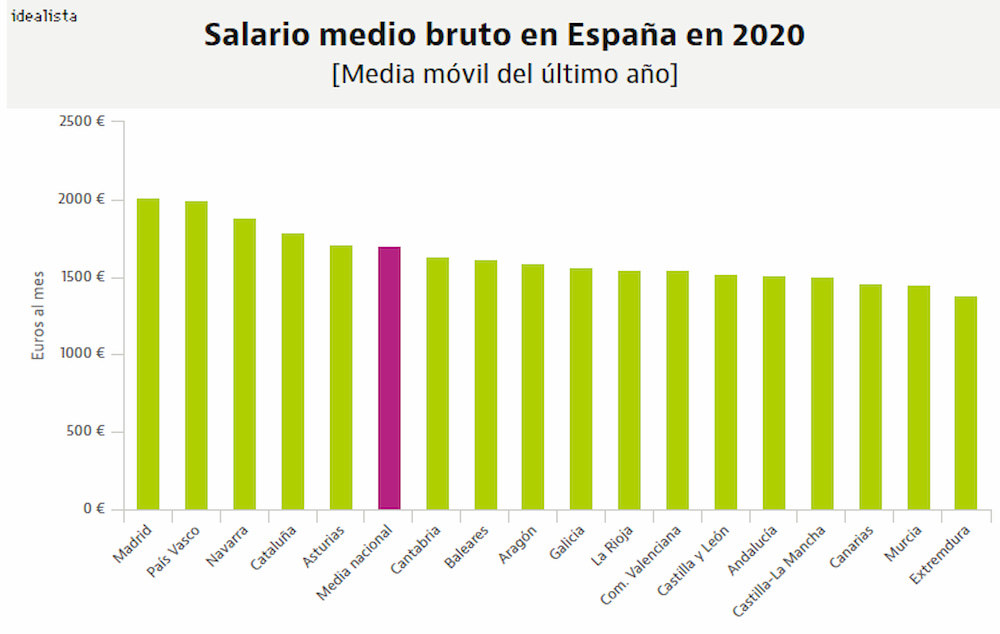
The portal Idealista (citing consulting agency Adecco) published data on average salaries in Spain for 2020. Of 17 autonomous communities, the top three leaders were Madrid (2,017 euros per month), the Basque Country (1,994 euros) and Navarra (1,886 euros). The average salary in the country is 1,700 euros.
The lowest salaries were recorded in the Canary Islands (1,460 euros per month), Murcia (1,455 euros) and Extremadura (1,385 euros). The level of remuneration and quality of working conditions is one of the main reasons why many seek to move to Spain.