Rental prices risen five years
Contents

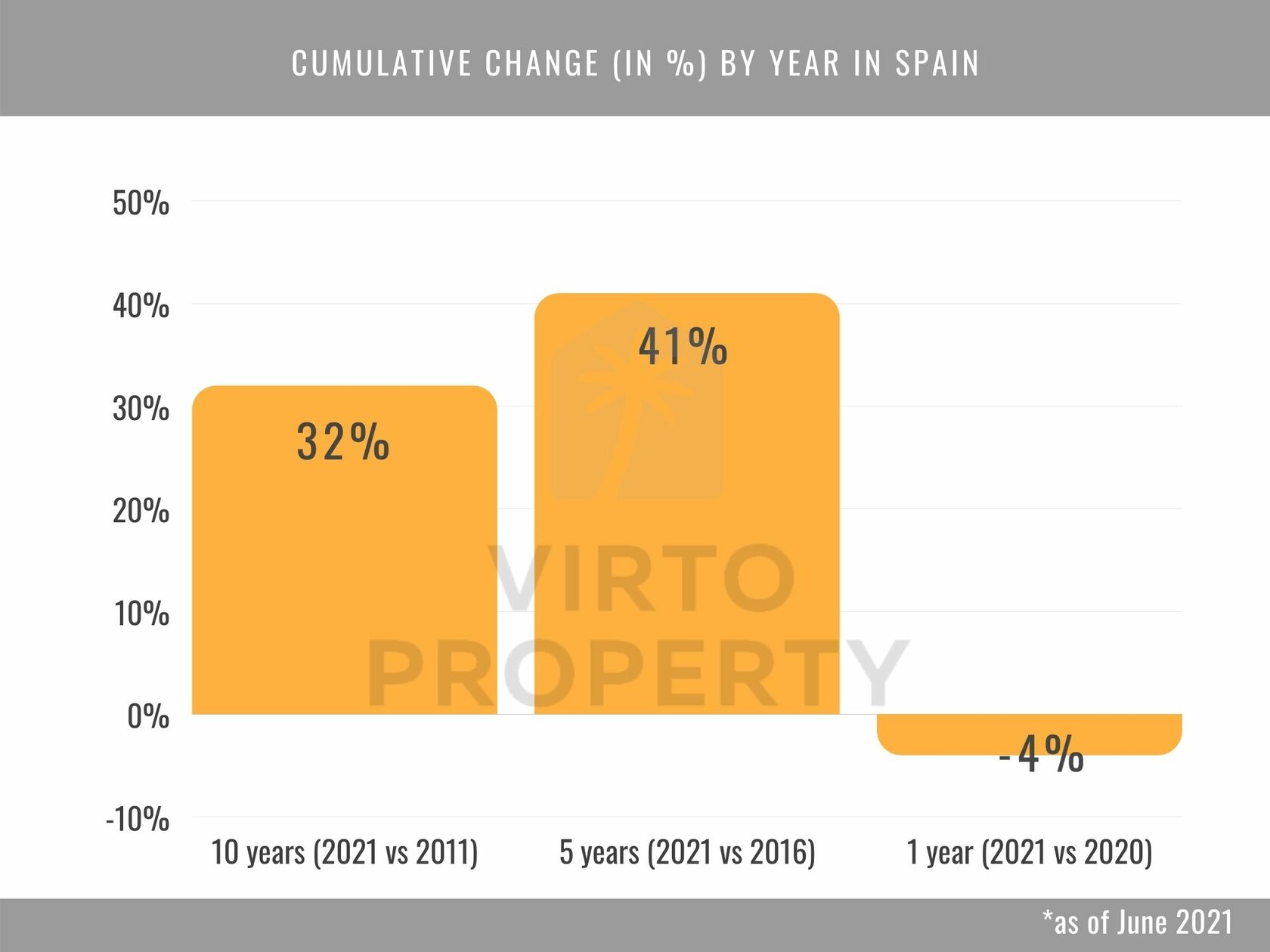
Apartment rental in Spain has become significantly more expensive over the last decade. Today it costs “41% more than in 2016,” with some locations experiencing even sharper growth. In Tenerife, Logroño and Murcia, prices jumped by 42-45%.
After several years of rapid growth, rental rates began to change direction. The pandemic triggered this reversal, reducing demand during the crisis period while simultaneously increasing the supply of available apartments. Despite the recent slowdown, the long-term trend remains steep: housing today costs 32% more than it did ten years ago.
In June 2016, tenants paid approximately 592 euros per month for an 80 m² apartment, while in June 2021 they paid 835 euros. This is substantial growth, reflecting unprecedented pressure on the rental market.
Barcelona as an exception
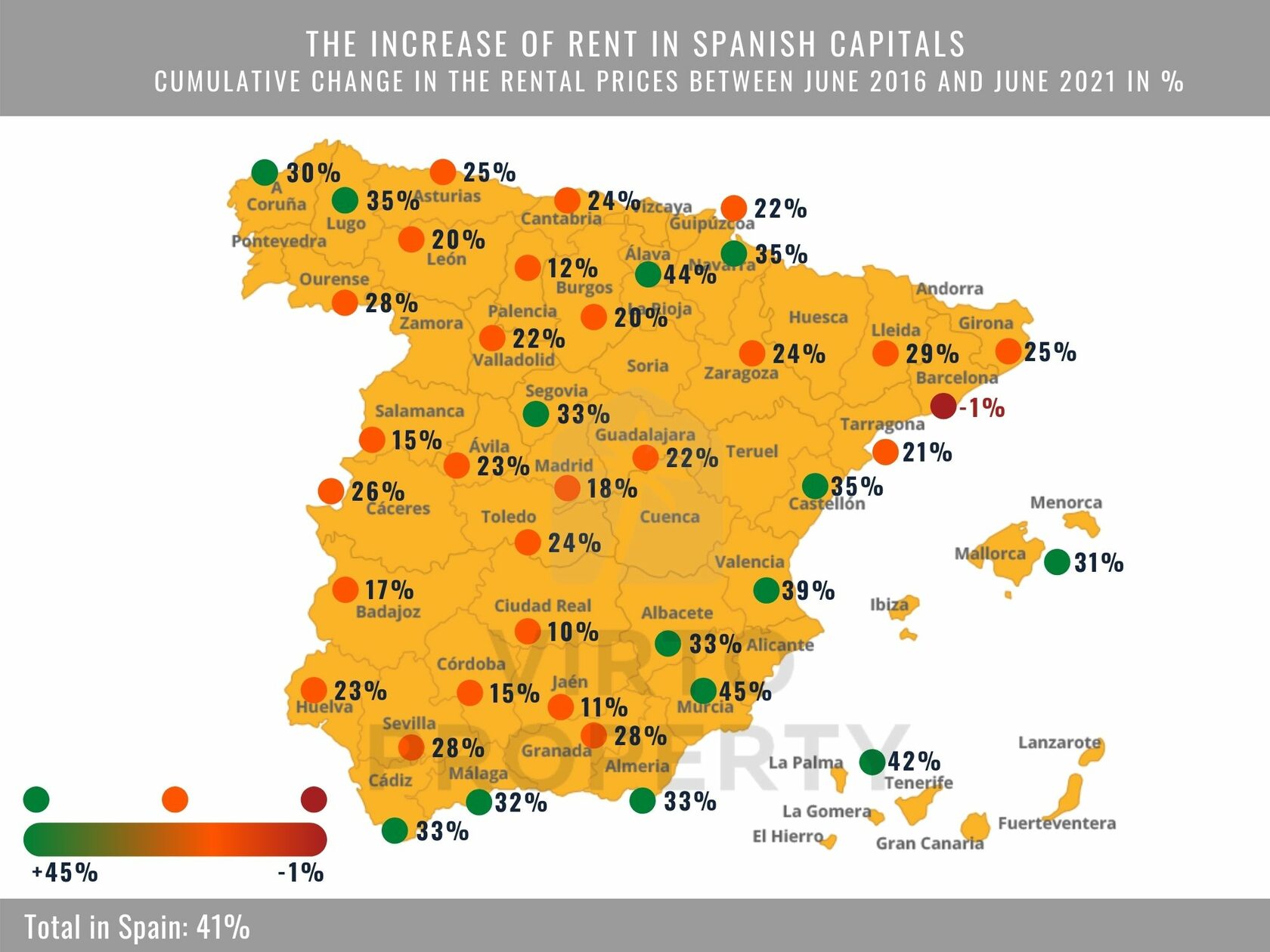
Barcelona stands apart from national trends: rental prices here actually decreased by 1% over the five-year period. However, in most Spanish provincial capitals, growth ranged from 10% to 45%. Among the cities with the highest growth are Murcia (45%), Logroño (44%) and Santa Cruz de Tenerife (42%). Valencia approached these figures with 39% growth.
In Castellón, Lugo and Pamplona, growth was 35% each. Outside provincial capitals, smaller cities experienced even sharper changes - San Cristóbal de La Laguna showed 62% growth, while Mijas and Torremolinos in Málaga posted 49% and 47% respectively.
Madrid and suburbs
Rental rate growth in Madrid of 18% over five years was below the national average, although individual districts vary greatly. Villaverde recorded 43% growth, La Latina 34%. Suburban municipalities showed even greater volatility: Fuenlabrada - 40% growth, Móstoles - 37%, Leganés and Getafe - 31% and 35% respectively.
The 2021 pause
Recent months have seen moderate decline: rental in June 2021 was 4% cheaper than in June 2020. Annual fluctuations varied from a 1% decrease in several cities to an 11% drop in Barcelona and Madrid, although some markets such as Logroño showed 10% growth.
Industry experts believe that “the decline will continue in the coming months,” noting that landlords have become more willing to negotiate on price, despite demand exceeding pre-pandemic levels.