Spanish real estate prices in 2022
Contents

What was happening in the Spanish real estate market in 2021
How Spanish real estate prices will change in 2022
Demand for Spanish real estate in 2022
Is there a “bubble” threat in the Spanish real estate market
What will happen to new construction prices
Which regions will be in demand in 2022
Conclusion
1. What was happening in the Spanish real estate market in 2021
Spain’s real estate market experienced unprecedented growth in 2021. According to Knight Frank Global Residential Cities Index, median housing prices rose by 10.6% in the third quarter of 2021 compared to the previous year — the biggest jump since 2005.
The National Institute of Statistics (INE) recorded housing price growth of 4.2% in the third quarter of 2021 relative to the third quarter of 2020. The average price reached €1,661 per square meter — a maximum since the end of 2011.
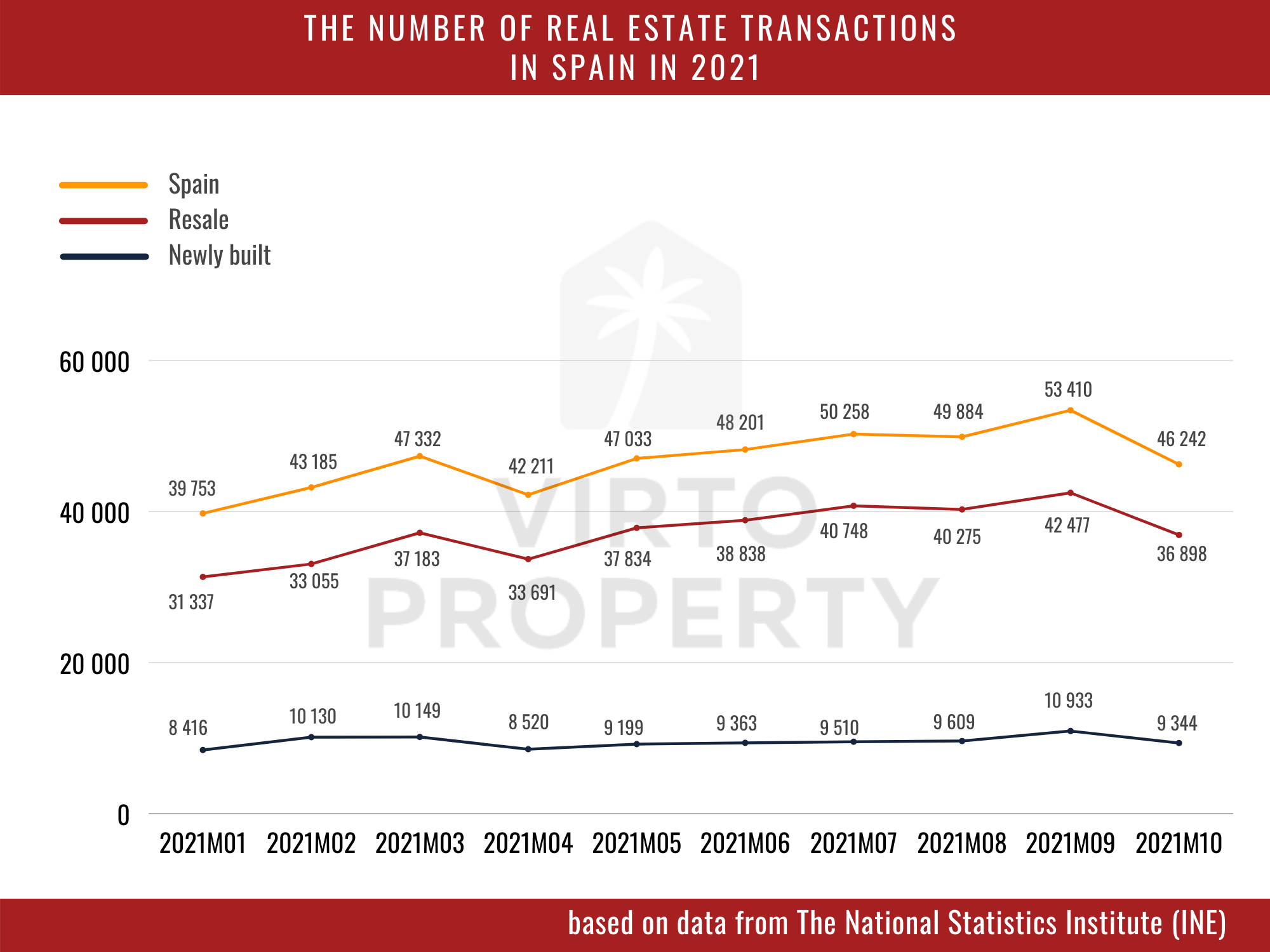
Transaction volumes broke records of recent decades. By October 2021, 468,000 sales were registered in Spain — 36% more than in 2020 and 8.3% higher than 2019 figures. According to forecasts, the year was expected to end with approximately 545,000 transactions — the highest figure since 2008.
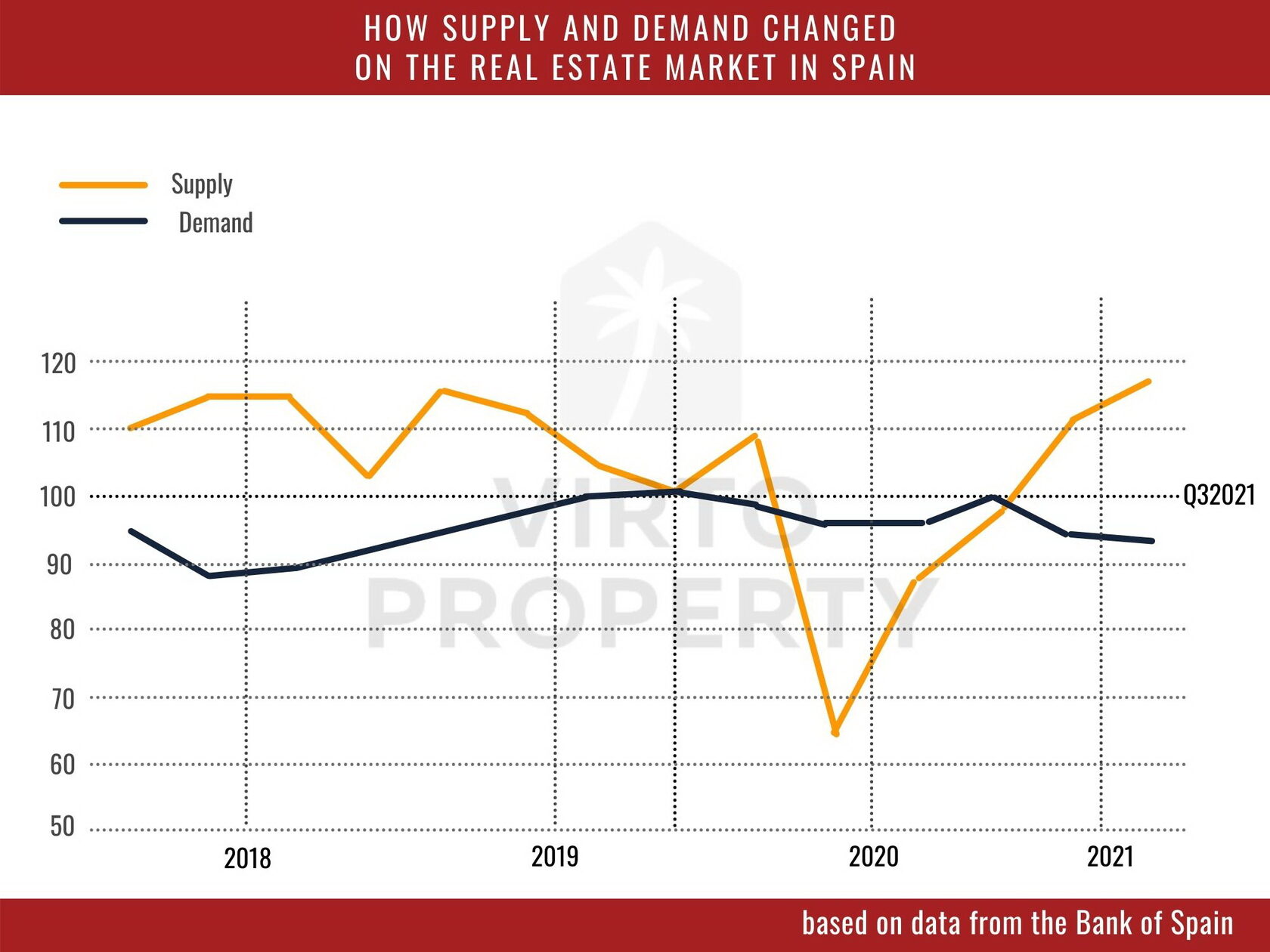
A critical shift occurred: in several market segments, the market transitioned from a “buyer’s market” to a “seller’s market.” Demand exceeded supply despite rising prices, especially in the new construction sector. Developers who previously fought for clients now struggled to fulfill bookings.
Foreign buyers returned in significant numbers, pushing prices up in traditional resort destinations. For example, on Ibiza, prices exceeded the pre-crisis maximums of 2008.
2. How Spanish real estate prices will change in 2022
Most real estate experts and banking analysts forecasted sustained recovery with moderate growth in 2022.

CaixaBank Research predicted more than 500,000 transactions per year with price growth of approximately 4%. Judit Montoriol-Garriga, chief economist at CaixaBank Research, stated: “Prices will rise by approximately 4%.”
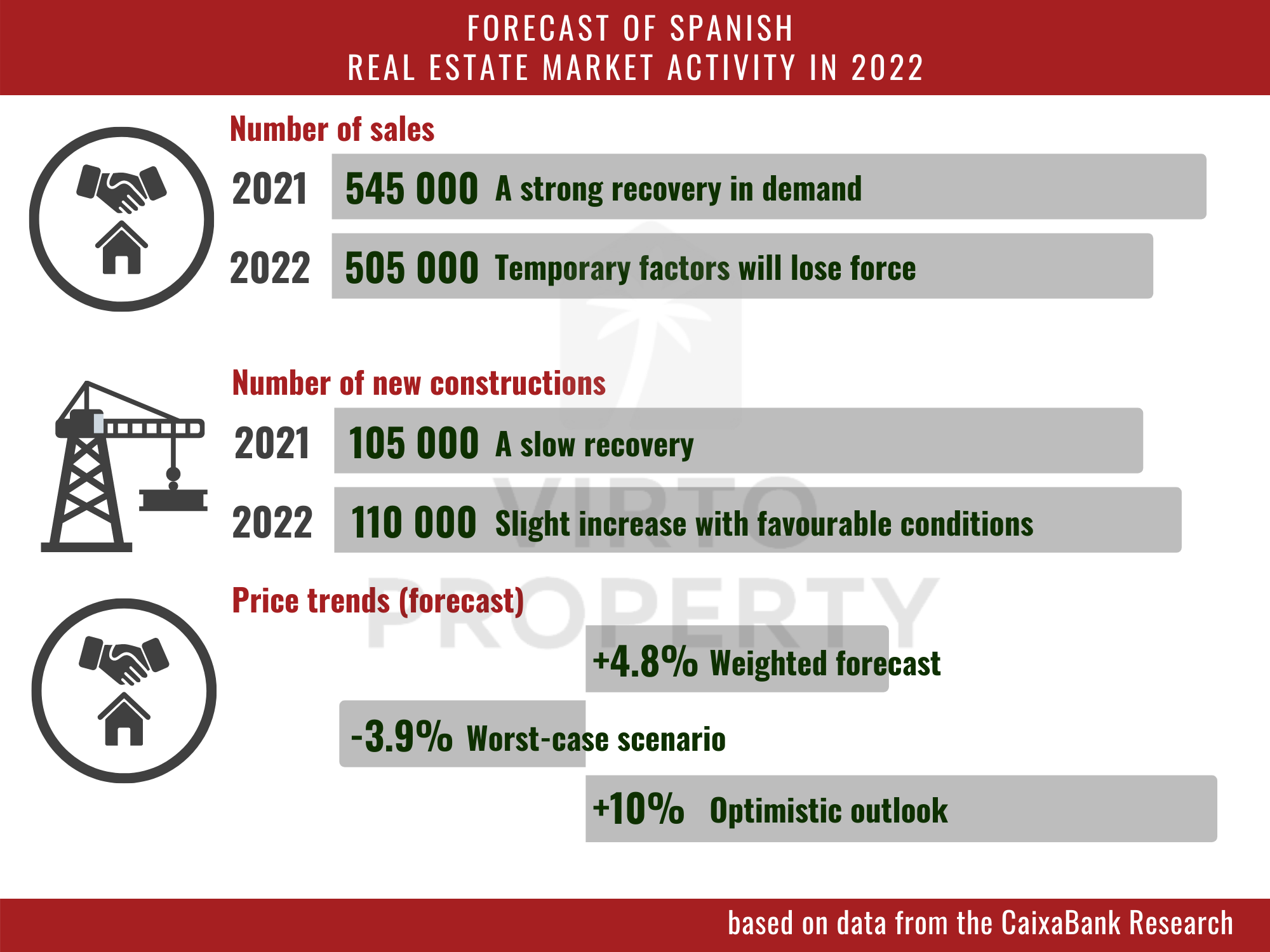
On average, experts forecasted gradual price growth of 4–5% per year. Some assessed the potential more deeply, predicting 10% growth, especially for new construction.

According to economist Gonzalo Bernardos: “If the pandemic recedes, sales will grow by 15%…”
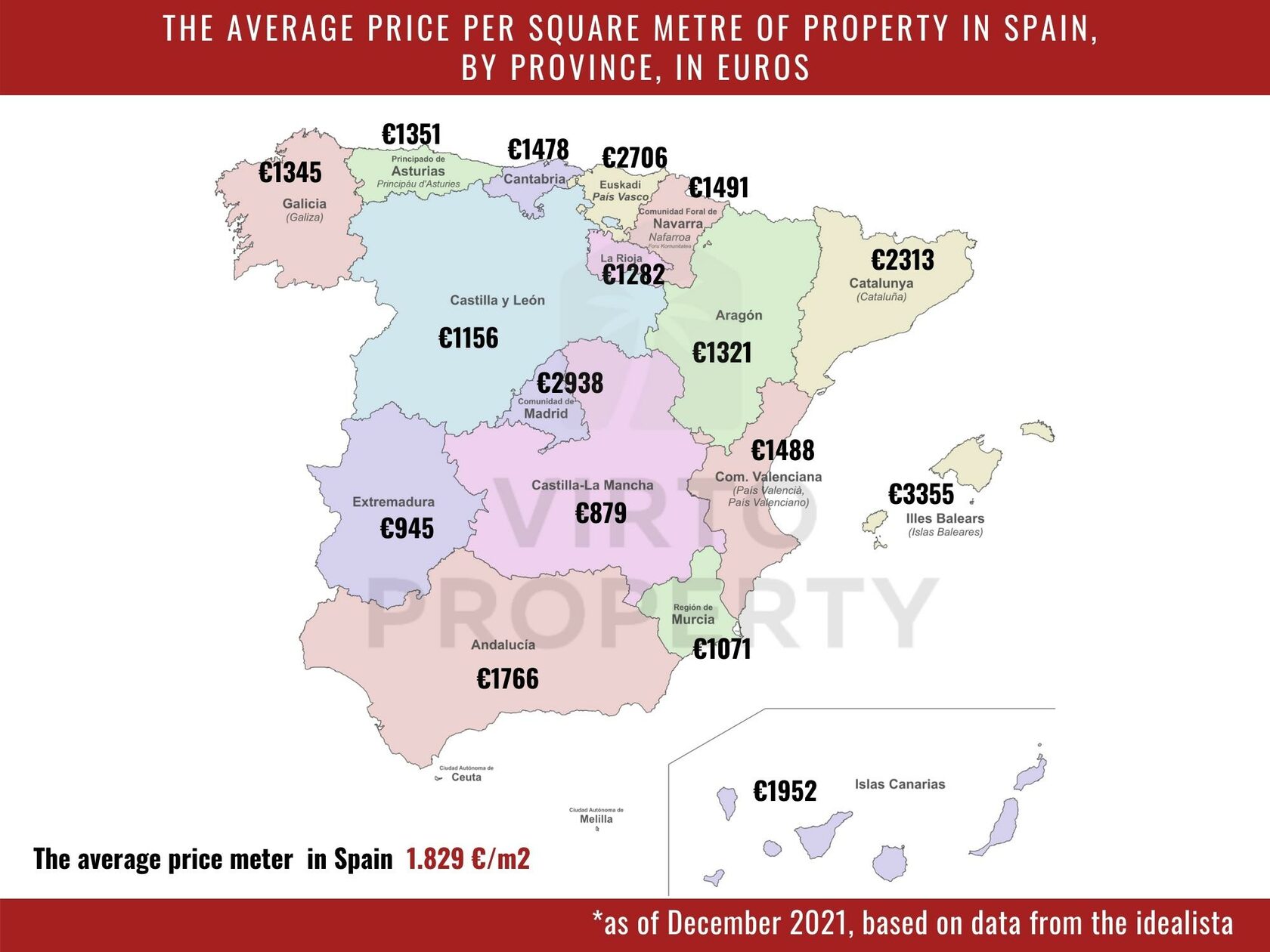
Overview of housing prices in Spain by provinces (December 2021)
The table shows average prices per square meter by Spanish provinces. The national average was €1,829/m². The regional spread was significant:
- Highest prices: Balearic Islands — €3,355/m² (8.1% annual growth)
- Madrid (autonomous community): €2,938/m² (3% annual growth)
- Catalonia: €2,313/m² (0.2% annual growth)
- Lowest prices: Castilla-La Mancha — €879/m² (1.5% annual growth)
Andalusia showed strong growth — 7% annually, while in some regions, such as Aragon, prices decreased by 0.8%.
3. Demand for Spanish real estate in 2022
In 2021, approximately 545,000 transactions were completed. For 2022, experts predicted a slight decrease in activity due to reduced supply of new housing and normalization of pent-up demand.
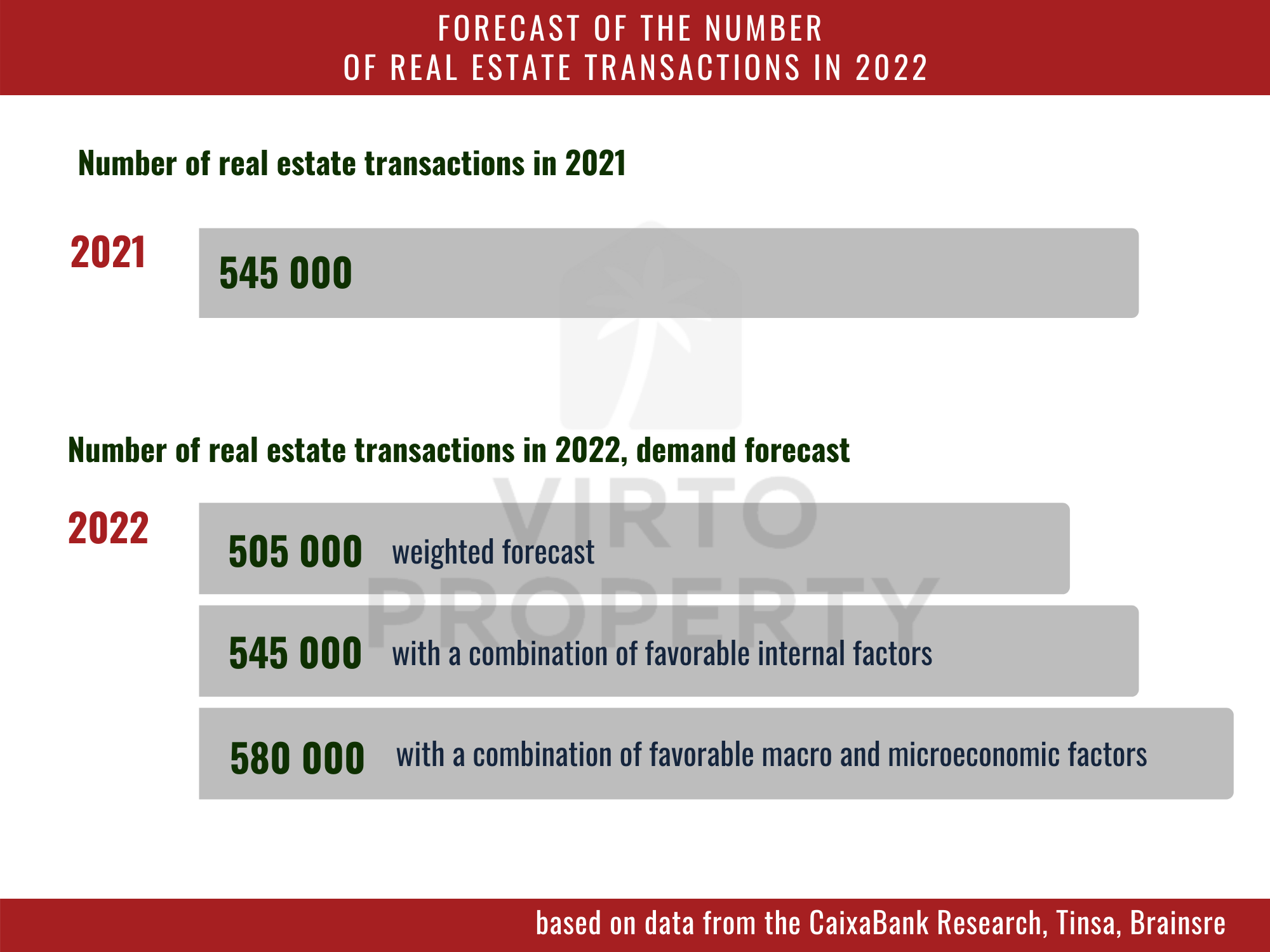
CaixaBank Research expected temporary factors related to the COVID-19 pandemic to weaken, and sales volume to decrease by approximately 8%, reaching about 500,000 units in 2022.
Optimistic forecasts suggested that the number of transactions could remain at previous levels or even exceed 2021 figures (540–550 thousand) with favorable epidemiological conditions and support from foreign buyers.
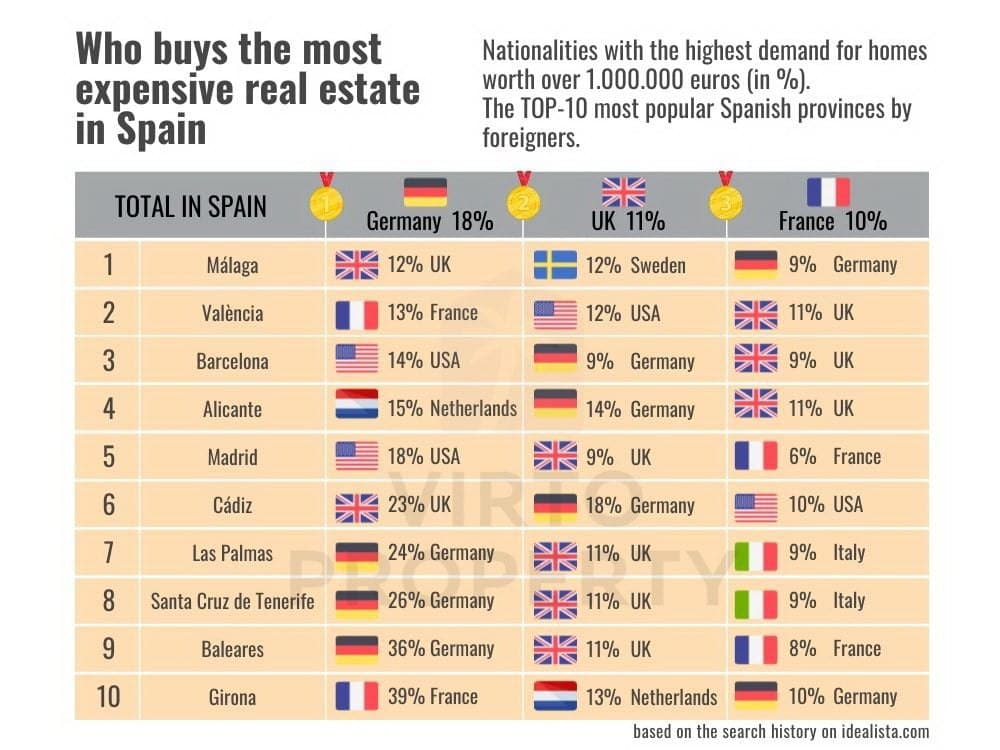
According to Spain’s Property Registry, foreigners purchased approximately 16,600 residential properties in the third quarter of 2021 — 8% more than in the third quarter of 2019, and close to the quarterly maximum of 17,300 properties achieved in the second quarter of 2018.
4. Is there a “bubble” threat in the Spanish real estate market
The sharp increase in market activity in 2021 sparked discussions about a possible “bubble,” concerning experts, market participants, and the Bank of Spain.
While real estate prices rose significantly, this reflected realization of pent-up demand and balanced macroeconomic factors, unlike previous crisis periods.
Housing sales volumes reached peak values since the 2008 boom, however the current supply level was significantly lower than during that crisis period. The combination of low supply and high demand created potential for an upward price spiral.
The Bank of Spain concluded that despite prices exceeding the pre-pandemic level of 2019 and slightly exceeding pre-crisis indicators in certain regions, the market remained balanced without obvious signs of overheating.
5. What will happen to new construction prices
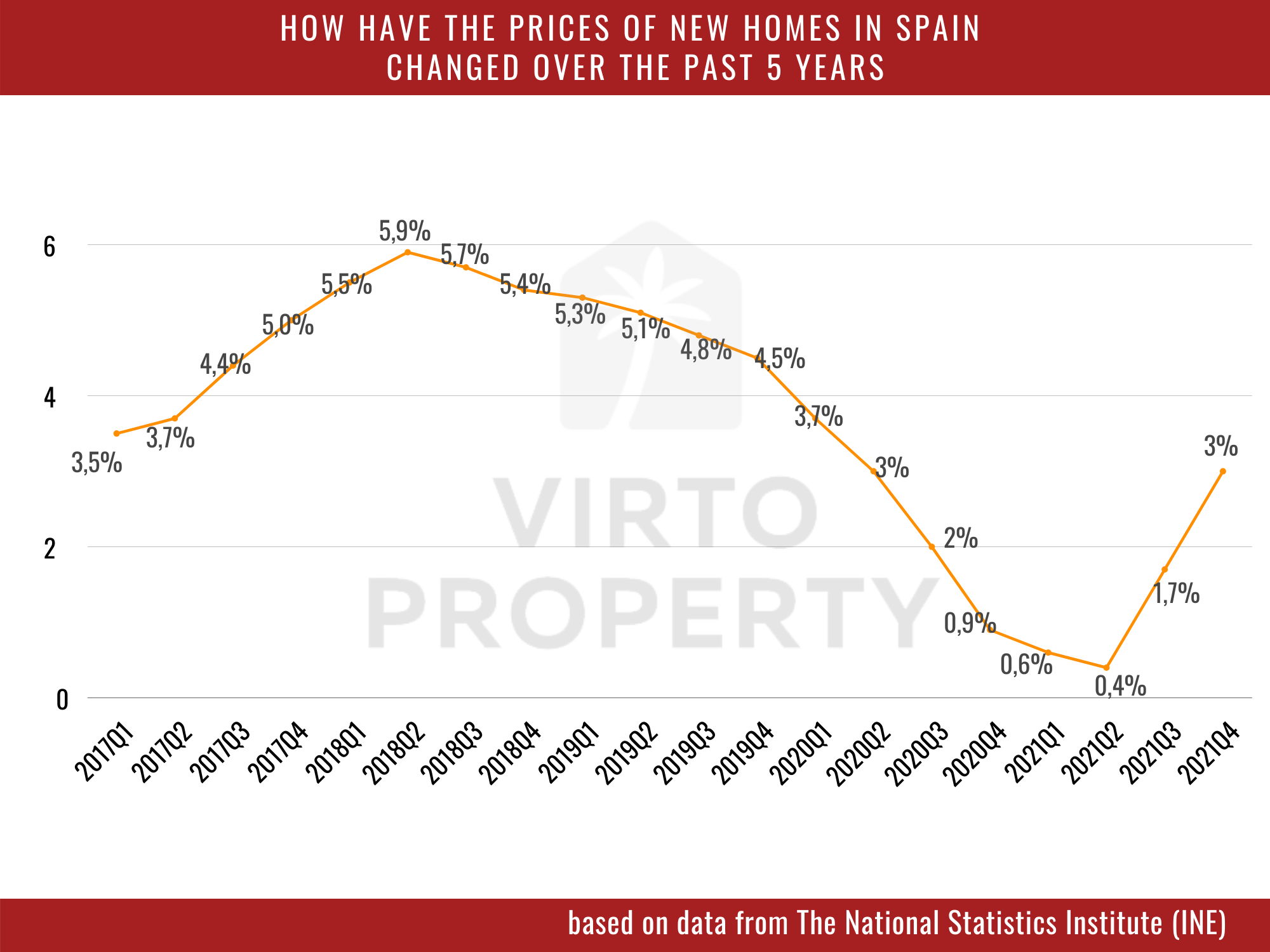
A critical phenomenon in the market was the growing price gap between new and secondary housing. By September 2021, the difference increased gradually, then sharply accelerated, reaching a 34% premium for new construction — a maximum over the past six years.
Rising construction costs, material shortages, and COVID-19’s impact on construction sector employment created uncertainty regarding price forecasts and demand for 2022.
Multiple factors caused explosive growth in demand for new construction in 2021. Legislative incentives mandated improving building energy efficiency. Since June 2013, energy efficiency certificates became mandatory for most housing types in Spain.
Rising electricity costs increased the importance of energy efficiency. The average cost in January 2021 was €42.51 per megawatt-hour; by December 2021 it reached €380 — nearly a ten-fold increase.
About 95% of new construction built after 2016 received a minimum energy efficiency class “C,” while newer properties approached class “A.” In contrast, 81% of secondary housing built earlier had classes “E,” “F,” or “G.” Buyers sought to avoid such properties and their associated high utility costs.
The pandemic changed buyer preferences. Buyers began prioritizing increased personal space, modern layouts with spacious terraces and equipped common areas. The shift to remote work created demand for dedicated home offices.
The New Home Confidence Index reached 53.1 points (out of 100) in the fourth quarter, exceeding the threshold mark. With stable price growth of 30% from project start to completion, new Spanish homes began working as an investment tool, especially considering installment plans from developers.
However, global economic conditions significantly affected the new construction market. Eurostat data indicated rising construction costs approaching 12% annually in 2022. The National Construction Confederation reported that 75% of 2021 projects faced resource shortages — both materials and labor.
The situation with new construction permits was complex. Spain issued 100,000 permits in 2021 — at the level of 2018–2019, but below projected demand. Analysts expected moderate growth in 2022 (110,000 according to CaixaBank Research estimates; 130,000 according to Brains Real Estate estimates), however failure to meet forecasts threatened a shortage of new housing with serious consequences.

José Vázquez Seijo, president of Euroval, noted: “New housing will continue to remain expensive…”
By the end of 2021, the average cost of new construction reached €2,551/m². All autonomous communities recorded annual growth — from 1.9% (Extremadura) to 4.1% (Balearic Islands).
This trend intensified in 2022. The new housing market became unambiguously favorable for sellers, who dictated terms. Buyers had limited time to make decisions before attractive options went to competitors. At the initial stage, deposit agreements required minimal financial commitments and documents — priority was given to decision-making speed.
6. Which regions will be in demand in 2022
In the first years of the pandemic, there was slight buyer migration from large cities to coastal and rural areas. However, in 2021, sales sharply increased in regions with the greatest business activity: Madrid, Malaga, Valencia, and Barcelona. The spread of remote work stimulated demand in Seville, Alicante, and Murcia.
Real estate experts identified six markets where growth in buyer interest was expected in 2022: the capitals Madrid and Barcelona, the Balearic Islands, as well as Valencia, Alicante, and Malaga.
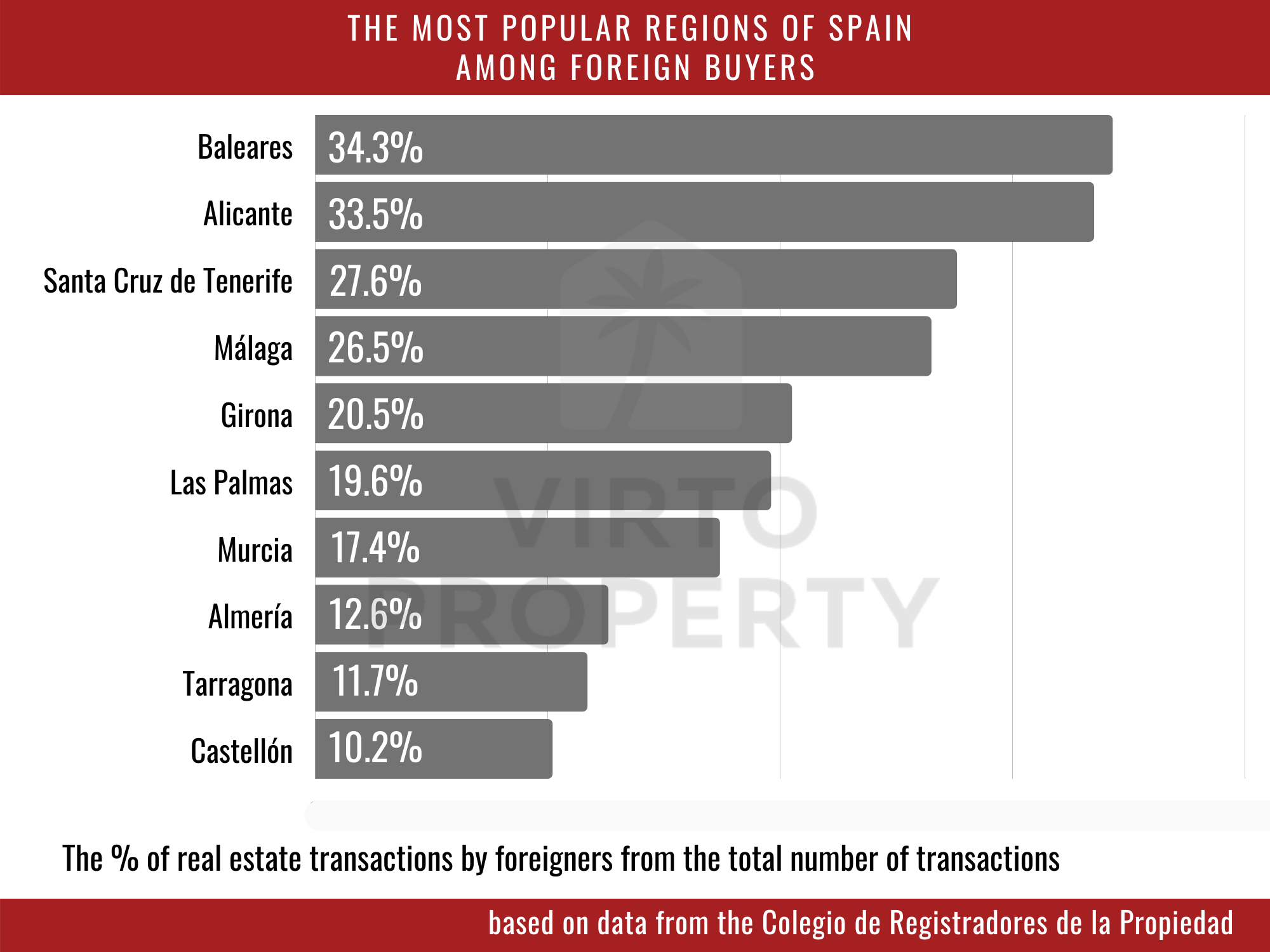
Foreign buyers concentrated primarily in traditional tourist destinations and resort areas, which contrasted with Spanish buyers’ preferences.
The highest share of purchases by foreigners was observed in the following regions:
- Balearic Islands: 34.3% of all transactions
- Canary Islands: 23.6%
- Valencian Community: 19.7%
- Murcia Region: 17.4%
- Andalusia: 11.3%
- Catalonia: 11%
These regions were expected to continue increasing the share of foreign buyers in 2022. Interest in the islands had not yet fully recovered, and the number of transactions involving foreigners had not reached previous peaks.
7. Conclusion
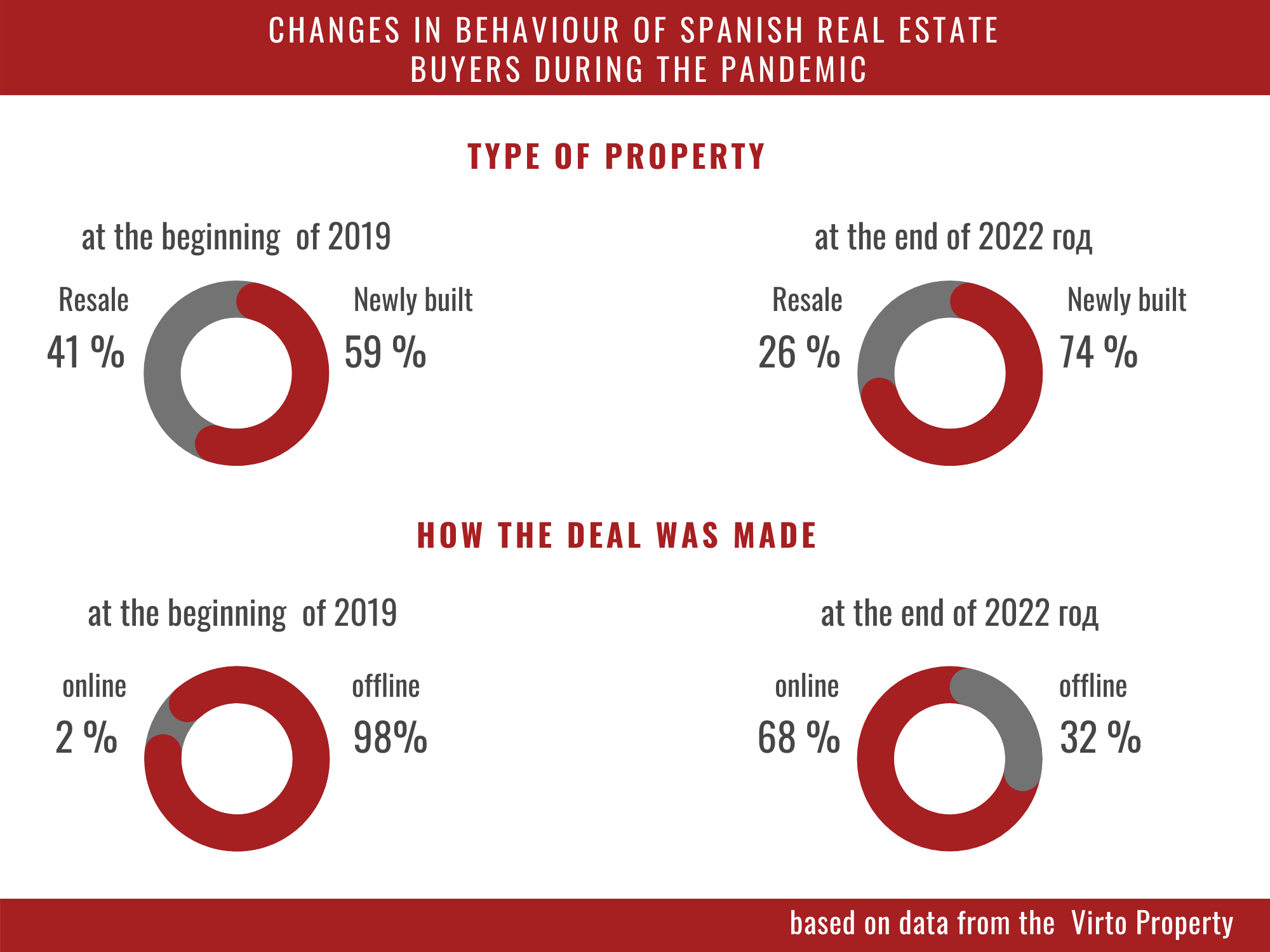
VirtoProperty experts expected productive results in 2022. With the restoration of international mobility and returning confidence after the pandemic, foreign demand in Spain continued to grow, supporting high real estate market activity.
2021 demonstrated rapid changes in Spanish real estate buyer behavior. If before 2019 online transactions were exotic, in 2021 most transactions at VirtoProperty were conducted remotely — a pandemic-induced shift that provided undeniable advantages: increased transaction speed and flexibility for buyers regarding residence permit processing.
The resumption of foreign demand for real estate reflected high investment attractiveness. Liquidity of apartments and properties continued to grow on coastlines and in developed locations. New real estate formats appeared in Spain meeting market needs: co-living, elderly homes, and familiar formats of investment apart-hotels.

Oriol Barrachina, CEO of Cushman & Wakefield, stated: “We expect high investment appetite and great liquidity…”
Buyer demand largely depended on economic and epidemiological conditions, however the possibility of remote transactions and relatively quick real estate purchase processing in Spain remained viable paths for acquisition.