Utility Costs in Spain
Contents
Utility costs in Spain
Electricity supply and costs in Spain
Gas supply in Spain
Water in Spain
Average monthly utility costs
Connecting gas or electricity
Waste disposal
Conclusion
Introduction
For those who have already purchased property in Spain and want to quickly settle into their new place, this article answers frequently asked questions from newcomers. Let’s begin!
1. Utility costs in Spain
Electricity in Spain is not cheap. Every year from December to March and from July to September, Spanish citizens’ wallets undergo a serious test. Due to the absence of central heating in Spain, each family heats their home as they can.
Diesel fuel, gas and alternative sources (solar panels, wind generators) are used, but the overwhelming majority of Spanish homes are heated with electricity using electric heaters and air conditioners. Hot water in homes is also obtained using electric water heaters (gas is less popular), and electric or induction cooktops are more commonly used for cooking rather than gas ones.
Before moving in, it’s recommended to connect water and electricity, or more precisely — to resume supply. After sale, the previous owner removes all obligations from themselves, and energy and water supply stops. If you’re buying a house through a real estate agency, they will also offer assistance with this matter. However, you’ll have to pay around €50-100 for intermediary services. Actually, connecting water and electricity is quite simple, even if you don’t speak Spanish.
Utility providers in Spain are both large companies operating at the national level and small regional firms. By utilities we mean payment for water (cold, as there is no centralized hot water supply), electricity and gas. Utility costs in Spain can vary significantly not only from region to region, but also in neighboring municipalities. This happens, for example, with water bills.
2. Electricity supply and costs in Spain
Electricity in Spain is supplied by a monopolist — the company Iberdrola. There are also several regional companies creating the appearance of free competition, but in practice they don’t offer fundamentally different tariffs. Further in this section we will compare electricity tariffs of several Spanish companies.
We advise choosing a company that has an office in your city. Many electricity suppliers have a large selection of tariffs adapted to different needs: stable consumption, reduced price during certain hours of the day or on weekends, etc.
Energy efficiency rules for housing (EPC)

Since June 2013, the energy efficiency certificate (Certificación energética de edificios, or CEE) has become mandatory for most types of housing in Spain.
The introduction of CEE is determined by European Union requirements.
Attention! Without this document you cannot sell or rent an apartment or house in Spain.
Energy efficiency solves not only environmental tasks and protects flora and fauna, but also benefits people. The less energy a house consumes, the lower the bills. Ultimately this reduces fuel costs and, eventually, building costs. To increase energy efficiency, enhanced thermal insulation, heat recovery, infiltration (low level of air penetration from the street) and other modern technologies are used.
Electricity tariffs in Spain
The cost of electricity in Spain depends on the chosen tariff. As already mentioned, the monopolist in Spain is Iberdrola, but there are also various regional suppliers. Let’s compare prices of three companies (Iberdrola, Alcanzia and Lucera) for the popular day/night tariff. Remember that prices per 1 kWh do not include additional fees and taxes.
| Iberdrola | Lucera | Alcanzia | |
|---|---|---|---|
| Fixed power tariff (€/kW/year) | 42,043426 | 0,104228 | 42,043426 |
| 1 kWh daytime | 0,162323 €/kWh | 0,148 €/kWh | 0,158 €/kWh |
| 1 kWh nighttime | 0,083565 €/kWh | 0,073 €/kWh | 0,088 €/kWh |
| Additional fees | 3,90 €/month |
Who offers the best electricity tariff in 2020?
Most attractive electricity offers with good price-quality ratio:
| Lucera | Podo | Esfera Luz | Holaluz | Repsol | |
|---|---|---|---|---|---|
| Tariff | Same Price 24h | Fixed | Normal Hourly Rate | Fair | Online |
| Fixed tariff (€/kW/day) | 0,1042 | on request | |||
| Fixed tariff (€/kW/month) | 3,85 | ||||
| Fixed tariff (€/kW/year) | 38,04 | ||||
| 1 kWh | 0,12700 €/kWh | 0,1350 €/kWh | 0,139 €/kWh | on request | 0,129900 €/kWh |
Paying electricity bills
Electricity bills in Spain are issued once every 1-2 months. All meters are located outside living spaces, so all data is checked by energy company employees. Almost every meter has been replaced with a “smart” one whose readings are taken remotely; in addition, since most companies have abandoned paper bills, they are now sent electronically by email or available for download through personal accounts.
The bill should indicate the calculation period, tariff name, consumed kWh, taxes and some statistical data.
If for some reason payment from the bank account didn’t go through (technical failure or insufficient balance), the company will notify you by letter, phone call or email and offer alternative payment methods.
With outstanding debt (usually 3-6 months) the energy company sends the debtor a non-payment notice. By law, companies cannot stop energy supply less than 2 months from the date of the last paid bill. Usually the debtor is given several days to settle the matter, after which a company technician disconnects the apartment or house from the grid and removes the meter. Further debt collection may proceed through court. Therefore, we strongly recommend paying bills on time!
Smart electricity meter
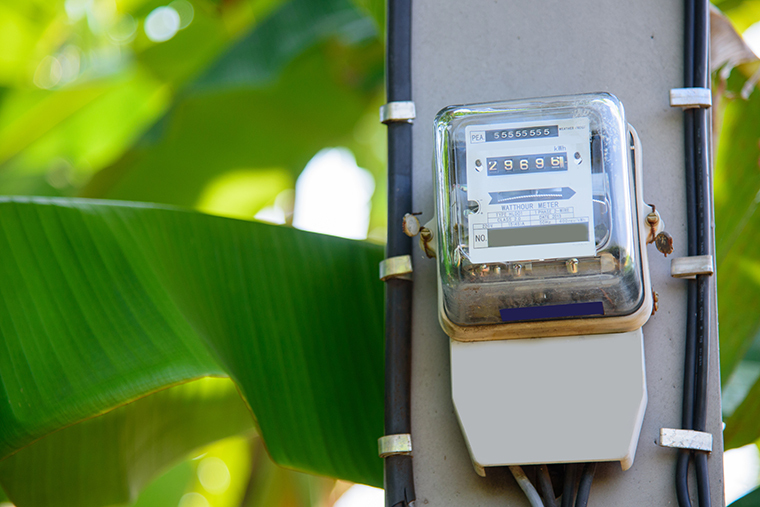
Almost all Spanish households have installed these devices that remotely measure electricity consumption.
Widely known as “smart meters,” these devices replaced analog ones that required manual reading of readings monthly.
The new ones differ in that they remotely measure energy consumption every hour. The advantage for the user is that now consumption can be checked through the supplier’s web page or the National Commission of Markets and Competition (CNMC) in real time, which allows better understanding of one’s habits and changing them to one’s advantage. Suppliers can remotely monitor the electrical grid, warn of possible incidents, improve service quality and speed up power or tariff changes.
Although households without smart meters are now in the minority, they still exist, especially in secondary market homes or in buildings where specialists couldn’t gain access. Neither dismantling the old nor installing the new meter requires payment from the user. Meter replacement involves only disconnecting electricity for a few minutes, and equipment rental and maintenance costs 0.81 euros per month. You can buy the device — this is about 100-200 euros, plus safety control and related administrative costs. Such a meter will pay for itself in approximately 10-20 years.
Solar energy
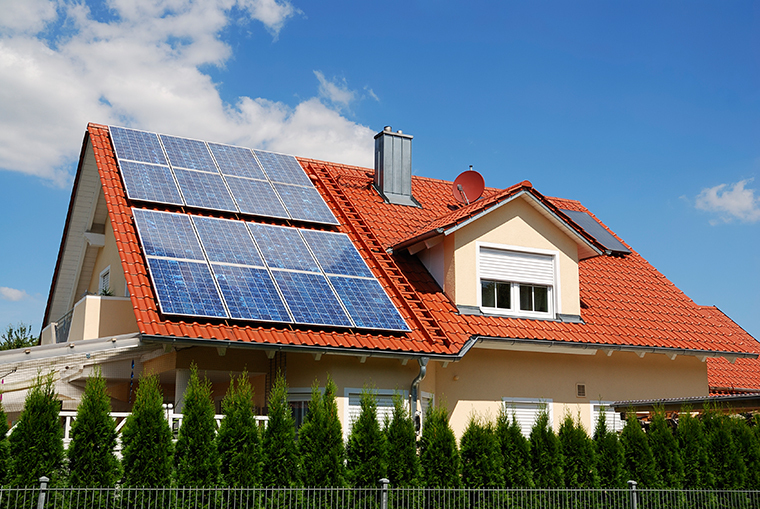
There was intense discussion in Spain regarding self-consumption of solar energy. Before the adoption of Royal Decree 15/2018, the situation was extremely unfavorable — neither financially nor bureaucratically — for pioneers of photovoltaic self-consumption with solar collector installation.
From 2015 until October 2018, laws were in effect that hindered this energy transition. The “sun tax” law for self-consumption was striking. It was repealed thanks to the new Spanish government and the EU ban on such taxes as part of the fight against climate change.
After all, to what extent can a government demand taxes for a universal good — the Sun?
In the Royal Decree of October 2018, the “sun tax” was abolished, and photovoltaic self-consumption was recognized as a citizen’s right without obligations to pay for energy self-sufficiency.
Before the new regulation, there was only one option: each user independently had their own panels and used exclusively accumulated energy.
Now an external grid has appeared that can supply energy to households that have signed contracts for such services. In the Royal Decree of April 5, two types of self-consumers were established: those who decide to give excess energy to the external grid, and those who decide not to share it. Those who contribute excess energy to the grid receive generous compensation from suppliers.
Overall, there’s no better way to deal with the challenges of energy transition than uniting an entire community for photovoltaic self-supply. This is one of the main innovations of the new law on electrical self-consumption, according to which the possibility of uniting residential complexes is regulated. For this, a common generating station is created that supplies energy to the entire household.
According to estimates by the Spanish Photovoltaic Union, after adoption of the new law, 400 to 500 MW of self-consumption equipment will be installed annually.
Many companies — large, medium and small — have already launched their projects in search of new clients. Holaluz, a “green” electricity supplier founded at the beginning of the decade, is now experiencing a boom. Last year the company increased its client base by 65%, reaching 180,000 facilities distributed throughout the market.
Reducing electricity costs
Reasonable approaches to energy conservation make us think not only about how to preserve the environment, but also about how to save our own money. The cost of maintaining a home in Spain can be significant, but it can always be reduced through responsible consumption. Here are some useful tips:
Use solar energy — almost all modern appliances can run on solar panels installed on the roof, which will also significantly reduce your electricity costs.
Choose modern appliances — each device has labeling indicating energy and water consumption. The label shows a rating from A+++ to D. The higher the rating, the greater the benefit for your wallet.
Install quality windows and doors — this step will improve thermal and acoustic comfort in the home, reduce CO2 emissions and save on heating and air conditioning.
Use light wisely — lighting costs account for about 25% of total energy consumption. LED lamps are considered most efficient, consuming 80% less electricity compared to incandescent bulbs. Use natural light! Open curtains, raise blinds and turn off lights when not needed.
3. Gas supply in Spain
In many apartments there’s no heating at all, and gas is an additional option, like air conditioning. Moreover, there’s no centralized gas supply in Spain, so at best an individual residential complex (urbanization) is gasified, and residents pay by meter. In the worst case, you’ll have to constantly change gas cylinders; however, cylinders can be ordered with home delivery or exchanged independently at gas stations. A propane cylinder costs €13, butane — €16. You may need a specialist for installation and connection of these devices, but this will cost at least €30.
Gas bills
Central gas supply is found in some central and northern regions of Spain. Depending on family size and gas consumption volume, costs can be about €30 per month per person.
The average gas price for consumers in Spain is 0.1 euros per kWh. Gas is used predominantly for air heating and water heating (mainly in northern regions of Spain), not for cooking. If you only heat water, gas costs will be about 200 euros per year. If you heat a three-room apartment in winter, this will require 200 euros monthly.
Example gas bill from Iberdrola:
Bill details
Bill summary and costs
Quality marks and important information
Energy supply information
Tariffication and consumption information
Additional information
Contacts
Inspections
Mandatory gas inspection is a check that gas consumers are required to undergo to confirm proper condition of the gas installation. The purpose of inspection is to guarantee system safety, the gas pipeline and all its elements.
Inspection is conducted every 5 years (every 4 years in the Basque Country) and must be conducted in the calendar year of expiration. Gas inspection should not be confused with boiler inspection, which is mandatory every 2 years (except in the Basque Country, where it’s conducted annually).
Inspection cost: about €30-45 depending on region. Administrative fees: about €15. This service is paid with the next bill. Nothing should be paid directly to the gas inspector, even if additional problems were discovered and eliminated!
Who conducts gas inspection? Inspection must be conducted by a certified technician. The technician must always carry a professional card so the client can easily identify an authorized inspector. The client can choose a specialist, since an authorized technician can belong to:
the natural gas distributor; or
a gas equipment installation company.
In any case, the body responsible for monitoring the presence of inspections at all gas installations is the gas distributors of each geographical area. In fact, although responsibility for installation condition lies with the owner of the supply point, it’s the distributors who are obligated to notify you of the need to undergo inspection in the current year.
The distributor must notify the consumer three months before conducting inspection. If the client hasn’t reported that they prefer to conduct inspection with an independent company, the distributor will schedule a visit at least five days in advance. Never let strangers into your home if the visit wasn’t planned in advance — scammers don’t sleep!
What happens if gas inspection isn’t conducted? In case of inability to conduct inspection due to the client’s fault, the distributor is obligated to report this to authorities, who have the right to suspend gas supply to the home until further notice.
Exceptions: inspection is not mandatory for gas cylinders with capacity less than 15 kg connected by flexible hose or directly to one mobile gas appliance.
4. Water in Spain
Spain has centralized cold water supply. To obtain hot water, each dwelling uses water heaters — gas or electric. Water tariffs are usually calculated on a progressive scale, and the bill includes clean water consumption, sewerage and wastewater treatment. Each city in Spain has its own water supply companies.
Water tariffs in major Spanish cities:
| Less than 1.30 €/m³ | From 1.31 to 1.60 €/m³ | From 1.61 to 1.90 €/m³ | More than 1.91 €/m³ | |
|---|---|---|---|---|
| San Sebastian | Madrid, Castellón | Girona, Málaga, Almería, Bilbao | Alicante, Murcia, Cádiz, Seville, Barcelona, Tarragona, Valencia, Canary Islands, Mallorca |
Water quality in Spain
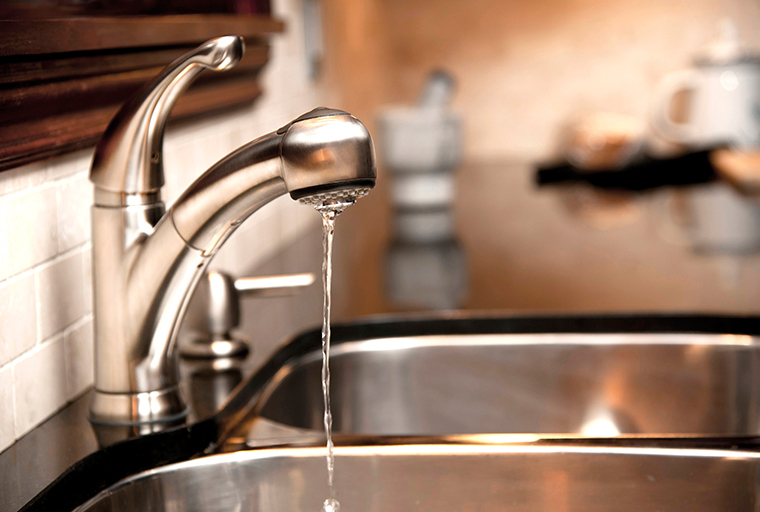
Availability of drinking water in Spain often suffers from droughts. In Spain’s water supply system today, 63% comes from surface sources, 33% from underground and 4% from seawater desalination. However, the trend is changing toward desalination.
Spain potentially experiences greater water shortage than other European countries. 60% of Spain’s territory is arid, which is especially characteristic of the Mediterranean coast and central regions.
Today Barcelona receives more than 20% of drinking water through desalination. Water quality in Spain doesn’t suffer from this, but taste may seem unusual. Therefore, most people prefer to drink bottled water or use water delivery services.
Nevertheless, it should be noted that water quality in Spain has noticeably improved in recent years. Thanks to the “National Recovery and Treatment Plan,” tap water in Spain has come to contain fewer organic impurities. Despite this, Spain is not yet among the top ten European countries with the highest quality drinking water.
Water bills
Subscription fee for connection to the water supply system is about €80-140 per year (regardless of whether you live in Spain permanently or not). Water is paid for by cubic meters on a progressive scale: the greater the consumption, the higher the tariff for “overconsumption.” For example, in Valencia for a two-month period: for the first 15 cubic meters — €0.5, for the next 15 — €0.7, for the next 20 — €1.8, etc. Usually 15 cubic meters is sufficient for 2 people.
Conclusion: concluding a contract with a company and installing a meter can cost up to €200. Regardless of whether you live in Spain and use water, or your dwelling is empty and taps are closed, you’re obligated to pay the company a monthly fee simply for connection to water supply and sewerage networks.
For example, in Torrevieja the subscription fee is approximately:
€13.5 per quarter for water €11.5 per quarter for water treatment €8 per quarter for sewerage €1.2 per quarter for meter rental
Actual consumption is accounted for by fact — how many cubic meters of water were used over 3 months. Water bill is usually issued once per quarter, and all your calculation data should be available in your personal account on the company website.
Usually water payment is linked to a bank account, meaning money is debited automatically. If for some reason payment didn’t go through by the established deadline, the company will immediately notify you of debt by SMS or phone and offer payment options: download the bill in your personal account and pay it at the bank or through your personal account with a bank card.
Limitations
In some rural areas of Spain, residents may still face real water shortage, so water supply can sometimes be limited. For this, owners usually have a tank for collecting rainwater.
Quite often household water is supplied by electric pumps, so lack of electricity can lead to lack of water supply. In addition, the pump activation button is often located in common areas. If suddenly water flow stopped, it’s worth checking if someone accidentally turned it off.
To receive notifications in all emergency cases (planned water shutdown; sharp unplanned increase in consumption — possible leak; payment problem, etc.) you need to connect to the free notification service. Usually this can be done on the supplier company’s website.
5. Average monthly utility costs
The average monthly payment amount in Spain is €100-200, depending on property type. In regions like Catalonia and the autonomous community of Madrid, where utilities are significantly more expensive, an owner spends an average of €250-300 monthly. In addition, utilities in Spain include a monthly subscription fee.
Remember that bills are usually issued every 2-3 months.
Utility costs for an apartment of about 60 m² (€):
| Amount | |
|---|---|
| Water | 20-30 |
| Electricity | 35-55 |
| Gas (water heating only) | 25-35 |
| Total per month | 80-120 |
Utility costs for a villa of about 150 m² (€):
| Amount | |
|---|---|
| Water | 40-70 |
| Electricity | 55-95 |
| Gas (water heating only) | 25-35 |
| Total per month | 120-200 |
The water bill for a villa also depends on season, as pool filling and more frequent garden watering may be required.
An excellent way to save water is to install an aerator on the tap, which can save 8 liters per minute! An aerator for each tap costs about €50 and is sold in any hardware store.
6. Connecting gas or electricity
Connecting natural gas is a simple procedure, but not free. To connect gas you need to contact your chosen supplier by phone, through an online platform or through an energy consultant at the office.
How to connect a new supply point
Natural gas distributors are responsible for delivering gas to homes. They use a network to which each home must be connected; the connection method varies depending on whether you live in a detached house or apartment building.
If you live in a detached house, it’s sufficient to install an Individual Receiving Installation (IRI) that connects directly to the gas pipeline. If you live in an apartment, the building must have a Common Receiving Installation (IRC), and each apartment an IRI.
To begin natural gas connection you need to contact your chosen distributor and sign a contract. This procedure can be performed by phone or through an online platform. All distributors have their own online platforms for convenient gas supply management at any time.
After signing a contract with the distributor, gas supply begins approximately one week later. A specialist will come to your home to install a gas meter and check the correctness of the gas installation.
Electricity and gas suppliers in Spain:
Endesa
Iberdrola
Naturgy
Edp
E.ON
What documents need to be provided?
Identity card/Passport of contract owner.
NIE (foreigner identification number).
First occupancy permit / opening license.
Certificate of housing suitability for residence (Cédula de habitabilidad).
Código Universal de Punto de Suministro or CUPS — Universal Supply Point Code (can be found on previous bill, these codes differ for gas and electricity). If you don’t have it, you need to obtain this code by contacting the distributor in your area, who will indicate steps for obtaining it.
For electricity you’ll need Certificado de Instalación Eléctrica or CIE (Electrical Installation Certificate). If you don’t have it, you need to invite a specialist to check your installation. This can cost €100-200.
For gas you’ll need an IRI certificate or thermal installation certificate if you need to connect heating. A copy of IRC may also be required.
Consumption power you want to charter.
Bank account number from which payment will be automatically debited.
All steps can be performed online on your chosen supplier’s website!
Costs of connecting gas or electricity
Mandatory fees for electricity connection in Spain:
Extension: €17.37/kW + VAT Access: €19.40/kW + VAT Connection: €9.04 + VAT
The price depends on three factors: the ordered power of the house, whether this is the first connection, and how long supply was suspended if connection already existed previously. All these fees will be included in your first bill. Overall, electricity connection will cost you €100-1000, depending on required power and CIE availability.
Each consumer connected to the gas system is obligated to pay the cost of natural gas supply. The distributor charges two fees that form a single bill for payment. Registration cost depends on the autonomous community, and the total amount can range from €200 to €700, varying depending on required supply volume and location.
Contract transfer to a new owner is usually free or costs no more than €20.
7. Waste disposal
All municipalities have garbage collection service, for which all owners are obligated to pay; however, not everyone pays the same price, for the same concepts and with the same frequency. There are also large differences in frequency, tariff calculation method, discounts and bonuses. Everything depends on municipal decision. In some cities there’s a fixed tariff, the same for all homes regardless of location. In others — a variable tariff depending on street and based on cadastral value.
In some cities (such as Badajoz, Barcelona, Las Palmas, Madrid, Málaga and Valladolid) there’s no separate garbage tax — the cost is included in IBI.
San Sebastian has the highest garbage tax (€178), while in Alicante the collection amount is only €28 per year. In cities like Madrid or Barcelona, there’s no “garbage tax,” but the service cost is charged differently — through inclusion in IBI.
Agamed, Spain’s largest water supply company, also provides garbage collection; however, the garbage bill comes separately every 3 or 6 months.
8. Conclusion
Utility payments can also include bills for household services: territory maintenance, pool cleaning, lighting, etc. Service costs depend on residential complex territory, common areas and number of apartments/villas. Accordingly, the price can vary from several dozen to several hundred euros per quarter.
Internet, cable television, mobile and landline communication are also a separate expense item. Prices depend on the specific operator and method of acquiring services — separately or as a package, by contract or prepaid, etc. Usually package cost is €40-60.
Comparison of utility costs for an 85 m² apartment in Spain and the UK:
| Utilities (per month) | Spain | UK |
|---|---|---|
| Electricity, gas, heating, water, garbage | €100 | €160 |
| Internet (6 Mbps ADSL/cable) | €35 | €25 |
| Total | €135 | €185 |
Overall, property maintenance costs in Spain are among the lowest in Europe and definitely lower than in the UK. If you wisely choose tariffs and suppliers, and also use resource-saving tips, you can significantly save on bills.