Millionaires Mallorca
What does the portrait of a typical luxury real estate buyer in Mallorca look like? Who owns the most expensive properties on the island? Is the market experiencing a real boom?
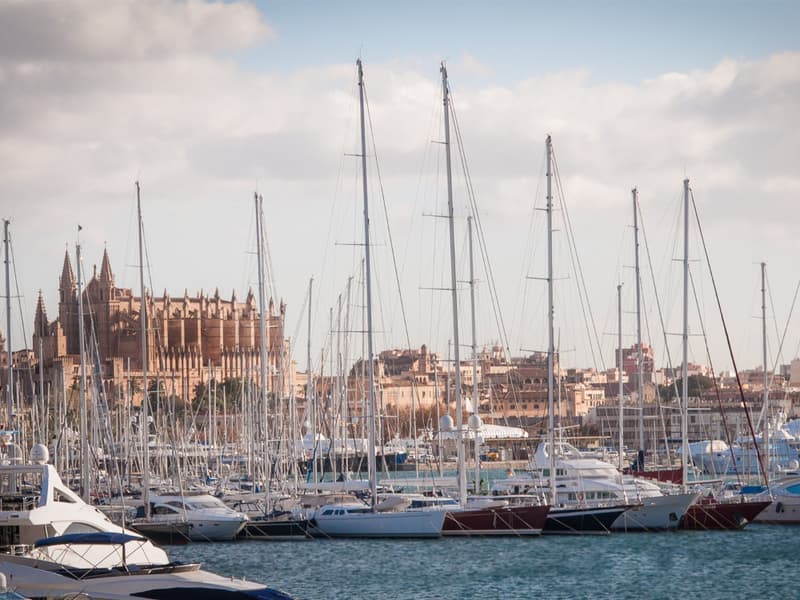
A significant portion of the world’s population spent lockdown dreaming of life in their dream home. Millionaires too! That’s exactly why sales are breaking records, and for those who want to and can spend, there are no limits. We spoke with several experts to find out who is behind the current real estate market revolution.
“The luxury real estate market in Mallorca is at a historic high. European millionaires who lived through lockdown are buying everything in sight, because many realized that thanks to the internet, they can run their business from the island. I just sold two major projects in Son Vida: one to a Czech, another to an Austrian. And they ordered five more villas from me. It’s madness,” says Mallorcan developer Carlos Segi over the phone. He’s not the only one pleased with pandemic sales statistics. All experts interviewed for this article agree: the real estate market is experiencing an absolute revolution.
The agents surveyed are also unanimous about other reasons that pushed this revolution in Spain: good weather, safety, and gastronomy play a huge role; the returns offered by banks on deposits also matter. “There’s high liquidity because banks penalize you for keeping money in accounts,” says María Isabel Esquivel, who has worked in the luxury housing market for 18 years, with her areas of activity being Jerónimos, Almagro, Castellana, El Viso, and of course, the Salamanca district.
“A few years ago, Ruiz Gallardón was actively developing the city. Walking down Serrano street, you had to navigate through ruins. Selling anything was much more difficult then,” she recalls. “Although he gave a big boost to underground parking development, and that turned out to be an excellent solution (he built several under Puerta de Alcalá).” Today, the former mayor’s construction fever is forgotten, and many foreigners are attracted to a city that is open, safe, and “very friendly,” Esquivel continues. In April, the capital’s most expensive penthouse was sold for 14.6 million euros — a three-level penthouse of 750 sq. m with a 200 sq. m terrace on Montalbán street. The buyer was an entrepreneur from Central Europe.
However, most of Luisa López Cabildo’s clients, an asset manager, are “Venezuelans, Mexicans, and Colombians who buy in the Puerta de Alcalá area because that’s where their friends live.” López Cabildo knows the luxury housing market well, having worked there for 20 years and conducting sales through personal contacts, because her properties are not listed on any portal. “These are properties of my clients that I offer to other clients. Everything is very confidential,” says the manager, who sells everything from castles to country estates with horses on Madrid’s outskirts. For selling such properties, home staging is gaining popularity — preparing real estate for sale: “Sometimes they buy the house along with the furniture,” she concludes. To all the listed advantages, López Cabildo adds another: “If the investment exceeds 500,000 euros, the government provides a temporary residence visa, which is attractive to many foreign investors.”
Jordana Paiva, however, claims that 70% of her clients are Spanish. “A Catalan who wants to have a second home in Madrid, or newlyweds buying their first house,” explains the sales director of Impar Grupo (formerly The Corner Group), a company engaged in purchasing and reconstructing buildings in aristocratic areas of the capital, such as the famous Tocame-Roque house mentioned in Benito Pérez Galdós’s works, or a new project they’re reconstructing on Núñez de Balboa in the Salamanca district: “Everything is done in-house: purchase, concept, architecture, construction work, and promotion.” Prices range from 10,000 to 14,000 euros per square meter. Expensive? Not at all. These products are so good they sell themselves: “We sell during construction phase, I don’t even have a showroom.” Despite the boom, not all buyer wishes can be satisfied: “After coronavirus, everyone wants penthouses or apartments with terraces, and unfortunately, there aren’t that many on the market.” López Cabildo agrees: “There are people who were comfortable in their homes, but after the pandemic they decided to move to housing with a garden. Although the price is high, the client is ready to pay.”
In the secondary market, the main clients remain Latin Americans who seek spacious homes with high ceilings, molding, and antique doors — “European style.” However, there’s one drawback: “Many complain about the poor condition of building courtyards. Sometimes you show an apartment and the wall crumbles, or the building hasn’t passed technical inspection. Americans are years ahead of us in this regard,” notes Esquivel. Besides safety and good weather, another attraction that added prestige to the city is the Canalejas center — the new Golden Mile that opened a year ago near Puerta del Sol, including the Four Seasons hotel, Dani Brasserie restaurant, and luxury shops that claim to compete with legendary Harrods in London or Lafayette in Paris.
But beyond the booming Madrid market, the most sought-after places in the hot season are located by the sea. “The pandemic changed where people want to live and accelerated a 60-year trend,” says Christopher Clover, owner of the historic Marbella agency Panorama. “Among buyers are many people from Northern Europe who realized they can work from anywhere,” continues the expert who came to the coast in 1973 “for a year” and has stayed ever since. Life in Marbella’s golden era brought him all kinds of celebrity acquaintances, as well as wealthy clients, including members of the Saudi royal house — remember that the late King Fahd owned the Mar-Mar palace, a magnificent building whose facade is a copy of the White House. “Now the wealthy are 45-year-olds who created an app and sold it for 100 or 200 million euros. They’re anonymous but very interesting: Dutch, French, Belgians…” continues the expert who annually compiles a report on local market dynamics. “The number of sales in the first half of 2021 grew by 70% compared to last year; prices more than doubled, and the number of inquiries from potential buyers increased by 150%.”
The Balearic Islands are not lagging behind. From independent sellers to giant Engel & Völkers — everyone got their piece of the pie. This is how things are for Marcel Remus, a 34-year-old German who came to the island at 19 and founded his own agency. “I sell houses in Son Vida, the Beverly Hills of Mallorca. From 1.5 million euros and up,” explains the young man who organizes the annual Lifestyle Night party for about 500 guests, where you can meet stars like Andie MacDowell, Eva Herzigova, or Elle Macpherson. “My clients are mainly Germans, but also Swiss and Austrians.” And he adds proudly: “This year will be very good. I expect to reach a turnover of 100 million euros.”
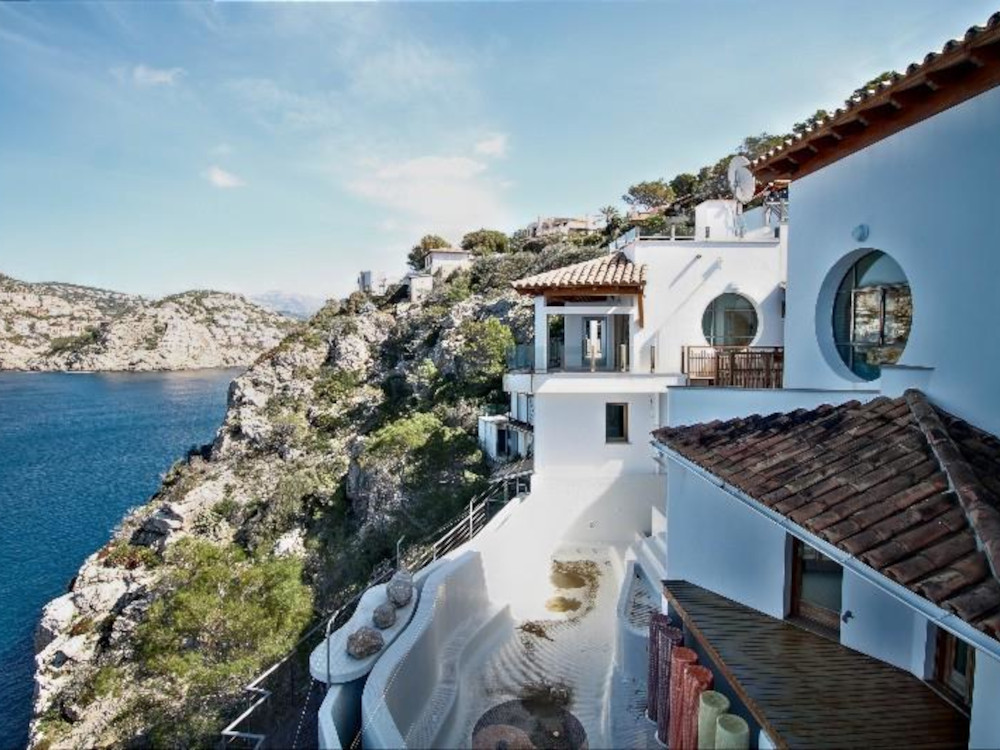
Gabriela Muñoz, owner of the Engel & Völkers franchise for Son Vida, cites impressive figures. In this exclusive area of Mallorca, west of Palma, entrepreneur Antonio Catalán, Gabriel Escarrer, and tennis player Carlos Moyá own properties. “Here, when we talk about luxury, we’re talking about the highest luxury,” she says, providing figures: “Houses start at four million and go up to 30 million. The smallest is 450 sq. m, the largest is 2,500 sq. m.” The buyer profile has changed: “Before it was elderly people, retirees. Now — young clients aged 40-45 who made money in technology. They’re super-rich. Besides housing, they buy cars, yachts, and visit the best restaurants. They spend 15,000 euros on dinner and never skip Dom Perignon. At home they prefer modesty and drive BMWs. When they come here, they buy the yellow Ferrari they always dreamed of. These people come here to spend.”
Most of them are entrepreneurs from Northern Europe seeking privacy: “They can no longer travel to Miami, the Maldives, or Thailand, so they find Mallorca — a place with good weather and excellent infrastructure: international schools, direct flights to their home countries, decent medical centers…” In the first half of 2021, Muñoz showed the best result in history: “This year in Son Vida, three houses worth 20 million euros were sold. This has never happened before.” These figures are confirmed by Mariana Muñoz, owner of interior design studio Terraza Balear and Gabriela’s sister: “My indicators grew by 50% compared to the same period last year. The client is very demanding, that’s for sure. But if he likes your proposal, he completely trusts you and hands over the keys. We renovated a house in Ibiza, another in Verbier (Switzerland), and now he’s entrusting us with building a penthouse in London for an Englishman who made his fortune in technology.” For these professionals, there are no boundaries — neither physical nor banking.