4 Favorite Neighborhoods in Madrid for Young People to Live
4 Favorite Neighborhoods in Madrid for Young People to Live

Young people aged 25 to 35 are the segment targeted by real estate agencies and developers, as this is the group that begins entering the housing market. Why? They finish their studies, start working, and begin independent living, separating from the parental home.
Most of them choose housing in familiar neighborhoods where they previously lived. In the case of Madrid, they also choose certain neighborhoods for professional reasons. However, prices in these neighborhoods are not always affordable for young people.
According to data from the real estate analytics platform Brains Real Estate, below are the neighborhoods with the highest concentration of people aged 25 to 35 in Madrid.
Centro
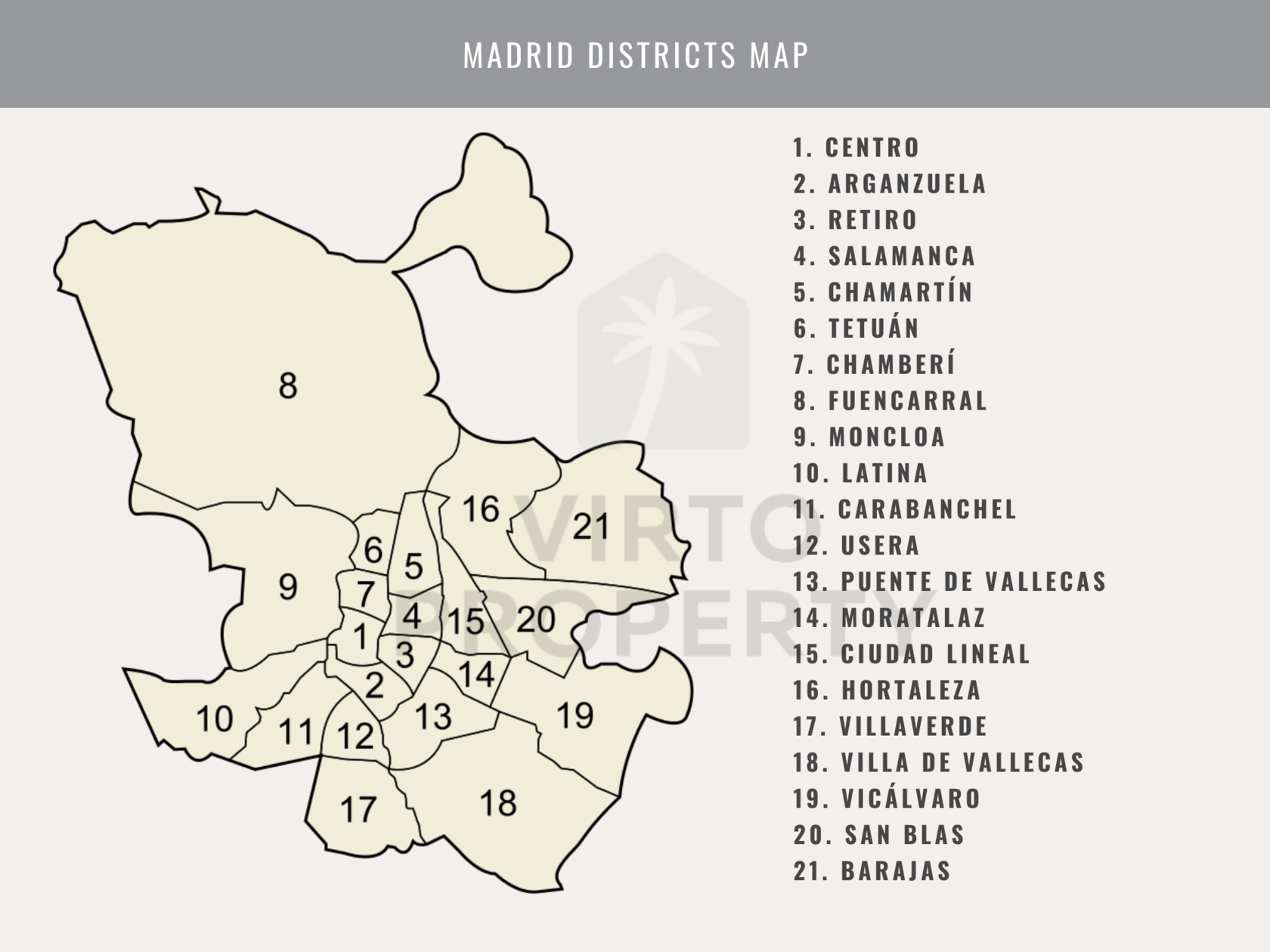
The Centro district is the Madrid neighborhood with the highest percentage of people under 35, according to Brains Real Estate data. Notably, it has the largest proportion of people aged 25 to 35 — 21.3%, although it doesn’t lead in the share of people under 25 — only 7.1%. Combined, 28.4% of the population belongs to the youth segment. Additionally, Centro has the largest number of rental offerings — 65% of the district’s total housing stock, according to Brainsre.
Renting property in this neighborhood is not cheap. Tenants pay an average of 17.1 euros per square meter per month. According to the Brains Real Estate platform, a one-bedroom apartment costs around 950 euros.
Buying housing here is also unaffordable: prices are around 4,800 euros per square meter. Average prices: 278,765 euros for a one-bedroom apartment, 459,479 euros for a two-bedroom, 671,626 euros for a three-bedroom, and 843,448 euros for a four-bedroom.
Tetuán
With a share of 9% of residents aged 15 to 25 and 17.5% aged 25 to 35, Tetuán is the neighborhood with the second-largest percentage of young people. More than every fourth resident of the district belongs to this age group.
In the neighborhood, where 58% of offerings are rentals, rental prices are the lowest — 14.3 euros per square meter. Purchase prices are also the most affordable — 3,565 euros/sq. m.
Salamanca
The Salamanca district has a high percentage of young people compared to the city average — 24.8% of residents over 15 and under 35.
The Salamanca district is now less accessible for young people. Any young person wishing to gain independence here must be prepared to pay more for housing than anywhere else in Madrid — both for purchase and rental. According to Brains Real Estate data, sales prices per square meter exceed 5,100 euros. Rental costs average 17.5 euros per square meter. One-bedroom apartment costs exceed 1,000 euros.
Chamberí
In fourth place is Chamberí. In this district, 24.3% of the population consists of people aged 15 to 35. Of these, 8.2% are under 25, and 17.1% are older.
56% of housing market offerings are rentals. The average rental cost is 16.4 euros per square meter. Prices range from an average of 962 euros for a one-bedroom apartment to 2,289 euros for a four-bedroom. This is the third most expensive district for rental.
Chamberí is the second most expensive neighborhood in Madrid for buying housing. The price per square meter exceeds 5,000 euros and increases as you approach Paseo de la Castellana.
Spain is Divided
At the national level, the country is divided into three completely different zones: the northern zone (Galicia, Castile and León, Asturias, Cantabria, and the Basque Country), where the population is older and the need for youth housing is lower.
Also part of the plateau and eastern coast (Catalonia, Aragon, Valencia, and Castile-La Mancha) show similar trends, though not as pronounced as in the first group.
On the other hand, in Madrid, the Balearic Islands, and a significant part of Andalusia, the percentage of young population is higher.
Young People Choose Rental
According to the Fotocasa report, “59% of people under 35 are currently looking for rental housing, which is 5% more than a year ago.” Meanwhile, 27% are interested in the buy-sell market, which is 4% less than in August 2020. Finally, 14% participate in both segments.
The main reasons for choosing rental, according to the report, are the unstable economic situation (52%), the flexibility that rental provides (31%), and labor mobility (30%).