Rationalism: The Style that Brought Barcelona to Modernity
Rationalism: The Style that Brought Barcelona to Modernity

The capital of Catalonia seeks to recover rationalist architecture—a style that took firm root in the city and positioned Barcelona alongside the major European capitals.
Ninety years ago, Barcelona joined the architectural avant-garde. Rationalism established itself with great force during the years of the Second Republic thanks to a group of young people who sought to change the world through construction, with support from the Group of Catalan Architects and Technicians for the Progress of Contemporary Architecture (Gatcpac). Among its most prominent members were Josep Lluís Sert, Francesc Fàbregas, Ricardo de Churruca, Germán Rodríguez Arias, and Josep Torres Clavé; the organization spread throughout Spain under the abbreviation Gatepac.
The defeat of the republican side in the Civil War forced many group members to emigrate—at a time when the laconic forms and social approach advocated by the group clashed with the academicism and historicism of the early Franco regime.
Nevertheless, by the end of the postwar period, rationalism flourished again. “In the 1940s, construction was practically non-existent; in the 1950s the situation changed, and economic recovery along with the country’s openness made new materials accessible,” explains Susana Landrove, director of the Iberian section of Docomomo, an international foundation dedicated to modern architecture.
One of the most iconic buildings of this second rationalist wave was recently acquired by Barcelona’s city hall. It is the headquarters of the former Gustavo Gili publishing house—a complex of three buildings within a block in the Eixample district, accessible through a landscaped interior courtyard.
This acquisition helps map an architectural style that, despite its extensive legacy, remains little known to both locals and tourists. “The same thing happens in other European cities: people visit a few clichéd buildings, but rationalism ends up catching their attention,” explains journalist and essayist Tate Cabré, author of the guide “Rationalism Route in Barcelona. Gatcpac and 1930s Architecture,” published by the city hall in 2018.
Industrialization
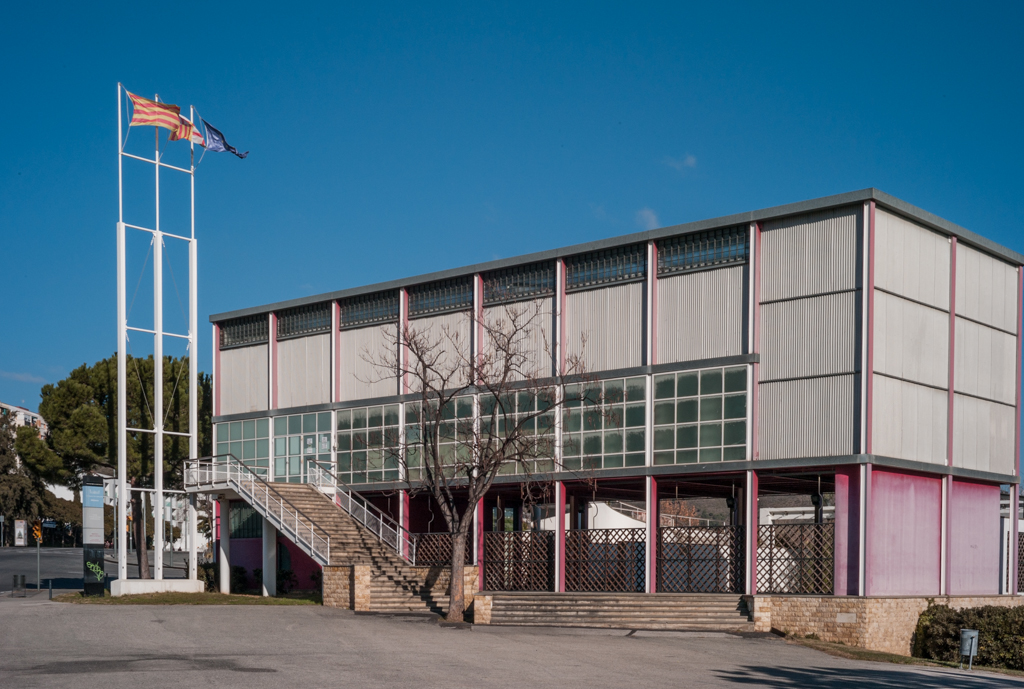
Cabré—an art and architecture specialist who organizes routes and tours of Barcelona focusing on its heritage—reminds us that this style was distinguished by the use of prefabricated or mass-produced materials, which allowed for cost reduction and the industrialization of construction, which until then had a markedly artisanal character.
The Gatcpac architects didn’t simply copy what Le Corbusier or Mies van der Rohe were doing in other countries, but adapted forms to the Mediterranean context. “In addition to glass, concrete, and iron, they also used brick”—a material very common in Southern Europe, adds Landrove. It was precisely this tendency that continued in the second wave of the 1950s, as evidenced by several residential projects by José Antonio Coderch and Antoni de Moragas. The latter became one of the catalysts for the revival of rationalism through Group R, founded in 1951.
According to Cabré, the main feature of the second wave is that it was “purer.” “In the 1930s, rationalist architects had to adapt to client demands, which meant the same specialist could design an eclectic and a rationalist building in the same year,” Cabré explains. In contrast, in the postwar period, modern aesthetics gained broader acceptance.
Social Architecture
Both Landrove and Cabré argue that rationalism cannot be understood without considering the strong social component of the architects who championed this movement.
Mass-produced or prefabricated materials made it possible to build housing for the working class: small apartments but well-ventilated and illuminated, designed to maximize space usage and create a sense of comfort.