Spanish Real Estate Market News Digest for December 2021
Spanish Real Estate Market News Digest for December 2021
- Own castle with 70% discount
- New construction boom in Spain
- Valencia real estate prices rising rapidly
- High electricity bills spur interest in alternative energy
- How secondary housing market prices are changing
- New skyscraper district to appear in Benidorm
- 2022 forecast
1. Own castle with 70% discount
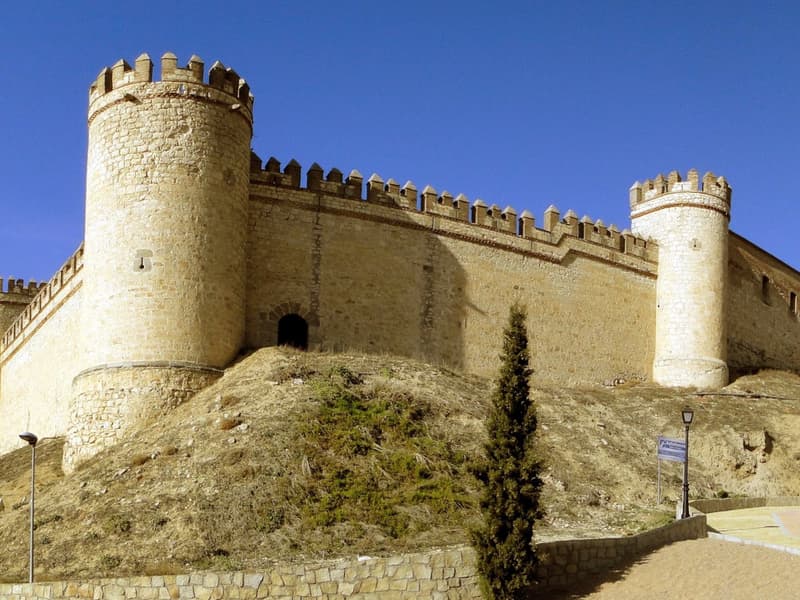
Castillo de la Vela castle in Maqueda (Toledo province) is listed for sale at €3.2 million — 70% below the original price. The 13th-century fortress originated as a Roman observation post, was later rebuilt as a Muslim castle, expanded in 981 and reconstructed in the 15th century. Queen Isabella I of Castile lived here, and in 1931 the castle received the status of a historic-artistic monument.
The rectangular fortress has two levels with 3.5-meter walls, moats and round towers. The coat of arms of the Cárdenas-Enríquez family is displayed on the main northern gate. The sale is complicated by the high cost of restoration and strict heritage protection restrictions: any changes require state approval.
Spain’s Ministry of Interior, the former Civil Guard barracks, invested €5 million in creating a Civil Guard Museum that was never completed. The original 2013 auction price was €9,588,290. After several unsuccessful sale attempts, the price dropped almost 70%.
Prospective bidders had to submit a deposit of €191,423.28 by January 12, 2022; bid opening was scheduled for January 26.

2. New construction boom in Spain
In 2021, Spain experienced rapid growth in new construction after pandemic delays and changing buyer preferences. According to Spain’s Ministry of Transport, Mobility and Urban Development, 85,945 completion certificates were signed in 2020 — 9% more than in 2019, the highest figure in eight years.
2021 completion forecast: 127,000 homes. Expected completions in 2022: about 130,000 homes, based on licenses issued to developers.
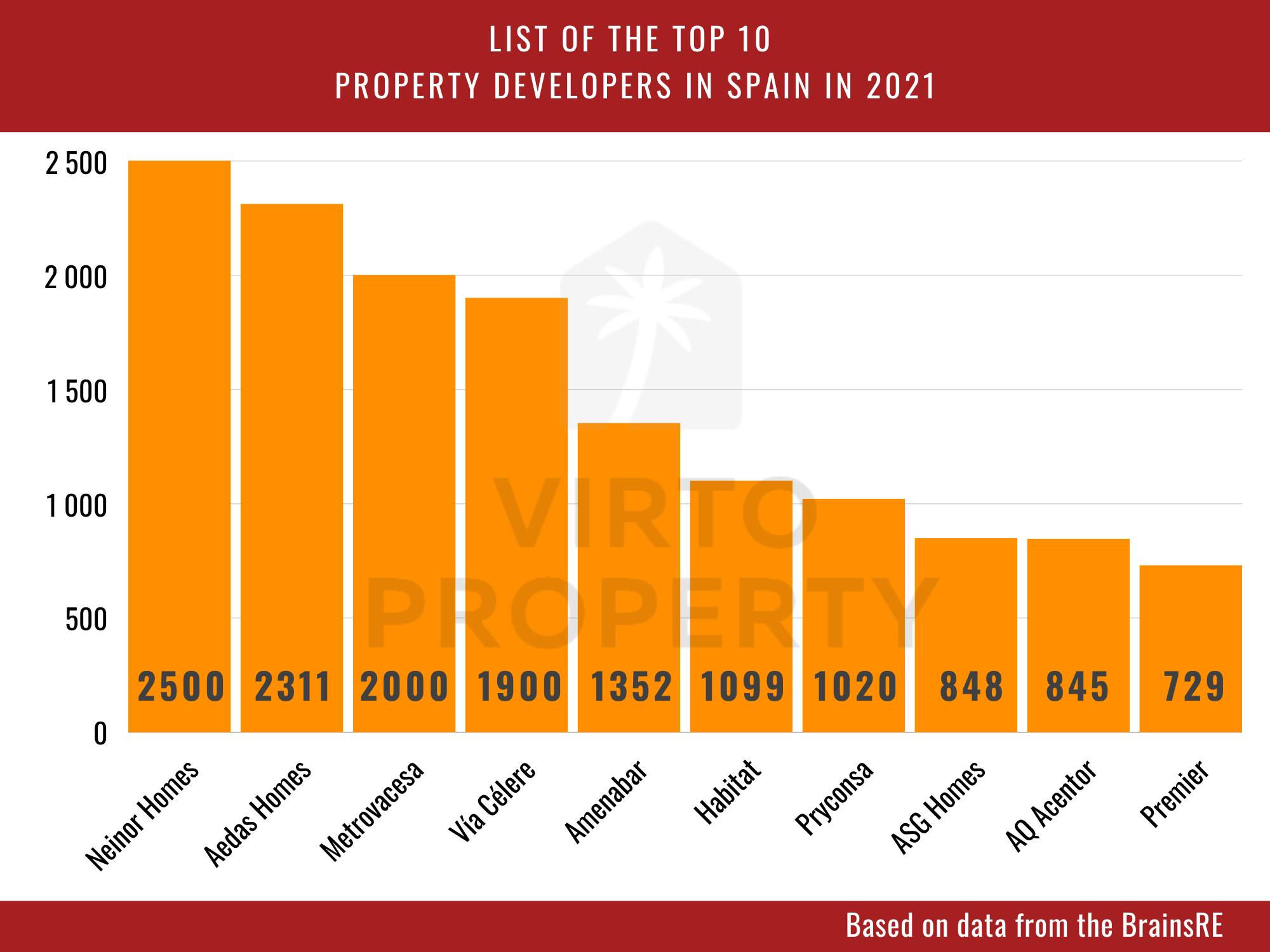
Top 10 Spanish developers by construction volume in 2021:
- Neinor Homes
- Aedas Homes
- Metrovacesa
- Vía Célere
- Amenabar
- Habitat
- Pryconsa
- ASG Homes
- AQ Acentor
- Premier
The market shifted from buyer-favorable to seller-favorable conditions, requiring buyers to make quick decisions.

3. Valencia real estate prices rising rapidly
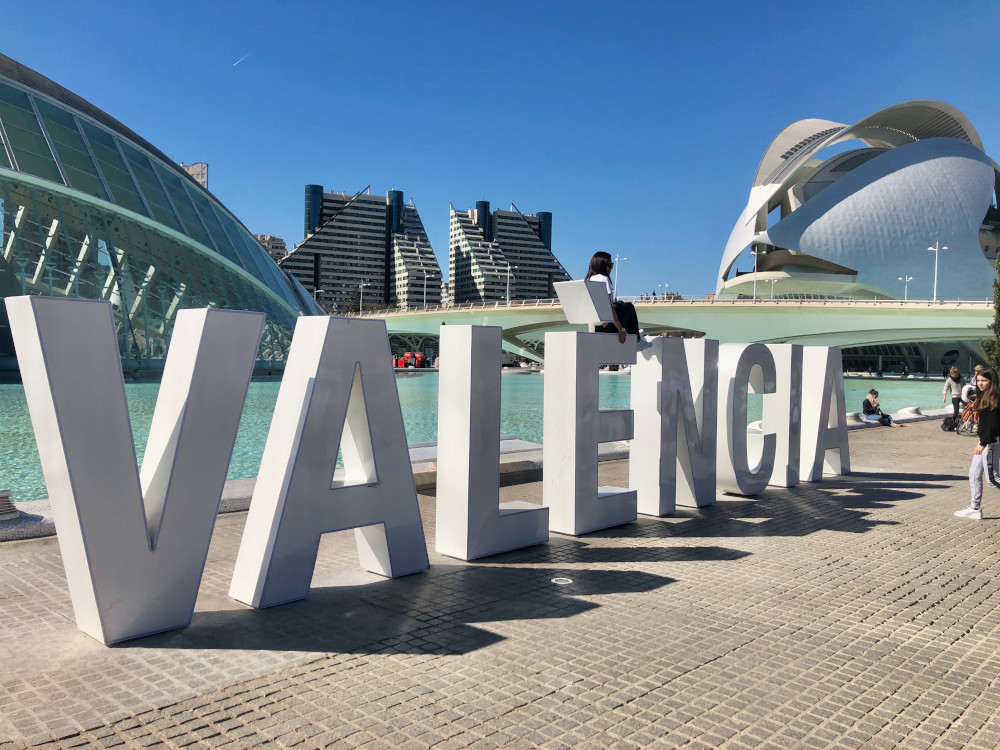
The Valencian Community real estate market surged in 2021. The number of transactions in October increased 31% year-on-year (from 8,953 in 2020 to 11,729 in 2021), exceeding the national average of 19.7%.
Comparing October 2021 with pre-pandemic October 2019, regional growth was 15.8% — three times Spain’s overall increase of 5.9% for the same period.
Leading municipalities (Alicante, Valencia, Castellón) recorded activity growth of approximately 17%. Demand was fueled by available affordable options — housing could be purchased from €120,000 — combined with geographical and climatic advantages.

4. High electricity bills spur interest in alternative energy
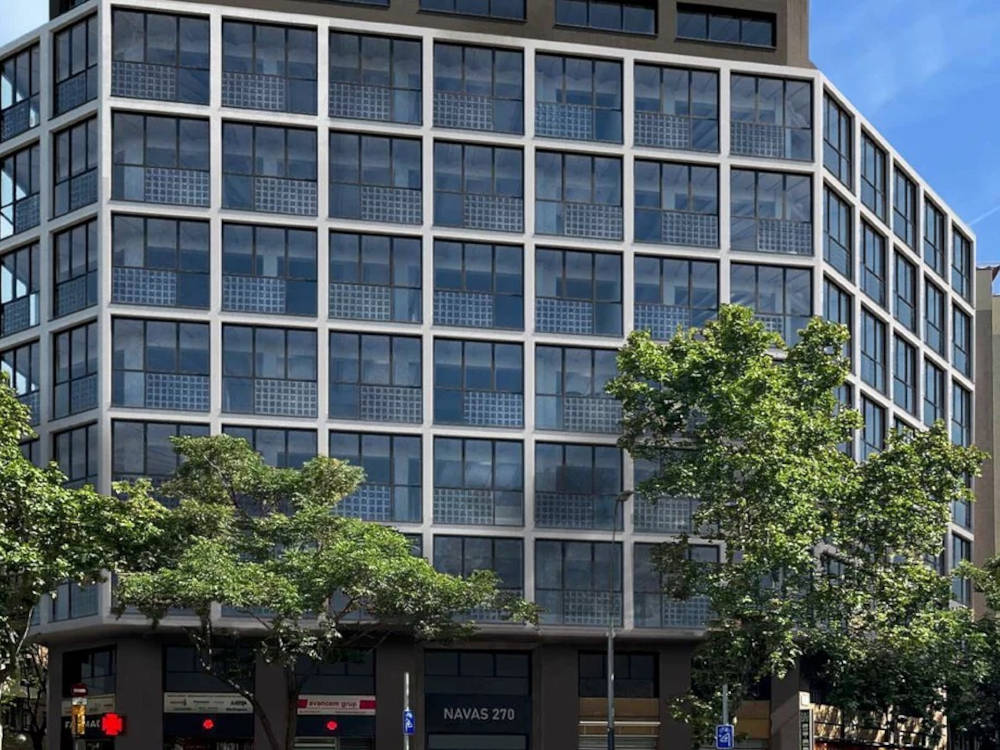
Electricity prices in Spain rose sharply in late 2021. The average daily market price in November reached €193.43/MWh — 361.2% higher than November 2020. By December 16, prices peaked at €302.48/MWh.
Contributing factors included suspension of Algerian gas supplies through Morocco due to diplomatic conflict, increased emission taxes, and revised pricing principles. Winter heating demand led to household bills jumping from typical €50–80 to €200–300.
According to Schroders forecasts, elevated prices will persist at least until June 2022. Government measures — 11-step programs, flexible hourly tariffs and the ability to change suppliers — did not lead to significant reductions.
In response, developers began more actively incorporating solar panels and renewable energy sources into projects. Tax deductions (under IRPF) became available in six autonomous communities:
- Cantabria
- Navarre
- Valencian Community
- Balearic Islands
- Canary Islands
- Murcia
Over 600 Spanish municipalities offered property tax (IBI) benefits. Subsidies covered up to 50% of solar panel and aerothermal system installation costs, with maximum support provided in rural areas.
5. How secondary housing market prices are changing
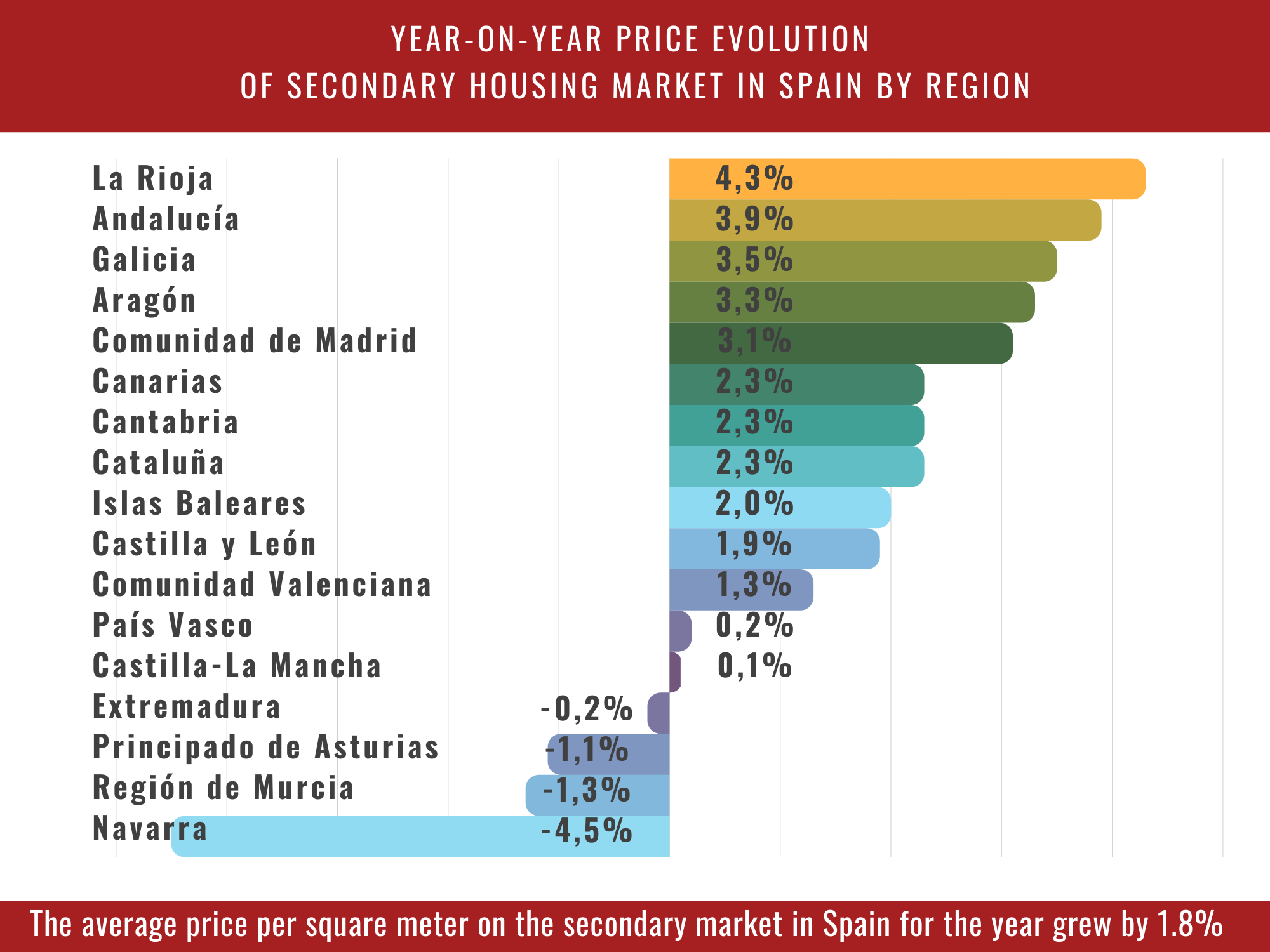
Secondary housing market prices showed stable, moderate growth. The average price per square meter increased 1.8% year-on-year, with positive dynamics observed in 13 of 17 autonomous communities.
Average secondary housing price in November 2021: €1,911/m².
Prices by region (€/m²):
- Madrid: €3,140
- Basque Country: €2,884
- Balearic Islands: €2,861
- Catalonia: €2,556
- Canary Islands: €1,783
- Cantabria: €1,779
- Andalusia: €1,713
- Galicia: €1,632
- Navarre: €1,623
- Aragon: €1,608
- Asturias: €1,558
- La Rioja: €1,475
- Valencian Community: €1,452
- Castile and León: €1,447
- Murcia: €1,150
- Extremadura: €1,146
- Castile-La Mancha: €1,114
6. New skyscraper district to appear in Benidorm
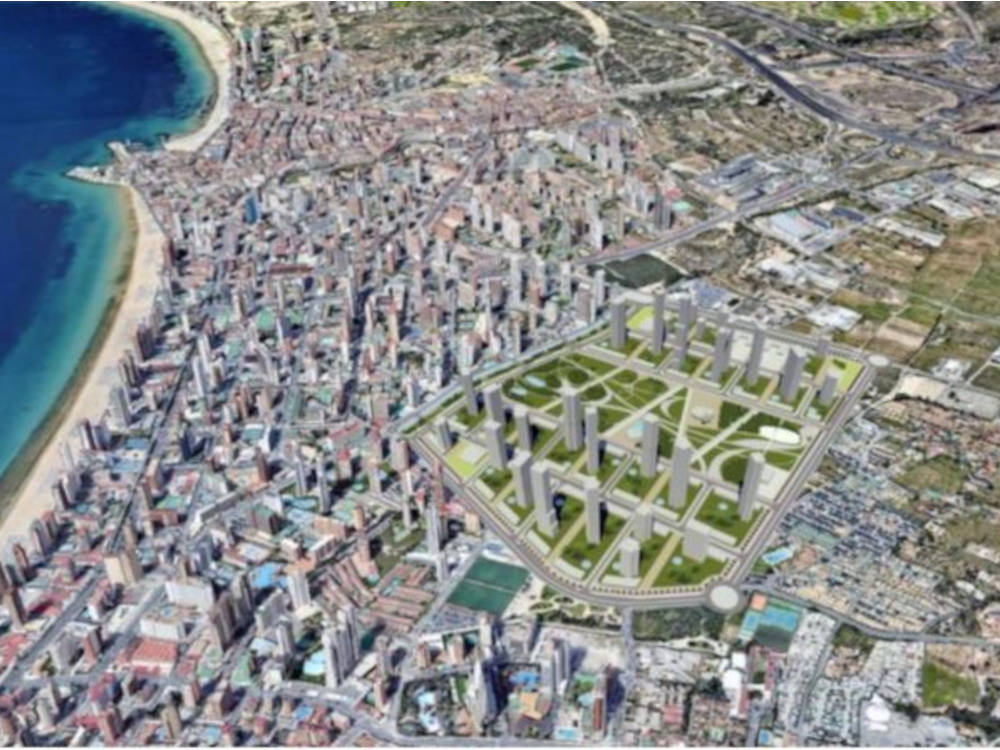
Benidorm City Council approved the Ensanche Levante development plan in late 2021, providing for construction of high-rise residential buildings, hotels and public spaces. Minimum building height — 20 floors.
The 560,000 square meter area will include municipal social housing and is designed to meet the region’s construction needs for the next 5–10 years. Final project approval was expected in spring 2022.
7. 2022 forecast
Continued price growth
Further market expansion is expected with overall growth of about 4%. Faster appreciation is forecast in Madrid, Málaga, Valencia, Alicante, Seville, Murcia and Barcelona.
New construction price growth is expected to outpace secondary market dynamics due to pandemic-induced construction cost increases, rising building material prices and increased logistics costs worldwide. The national average price is forecast to reach approximately €2,016/m².
Real estate as investment
The sales gap between new construction and secondary housing reached a record level — 34% in the first nine months of 2021, the largest difference in six years (previously the typical gap was several percentage points, with a historic maximum of about 20%).
This gap reflects post-pandemic recovery and investor preference for investing in new construction as a savings preservation tool. CaixaBank economist Judith Montoriol-Garriga noted that “favorable financing conditions will continue to support real estate investment.”