Hoteliers warn of tourist apartment boom as a way to circumvent rent control
Hoteliers warn of tourist apartment boom as a way to circumvent rent control

In Barcelona, the number of apartments available for rent has drastically decreased, and more and more owners are considering switching to seasonal or tourist rentals. This is the formula they have found to circumvent the price control introduced in Catalonia. The Generalitat can intervene in regular rentals, but is unable to control tourist or seasonal rentals, where landlords have the right to raise prices without any restrictions.
The same thing could happen with the new housing law that the government intends to pass. The tourism sector warns about the risk of vacation homes and seasonal rentals spreading as a way to circumvent price control. Industry sources state that the country is making a “strategic mistake” by not addressing this issue in the new law, which lacks measures to regulate vacation rentals.
Rent control can only apply to regular rentals under the Urban Rental Law (LAU). Seasonal and tourist rentals fall outside this regulation. The distinction between them is related to the basis on which price control is built. Justifying its intervention, the government argues that housing must fulfill a social function. However, tourist apartments are not considered housing, so they cannot be required to fulfill this function. According to the LAU, vacation homes or seasonal rentals fall under the category of “use for purposes other than housing,” and it is impossible to compel them to perform a function for which they are not intended.
Currently, Spain has more than 294,000 tourist apartments. Seasonal rentals should be added to this figure. All these properties are already excluded from price control. Hoteliers fear that a massive flight of owners from the law will lead to a boom in tourist apartments—a segment that neither the state nor administrations are able to control and where regulatory chaos reigns at community and municipal levels.
These fears are not empty predictions. In Barcelona, this phenomenon is already being observed. According to Gonzalo Bernardos, professor and director of the real estate master’s program at the University of Barcelona, “an owner who doesn’t want to lower the price under pressure from the Generalitat’s control will switch to seasonal rental.”
At the beginning of September, 10,900 apartments were listed for rent in Barcelona—42% fewer than a year earlier, according to Idealista data. “There is already a flow from regular rental to seasonal rental to circumvent control. This will lead to continued price growth, while the regulated supply collapses,” explains Bernardos.
Price control does not apply to tourist or seasonal rentals, but these types of rentals work differently than regular ones. First, contracts cannot be concluded for more than one year, and owners cannot receive tax benefits for renting regular housing.
This doesn’t necessarily deter landlords, since, as Bernardos explains, “most rental contracts on average don’t last three years.” This trend could become an additional collateral blow to tenants: if more and more apartments are regulated by norms different from regular housing legislation, rental contracts will not only not be limited by price control, but will also be valid for a shorter period, reducing stability for tenants.
Regarding tax benefits, the new housing law reduces the income tax deduction that landlords can apply for renting an apartment from 60% to 50%, with the possibility of increase only in certain cases. In most situations, the profitability of tourist rentals is higher than regular ones. The president of the Tourist Housing Federation, Bartolomé Gomila, however, notes that “today, tourist housing owners don’t put profitability first. The main thing is to instill confidence in property owners, and unfortunately, they don’t have it.”
The path of circumventing price control could turn out even worse for tenants if landlords decide to sell their real estate. Such a scenario is predicted by Idealista. According to Francisco Iñarreta, a representative of the portal, “we don’t doubt that an insignificant part of the market could switch to tourist or seasonal rental, but we believe this won’t have a significant impact: it’s quite likely that many properties that are rented or could be rented will end up on the buy-sell market. We’ve already seen this in Barcelona.”
Already 294,000 properties circumvent price control
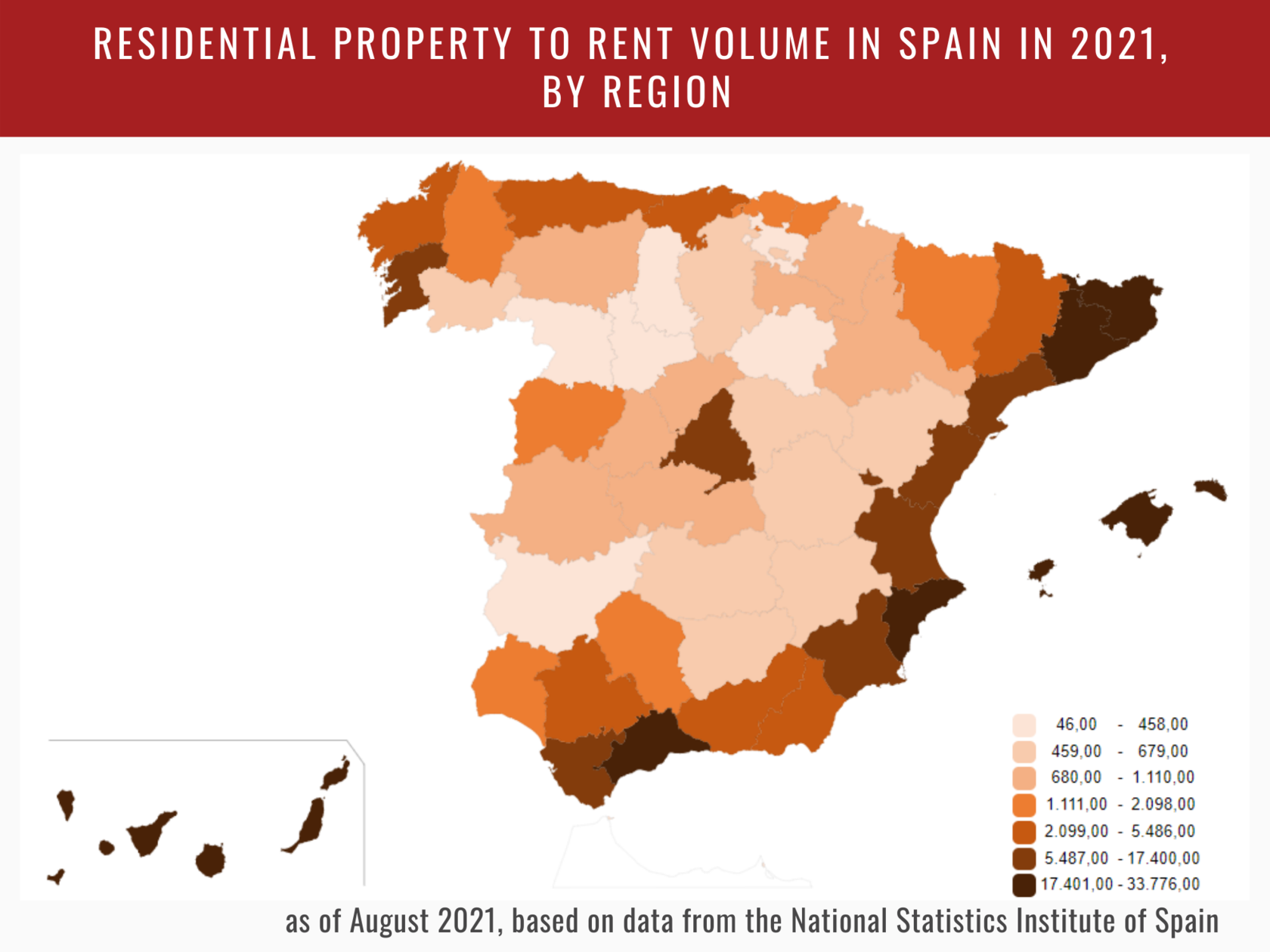
When the government presented the future housing law, it emphasized that the most interventionist part of control (forcing owners to reduce rent to the price set by the community) would only affect companies owning more than ten properties—about 150,000 homes in Spain, according to government calculations. Curiously, this represents almost half of the apartments that already circumvent control. Currently, Spain has about 294,000 tourist apartments, according to INE data. Almost 300,000 rental apartments not regulated by the Urban Rental Law, where the owner freely sets the price and contract terms are less than a year, so the spread of this market could lead to instability. The tourist apartment boom could be even more massive. INE data shows how the COVID-19 crisis led to a reduction in the number of vacation homes in Spain. In August 2020, there were 320,000 tourist apartments. But without tourists, owners switched to vacation rentals. Hoteliers fear that the new law will provoke the opposite movement and increase unregulated supply.